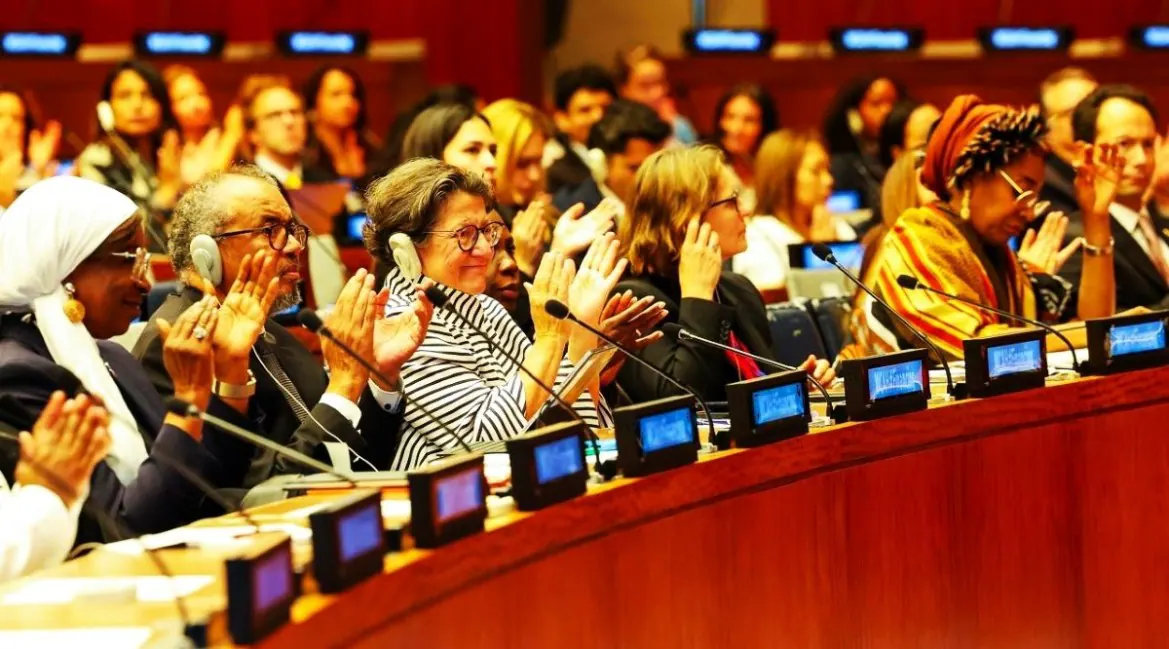
The Global Leaders Network and partnering sovereign states have released a joint Communiqué on Financing for Women’s, Children’s and Adolescents’ Health in a Time of Austerity. The statement was made on the margins of the 81st Session of the United Nations General Assembly. The leaders reaffirmed their commitment to the health, rights, and well-being of women, children, and adolescents. This commitment comes at a crucial moment for global health and development.
The current global landscape presents significant challenges to health systems and national budgets. Intersecting crises, including geopolitical uncertainty and rising debt burdens, are threatening decades of progress in women’s, children’s, and adolescents’ health. Furthermore, growing efforts to roll back hard-won rights, particularly sexual and reproductive health and rights, compound these challenges. The consequences of these challenges fall hardest on those already facing the greatest barriers to care.
The Global Leaders Network emphasized that protecting the health, rights, and dignity of women, children, and adolescents is fundamental to achieving the 2030 Sustainable Development Goals. To achieve this, they called for a decisive shift towards stronger, more sustainable, country-led health financing. This shift is underpinned by a determination for all countries to attain health sovereignty. The leaders commit to financing mechanisms that uphold the ability of countries to determine, mobilize, and direct resources according to their own priorities and the needs of their populations.
Donor partners are urged to support this shift by aligning their assistance more closely with nationally determined priorities and plans, as contemplated in the Lusaka Agenda. The leaders stress that they cannot allow a period of fiscal constraint to become a period of lost progress. They therefore call on governments, development finance institutions, international partners, and the wider global community to act with collective urgency to protect and promote the health and well-being of women, children, and adolescents.
To achieve their goals, the Global Leaders Network commits to catalyzing domestic resource mobilization and exploring diversified financing mechanisms. These mechanisms include blended financing, optimized pooling, debt swaps, and other emerging evidence-based innovations. The leaders emphasize that these approaches must be appropriately implemented, adapted to national contexts, and embedded within country-led financing models.
The Global Leaders Network will carry this agenda beyond the 81st United Nations General Assembly by leveraging the GLN platform. They will engage governments, technical expertise, and investors to advance practical financing solutions. The leaders will facilitate South-South learning and hold themselves accountable for the commitments made. This effort aims to ensure that the health and well-being of women, children, and adolescents remain a political and financing priority.
The commitments made by the Global Leaders Network are seen as a measure of their shared commitment to sustainable development. The leaders' actions will be crucial in determining the future of women's, children's, and adolescents' health. The meeting's outcomes reflect a collective recognition of the need for urgent action to protect and promote the health and well-being of these critical populations.
Key points
- Global leaders call for stronger, more sustainable country-led health financing.
- The leaders commit to catalyzing domestic resource mobilization and exploring diversified financing mechanisms.
- The health and well-being of women, children, and adolescents must remain a political and financing priority.