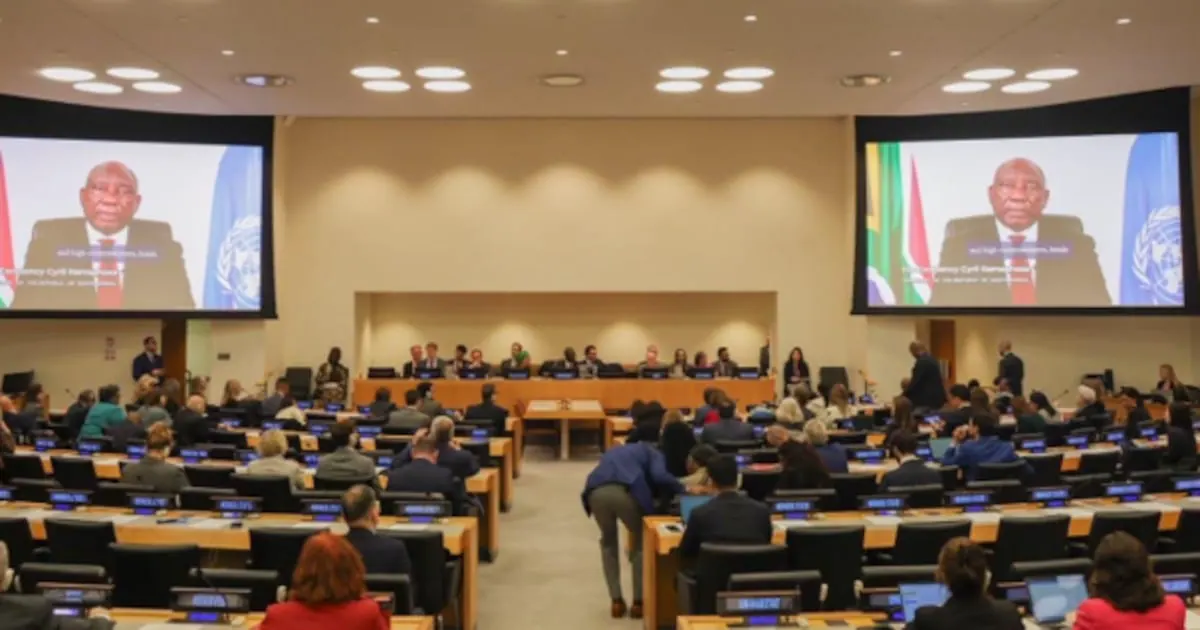
The proposal for an international panel on inequality, initially presented at the 81st UN General Assembly, is gaining traction globally. South Africa, during its G20 presidency last year, took a significant step by commissioning the first-ever G20 report on global inequality. The report, chaired by Nobel laureate Joseph Stiglitz, aimed to understand the current inequality crisis and potential solutions. It revealed that the gap between the richest and poorest has widened, with extreme wealth concentrations in the hands of a tiny elite.
The report identified a crucial gap between scientific research and policy implementation, leaving policymakers without a unified consensus on reducing inequality. Studies and research on inequality are scattered across disciplines and institutions, making it challenging to access effective policy solutions. To address this, the proposal for an international panel on inequality, similar to the Intergovernmental Panel on Climate Change, was born. This initiative aims to provide a shared understanding of the issue and evidence-based policy recommendations.
South Africa, having experienced extreme inequality firsthand, is advocating for the establishment of this panel. Despite progress since the end of apartheid, stark inequalities persist. The richest 1% of South Africans own 55% of the country's wealth, while the poorest half of the population have negative net wealth. Black households hold only a fraction of the wealth of white households. The economic structures built during colonialism and apartheid remain largely intact, perpetuating these disparities.
The international panel on inequality aims to bring together countries from the Global North and South, united by a common purpose. Recently, countries such as Germany, Japan, Bangladesh, Iceland, and Cabo Verde have backed the initiative. The proposal's founding governments, including South Africa, Spain, Norway, and Brazil, have been driving efforts to propose a panel and work towards a UN resolution in support of it.
The initiative has garnered significant support from academics and former world leaders. Over 1,500 academics and 37 former world leaders, including previous German chancellor Olaf Scholz and former leaders of several African nations, are urging governments to back the initiative. They share the conviction that the inequality crisis is not inevitable but rather the result of policy choices that have allowed a small few to accumulate wealth.
UN Secretary-General Antonio Guterres has warned of a "ticking time bomb" due to unchecked inequality, which could further erode democracy. The new frontier against inequality will involve getting the backing of the UN General Assembly in 2027 for a new resolution on an international panel on inequality. South Africa's Imraan Valodia, a professor of economics, emphasizes the need for an evidence-based approach to address this crisis.
As the momentum for the international panel on inequality grows, it is clear that global leaders and academics are rallying behind South Africa's call to address wealth disparity. With the right evidence base, political will, and institutional architecture, it is possible to reverse the inequality crisis. The international community must now work together to make this initiative a reality and create a more equitable world.
Key points
- South Africa's proposal for an international panel on inequality has gained support from countries and academics worldwide.
- The initiative aims to provide a shared understanding of the inequality crisis and evidence-based policy recommendations.
- The international panel on inequality is expected to be formally established with the backing of the UN General Assembly in 2027.