The Apparel Recovery Coalition (ARC) was launched in the heart of Accra's Kantamanto Market, one of the world's largest hubs for secondhand clothing reuse, repair, and upcycling. The coalition, co-founded by H&M Group, Inditex, BESTSELLER, adidas, and The Or Foundation, aims to explore producer responsibility systems that support circular pathways such as reuse, upcycling, recycling, and responsible waste management. Kantamanto Market recirculates 25 million garments each month, supporting the livelihoods of tens of thousands of workers and entrepreneurs.
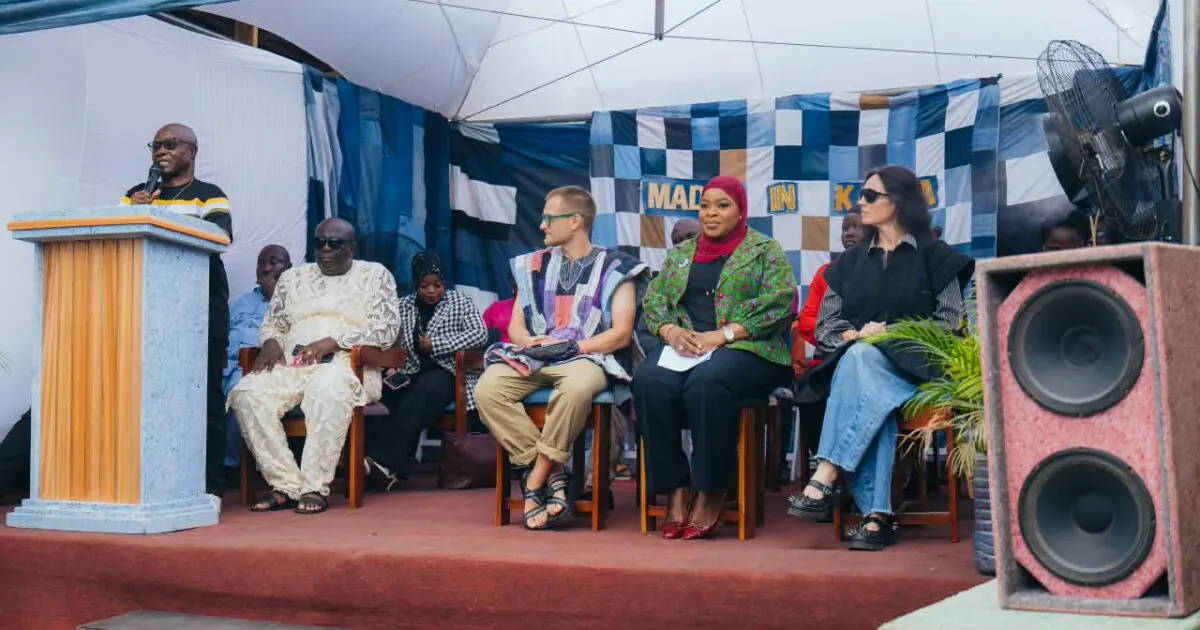
The launch event, held at Kantamanto Market's central Egg Sellers Lane, featured upcycled canopies made by The Or Foundation's Remanufactory and a podium and sound system made from Cassaboard, a material developed from waste textiles. Reverend Opoku Afreh, President of Kantamanto Obroniwawu Businesses Association (KOBA), welcomed the representatives from the world's largest fashion companies, expressing hope that ARC will build upon the existing knowledge, skills, and resourcefulness of the Kantamanto community.
Shamima Muslim, Deputy Presidential Spokesperson, speaking on behalf of Dr. Julius Debrah, Chief of Staff, described the launch as a monumental step, acknowledging that big brands are coming to Kantamanto not just to take pictures but to recognize the community's role in keeping global fashion circular. Gifty Anderson, Secretary of Kantamanto Women's Association, emphasized the importance of involving local communities in decision-making processes, stating that normally, decisions are made in boardrooms overseas, leaving them to deal with the impacts.
The coalition recognizes the work done by The Or Foundation over the past 15 years to support Ghana's circular textile ecosystem and aims to build on that experience. ARC will explore how producer responsibility contributions can help strengthen Ghana's existing circular textile ecosystem, with The Or Foundation continuing to organize and implement initiatives across Accra, such as improvements to infrastructure at Kantamanto Market and environmental remediation.
According to the European Environment Agency, around 1.4 million metric tons of used textiles are exported from the EU annually, mainly to countries in Africa and Asia. ARC will build and test a producer responsibility blueprint that reflects the global nature of post-consumer textile flows, engaging brands, producer responsibility organizations, sorters, recyclers, policymakers, and affected communities to help shape practical solutions.
Over the next two years, ARC will work with various stakeholders to develop and implement a producer responsibility system that addresses the environmental and social impacts associated with post-consumer textiles. The coalition's demonstration project in Ghana will serve as a model for other countries, providing valuable insights into the management of post-consumer textiles and the role of producer responsibility in promoting sustainable practices.
The launch of ARC in Kantamanto Market marks a significant step towards addressing the environmental and social impacts of the global fashion industry. By bringing together major brands, local communities, and other stakeholders, ARC aims to promote a more circular and responsible approach to fashion, one that recognizes the value of secondhand clothing and the importance of supporting local ecosystems.
Key points
- The Apparel Recovery Coalition (ARC) aims to explore producer responsibility systems that support circular pathways for secondhand apparel.
- Kantamanto Market recirculates 25 million garments each month, supporting the livelihoods of tens of thousands of workers and entrepreneurs.
- ARC will build and test a producer responsibility blueprint that reflects the global nature of post-consumer textile flows.