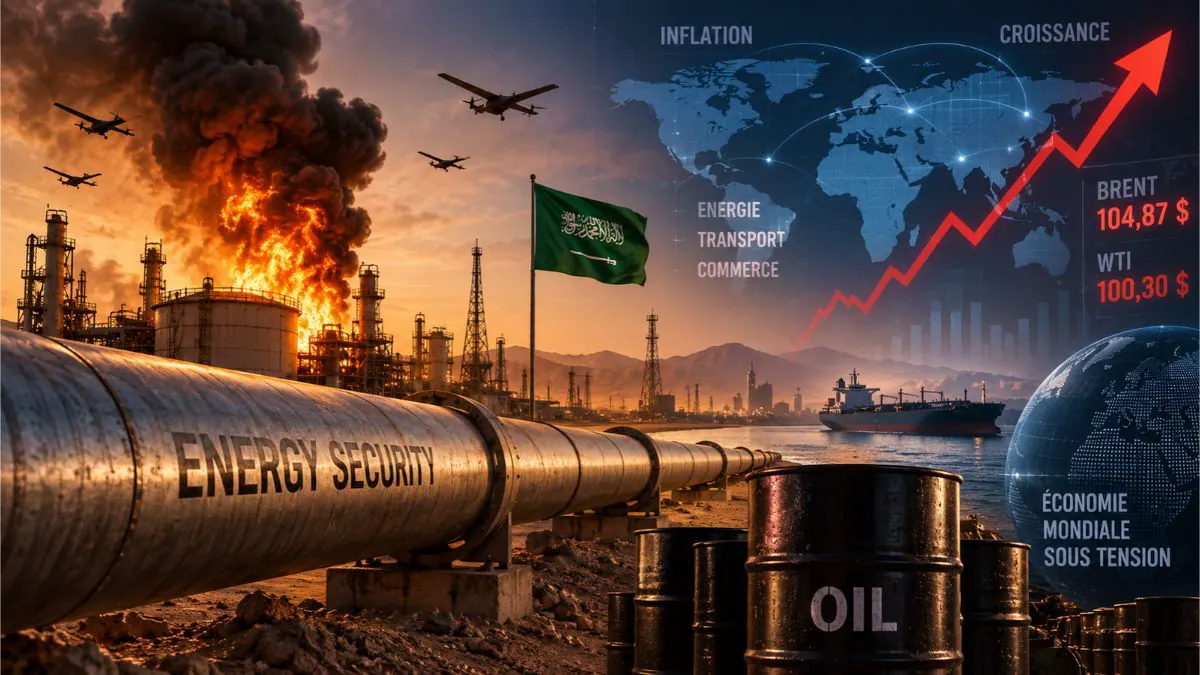
The recent resurgence of attacks on energy installations in the Middle East has significantly raised concerns about the stability of the global economy. The targeting of critical infrastructure such as pipelines, pumping stations, and export routes has escalated the risk, exposing the global economy to direct vulnerability. A notable incident involved the damage to three pumping stations of the East-West oil pipeline in Saudi Arabia, a strategic infrastructure that enables oil transportation to the Red Sea, bypassing the Strait of Hormuz.
The East-West oil pipeline plays a crucial role in the global oil supply, recently transporting 4 to 5 million barrels per day, which accounts for approximately 4 to 5% of the world's oil supply. The attacks have led to a significant increase in oil prices, with Brent closing at $104.87 per barrel and WTI at $100.30 per barrel on September 18. These price hikes are indicative of the potential for further economic disruption, as increased oil costs can lead to higher transportation and production expenses.
The impact of these attacks is not limited to oil-producing countries in the Gulf region but also affects countries that import energy. For producers, while higher oil prices can increase revenue from each barrel sold, damaged infrastructure and disrupted maritime routes can negate these gains. Additionally, uncertainty and logistical disruptions can adversely affect non-oil sectors. Importing countries face immediate risks, including increased oil bills, pressure on their currencies, and higher inflation.
The global economy is at a critical juncture, with the potential for sustained disruptions in energy supplies, which could maintain high levels of oil and fuel prices, thereby increasing transportation and production costs. Prolonged shocks could fuel inflation, complicate monetary policy decisions by central banks, and weigh on global growth. The situation demands close monitoring of the duration and extent of these disruptions.
The strategic importance of the affected infrastructure cannot be overstated, particularly in the context of efforts to secure and diversify energy exports. The transformation of regional security concerns into global economic risks underscores the interconnectedness of the world's economies. The critical question now is not just how high oil prices will rise but how long the global economy can absorb these tensions without the energy sector triggering a broader economic shock.
Economists and policymakers are closely watching the situation, aware that the consequences of prolonged disruptions could be far-reaching. Countries with limited fiscal buffers are particularly vulnerable to these developments. The global economy's resilience will be tested by its ability to adapt to these changing circumstances and mitigate the adverse effects on growth and stability.
As the situation continues to evolve, stakeholders are emphasizing the need for a coordinated response to address the emerging challenges. The focus is on ensuring that the global economy can navigate these turbulent times with minimal disruption. Key to this effort is the accurate assessment of the damage and the swift implementation of measures to repair and restore affected infrastructure.
Key points
- The recent attacks on Saudi Arabia's East-West oil pipeline have raised global oil prices and heightened concerns about the stability of the global economy.
- The disruptions in energy supplies could lead to sustained high oil prices, increased transportation and production costs, and potentially fuel inflation.
- The global economy's vulnerability to these developments underscores the need for close monitoring and a coordinated response to mitigate the risks.