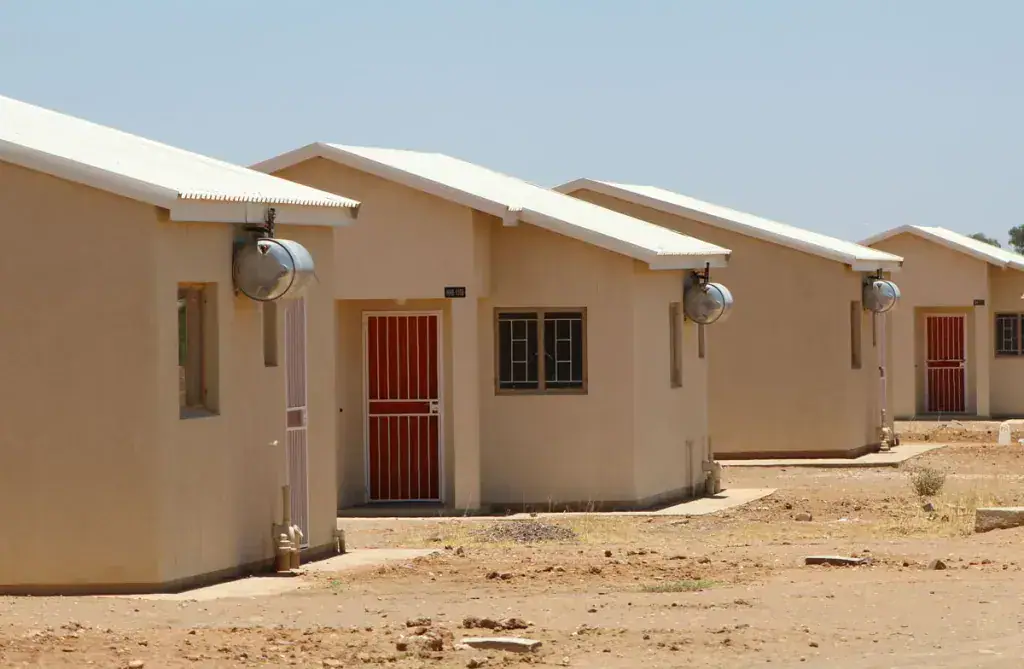
The Government Institutions Pension Fund (Gipf) has invested N$5 billion in housing and property development in Namibia, contributing to the delivery of approximately 12 000 homes and 2 345 serviced plots across the country. Gipf board of trustees chairperson Penda Ithindi disclosed the figures at the Gipf pension and investment symposium in Windhoek, highlighting housing as a key investment priority amid persistent shortages of serviced land and affordable homes.
Ithindi stated that Gipf's investments had created nearly 5 000 jobs across Namibia's 14 regions, covering commercial property, real estate, serviced land, and various housing arrangements. He acknowledged the country's persistent housing shortage, suggesting that institutional investors could play a greater role in addressing the deficit. The pension-backed home loan scheme is one of the interventions intended to expand access to homeownership among eligible Gipf members.
At the same symposium, the National Housing Enterprise (NHE) appealed for N$572.49 million in institutional financing to develop 1 032 housing opportunities in Windhoek, Ongwediva, Oshakati, and Opuwo. NHE manager for infrastructure development Indileni Set-Sam Iipinge said the enterprise was seeking long-term financing partnerships to support land acquisition, infrastructure servicing, and housing construction.
Iipinge described the request as relatively small compared to other funding mentions at the symposium, saying that housing investment should be viewed as both a financial opportunity and a means of improving living conditions. He emphasized that housing is not merely about providing shelter but also about dignity, economic participation, and wealth creation for families.
The NHE's funding request includes N$86.79 million for land acquisition, N$128.40 million for infrastructure servicing, and N$357.30 million for housing construction. The projects are backed by identified demand, implementation capacity, and development plans. Iipinge proposed a revolving development fund that would allow capital recovered from housing sales to be reinvested in subsequent projects.
Iipinge mentioned that the new funding request is separate from NHE's existing N$1.5 billion facility, co-funded by the Development Bank of Namibia and the Development Bank of Southern Africa. This facility, approved in 2024, is expected to reduce the housing deficit by approximately 2 300 units across 27 project sites. Most projects under this facility have already been completed.
Iipinge emphasized that government funding alone cannot address Namibia's housing shortage, and institutional investors like Gipf possess the long-term capital needed to expand housing delivery. He argued that pension funds and other institutional investors could provide the necessary patient and long-term capital to support housing development in the country.
Key points
- Gipf has invested N$5 billion in housing and property development in Namibia.
- NHE seeks N$572.49 million in institutional financing for new housing projects.
- Institutional investors are crucial in addressing Namibia's housing shortage.