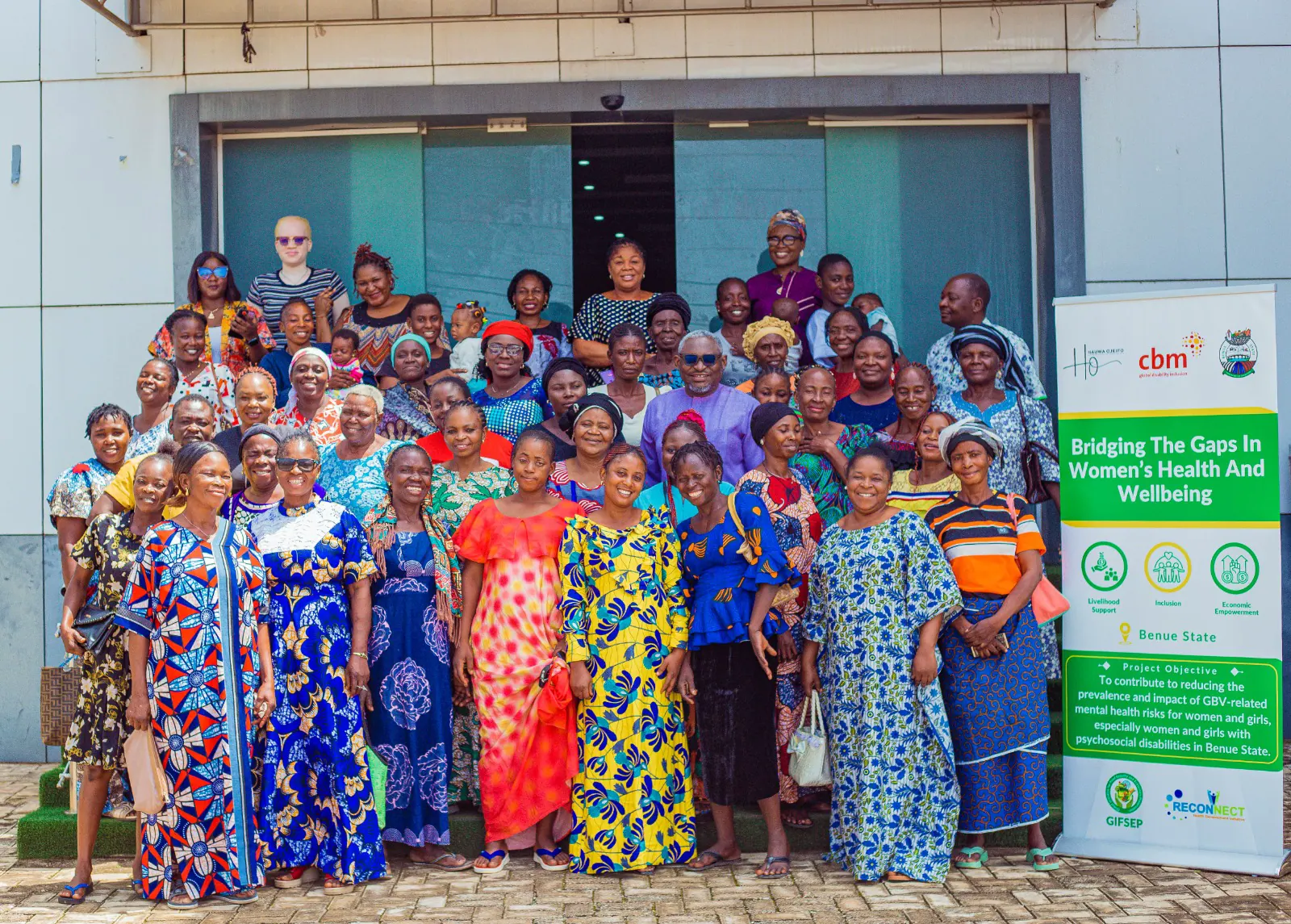
The Global Initiative for Food Security and Ecosystem Preservation (GIFSEP) has initiated a livelihood support programme for 40 women in Benue State, Nigeria. The programme, known as the Bridging the Gaps in Women’s Health and Well-being (BtG) Project, aims to boost economic independence, strengthen household resilience, and help women establish sustainable sources of income. The programme is funded by the Hauwa Ojeifo Global Impact Fund for Women and Girls, with technical support from CBM Global Nigeria.
The women were formally onboarded during an orientation held at Eyah Hotel and Suites in Makurdi, Benue State. The orientation marked the participants’ first direct engagement with the project team and provided an opportunity to familiarise them with the programme’s objectives, implementation timelines, available support, and individual responsibilities. Participants were introduced to the Graduation Approach, a structured, phased intervention designed to help economically vulnerable individuals transition towards sustainable livelihoods, greater resilience, and financial independence.
The Graduation Approach combines social protection with livelihood development, enabling beneficiaries to address immediate household needs while preparing to engage in productive economic activities. According to GIFSEP Executive Director, Dr. Michael Terungwa David, the approach goes beyond providing temporary financial assistance, equipping participants with the resources, skills, and confidence needed to improve their economic circumstances. He stressed that the programme’s success would depend on participants’ commitment, active involvement, and responsible management of the support provided.
Participants will receive conditional cash transfers over six months as part of the programme’s social protection component. The transfers are intended to stabilise household consumption, ease immediate financial pressures, and enable participants to sustain their livelihood activities while working towards self-reliance. Dr. David noted that sustainable progress involves not only increased income but also improved financial resilience, dignity, access to essential services, and social inclusion.
The Project Manager, Dorcas Nicanor, presented an overview of the initiative, outlining participants’ roles, responsibilities, and expectations throughout the implementation period. A dedicated session on safeguarding and gender-based violence (GBV) prevention was facilitated by Dr. Beatrice Onoja, who educated participants on different forms of abuse and encouraged them to memorise emergency contact numbers and use the project’s feedback and safeguarding reporting channels.
One of the significant outcomes of the orientation emerged during the question-and-answer session, when some participants reconsidered and changed the livelihood options they had selected during the earlier verification exercise. The changes followed a clearer understanding of the Graduation Approach and the practical requirements associated with their proposed economic activities, underscoring the importance of informed decisions that reflect beneficiaries’ interests, circumstances, and available opportunities.
Through the BtG Project, GIFSEP and its partners are working to address barriers affecting women and girls by expanding access to livelihood opportunities, strengthening protection mechanisms, and improving support systems that promote economic resilience and social inclusion. The orientation ended on a celebratory note, with participants singing and dancing to mark the beginning of their journey towards stronger livelihoods, greater financial independence, and more secure futures.
Key points
- GIFSEP has enrolled 40 women in a livelihood support programme aimed at boosting their economic independence.
- The programme combines social protection with livelihood development, enabling beneficiaries to address immediate household needs while preparing to engage in productive economic activities.
- Participants will receive conditional cash transfers over six months as part of the programme’s social protection component.