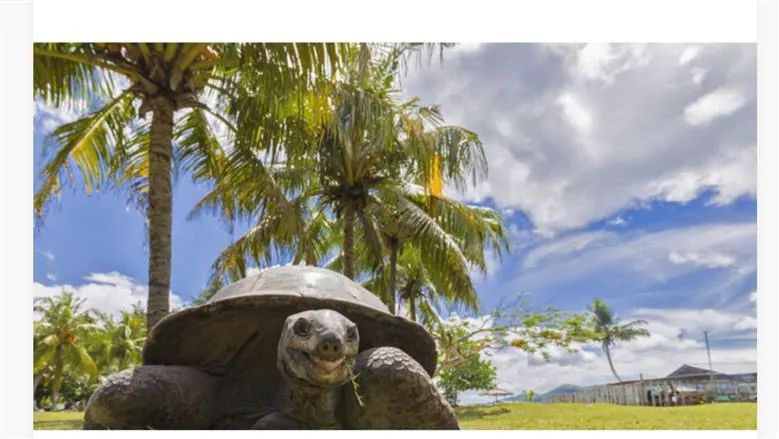
In a remarkable turnaround, the giant turtle population on Seychelles' Aldabra island has surpassed the human population for the first time in centuries. A recent survey revealed over 180,000 giant turtles roaming the island, a significant recovery from the brink of extinction due to hunting and human exploitation. Conservation efforts have played a crucial role in this resurgence, with the island declared a nature reserve in 1981 and later listed as a UNESCO World Heritage Site in 1982.
Before European explorers and sailors arrived in Seychelles in the 15th century, Aldabra island provided a safe haven for giant turtles. The island's natural conditions, including abundant food and scarce predators, allowed the turtles to thrive. However, with the influx of ships, the turtles became easy prey, leading to a significant decline in their population. By the 19th century, only about 1,000 turtles remained on the island.
The recent survey, which used a combination of direct observations and modeling, marks the first accurate estimate of the giant turtle population on Aldabra since the 1990s. According to Frauke Fleischer-Dougli, CEO of the Seychelles Islands Foundation, the turtle population's recovery is a testament to the long-term commitment to environmental protection. This achievement is seen as a positive development for Seychelles and the world.
The conservation efforts have not only helped to increase the turtle population but also provided a safe habitat for them to thrive. The island's unique ecosystem, which includes a diverse range of flora and fauna, has been protected through strict conservation measures. However, despite this success, threats to the turtles' survival still exist, including habitat destruction, climate change, and invasive species.
Climate change poses a significant threat to the turtles' survival, with rising sea levels and increased droughts affecting the island's ecosystem. Additionally, stray cats and black rats on the island continue to pose a risk to turtle eggs and hatchlings. Continued conservation efforts are necessary to protect the turtles and ensure their long-term survival.
The recovery of the giant turtle population on Aldabra island serves as a model for conservation efforts globally. It highlights the importance of long-term commitment to environmental protection and the positive impact it can have on endangered species. The Seychelles Islands Foundation and other conservation organizations will continue to work together to protect the turtles and their habitat.
The giant turtle population on Aldabra island is an important part of Seychelles' natural heritage, and efforts to protect it will continue. The island's unique ecosystem and biodiversity make it a valuable resource for scientific research and conservation. As the turtle population continues to thrive, it is essential to remain vigilant and address the ongoing threats to their survival.
Key points
- Conservation efforts have led to a significant increase in the giant turtle population on Seychelles' Aldabra island.
- The turtle population has surpassed the human population on the island for the first time in centuries.
- Continued conservation efforts are necessary to protect the turtles from ongoing threats such as climate change and invasive species.