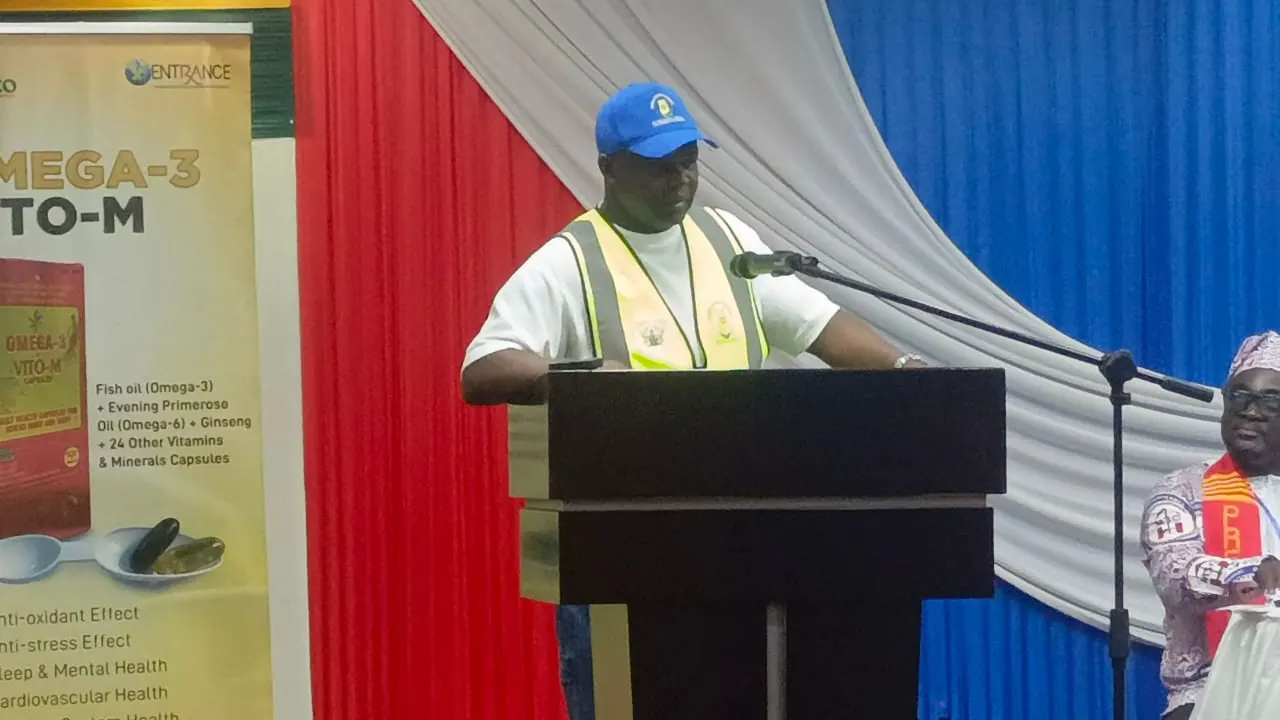
The Director-General of the Ghana Health Service (GHS), Dr. Samuel Kaba Akoriyea, has emphasized the importance of leadership at every level in making free primary healthcare a success. He made this statement at the 24th Annual General and Scientific Conference of the Medical Superintendents Group in Ho. Dr. Akoriyea encouraged Medical Superintendents to be the hope for citizens in their positions, just like President John Mahama relies on ministers, directors, and medical superintendents to deliver healthcare services.
Dr. Akoriyea shared a story about an 87-year-old man, Benjamin Kuri, who was born in 1939 and had not visited a hospital in 54 years due to distance, cost, and fear. However, a recent home visit by community health nurses found Mr. Kuri to be double-disabled and in need of medical attention. This encounter, Dr. Akoriyea said, was a reminder that many parents, especially those in villages, sacrifice to educate their children with the hope that they will give back to their communities.
The GHS Director-General reported that 135 districts are currently implementing free primary healthcare, with 3,774 Community Health and Planning Services (CHPS) zones active. Over 2.5 million clients have been registered, and more than 800,000 home visits have been conducted. However, Dr. Akoriyea warned that referrals could cause overflows at district and regional hospitals and announced plans to introduce a patient navigator system to manage this.
Dr. Akoriyea also spoke against the hoarding of equipment and drugs, stating that a facility keeping X-ray machines without radiographers and refusing to share medicines with other facilities in need would be doing a disservice to the Ghanaian public. He encouraged Medical Superintendents to do their best, leave a legacy, and change their ways to adapt to the changing times.
Prof. Lydia Aziato, Vice-Chancellor of the University of Health and Allied Sciences, Ho, shared a personal experience of inadequate healthcare service, highlighting the variability in healthcare quality across different facilities and regions. She urged healthcare leaders to do their best in their responsibilities, knowing that they could also be consumers of the same service.
Dr. Gina Teddy, representing the GHS Council, reiterated that leadership is key to achieving every policy, and that the successful implementation of the free healthcare policy lies with healthcare leaders. She encouraged them to do things differently and adapt to the constraints.
The ongoing conference, being held from October 5-10, has the theme "Leadership and Innovation in Free Primary Healthcare towards Achieving Universal Health Coverage in Ghana: The Role of Medical Superintendents." The event aims to bring together healthcare leaders to discuss ways to improve healthcare delivery in Ghana.
Key points
- Dr. Samuel Kaba Akoriyea emphasizes leadership's role in making free primary healthcare succeed.
- 135 districts are currently implementing free primary healthcare in Ghana.
- A patient navigator system will be introduced to manage referrals and prevent overflows at district and regional hospitals.