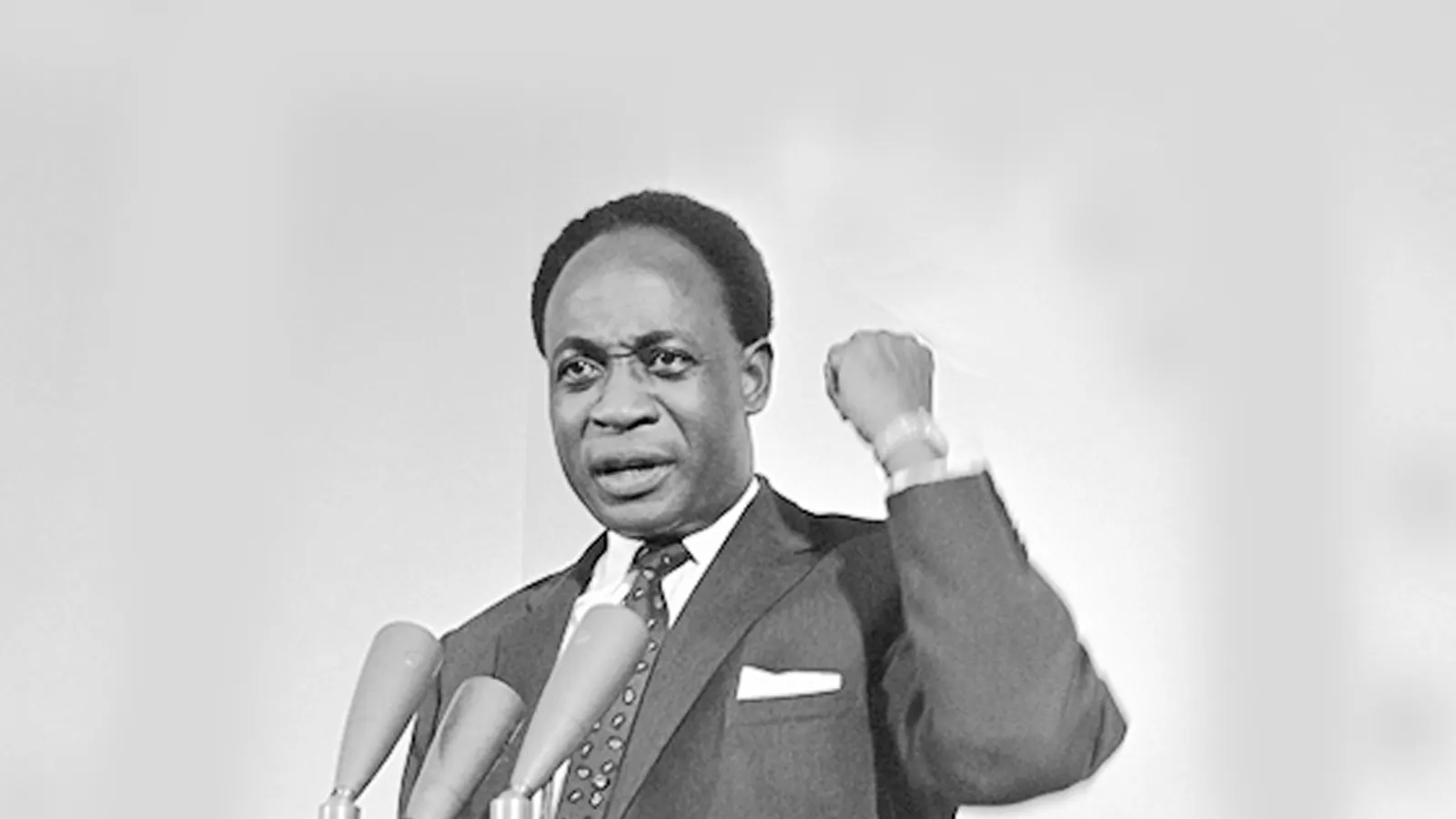
Ghanaians and Pan-Africans worldwide are commemorating the 117th birthday of Dr. Kwame Nkrumah, a founding father and first President of Ghana, with renewed calls to examine and apply his development ideas to address contemporary challenges. The occasion, observed as Founder's Day, is a statutory public holiday in Ghana, following Parliament's restoration of September 21 as Founder's Day on June 25, 2025.
Professor Samuel Ntewusu, Director of African Studies at the University of Ghana, said the significance of Nkrumah's legacy should be assessed beyond political affiliations and contemporary partisan debates. He urged political parties and citizens to critically examine Nkrumah's policies and identify ways to apply relevant aspects to Ghana's development and the advancement of Africa.
Dr. Nkrumah was born on September 21, 1909, at Nkroful in the then Gold Coast, and trained as a teacher before traveling to the United States in 1935 for further studies. He later moved to Britain, where he helped organize the Fifth Pan-African Congress in Manchester in 1945, an important gathering in the struggle against colonialism and racial discrimination.
Dr. Nkrumah returned to the Gold Coast in 1947 and became actively involved in the independence movement. In 1949, he formed the Convention People's Party (CPP) and launched the "Positive Action" campaign, mobilizing workers and citizens around the demand for self-government. Following the CPP's victory in the 1951 elections, Dr. Nkrumah became Leader of Government Business and subsequently Prime Minister in 1952.
Under Dr. Nkrumah's leadership, the Gold Coast attained independence from Britain on March 6, 1957, becoming Ghana, the first sub-Saharan African country to gain independence from colonial rule. He became the country's first Prime Minister and, following the establishment of the republic in 1960, its first President. His administration pursued an ambitious program of education, industrialization, infrastructure development, and social transformation.
Prof Ntewusu said Ghana's political identity was "directly linked to the persona of Kwame Nkrumah", acknowledging that although several individuals contributed to the independence struggle, Nkrumah's strategies were central to its success. He identified economic independence, natural resource extraction, education, urbanization, agriculture, and energy as areas in which Nkrumah's thinking continued to merit attention.
In 2000, listeners of the BBC World Service voted Dr. Nkrumah the "African Man of the Millennium", reflecting his continuing international recognition for his role in Africa's independence and liberation struggles. Dr. Nkrumah authored 15 major books and published collections of political writings and pamphlets during his lifetime and posthumously, including "Towards Colonial Freedom" and "Africa Must Unite".
Key points
- Dr. Nkrumah's development ideas and policies remain relevant to Ghana's development and the advancement of Africa.
- Prof Ntewusu urges stakeholders to critically examine Nkrumah's policies and apply relevant aspects to contemporary development challenges.
- Dr. Nkrumah's legacy extends beyond Ghana, with his advocacy for Pan-Africanism and his role in the establishment of the Organisation of African Unity (OAU), the precursor to the African Union (AU).