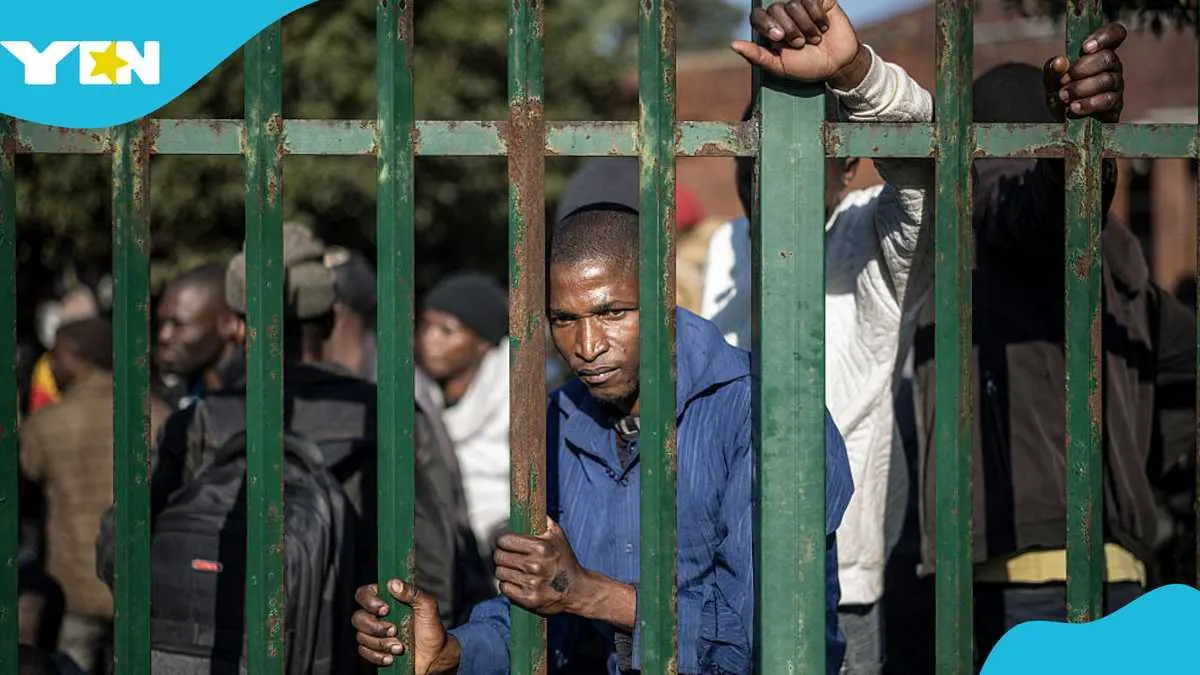
Protesting groups in South Africa have issued an ultimatum to Ghanaian shop and salon owners, demanding they leave their premises by September 30. The threats have sparked fear among the Ghanaian community, who are still reeling from a wave of xenophobic unrest that has already forced over 1,900 Ghanaian nationals to flee this year. Many of those affected are struggling to find safety and assistance.
The situation has become increasingly dire for Ghanaian traders, with some reporting that written notices have been delivered to their businesses, instructing them to clear out before the end of the month. However, the threats are not uniform across the country, and the situation in some areas has become unsettling for the Ghanaian community. A Ghanaian woman still living in South Africa said the community is facing an uncertain future.
Some Ghanaian nationals who fled earlier attacks have found themselves stranded without food or shelter. They had relocated to other provinces hoping to find safety, but instead, they are facing significant challenges. An appeal to the Ghanaian mission for help was unsuccessful, as embassy staff informed them that the government's repatriation programme had already closed.
Ghana's Ministry of Foreign Affairs had resumed evacuation flights from South Africa in July 2026, moving roughly 1,000 Ghanaians in that phase alone. The ministry prioritized women, children, the elderly, and the sick and has funded every evacuation exercise itself since May 2026. However, with the repatriation exercise now closed, those still targeted may have to fund their own return to Ghana or find alternative shelter within South Africa.
The unrest turned deadly in June when a Ghanaian national, Bashiru Isak, 40, was fatally shot during anti-immigrant demonstrations in Cape Town on June 30, 2026. His death prompted Accra to lodge a formal protest with South African authorities. The incident highlighted the severity of the situation and the need for a resolution.
The renewed ultimatum affects Ghanaian traders whose livelihoods depend on shops and salons operating in South African provinces. Many had already lost businesses or fled once during earlier rounds of violence this year. The Ghanaian government has not issued an official response to the new deadline, and it remains unclear whether evacuation flights will reopen if the threats materialize.
Xenophobic attacks have periodically flared in parts of South Africa, and it is unclear whether authorities have responded to the reported notices given to Ghanaian business owners. The situation remains uncertain, and the Ghanaian community is facing significant challenges. The international community is watching closely, hoping for a peaceful resolution to the crisis.
Key points
- The Ghanaian government has funded every evacuation exercise itself since May 2026.
- Over 1,900 Ghanaian nationals have been forced to flee South Africa this year due to xenophobic unrest.
- The September 30 deadline has sparked fear among the Ghanaian community in South Africa.