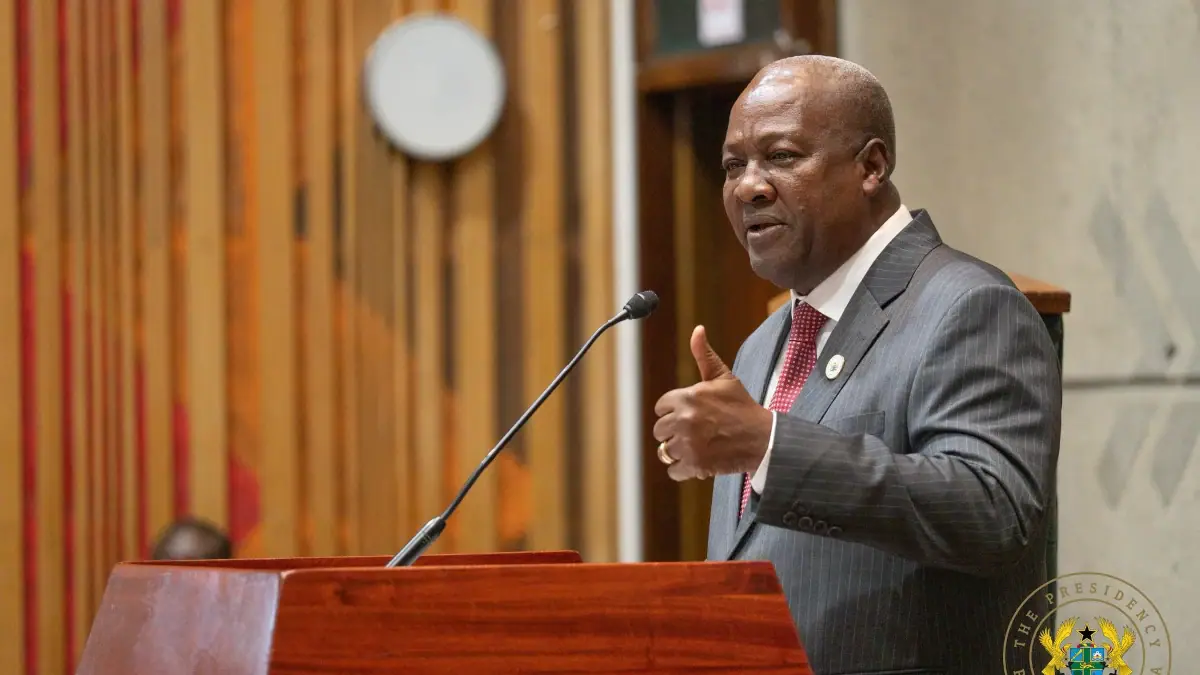
Ghanaian President John Dramani Mahama has called for a new approach to reparations for the transatlantic slave trade and colonialism, focusing on economic and social cooperation between Africa and former colonial powers. Mahama argues that reparations do not necessarily require direct financial compensation. He made these remarks during a press conference at the presidency, following several international trips. The president emphasized the lasting impact of these historical events on affected countries.
Mahama highlighted the economic mechanisms that characterized the slave trade and colonialism, including the exploitation of unpaid labor and the extraction of African natural resources for the benefit of colonial powers. He suggested that investments in education, healthcare, economic growth, and debt treatment could help mitigate historical injustices through cooperation. This approach aims to address the ongoing consequences of these events.
The Ghanaian president's comments come after the United Nations General Assembly adopted a resolution on March 25, 2026, recognizing the transatlantic slave trade and racial enslavement as a "crime against humanity." The resolution, sponsored by Ghana, received 123 votes in favor, with three countries opposing it and 52 abstaining. This recognition provides a backdrop for Mahama's advocacy for a cooperative approach to reparations.
Mahama also mentioned initiatives by certain religious institutions, such as the Church of England's announcement of a £100 million fund to address historical consequences of the slave trade. He emphasized the need for cooperation in areas like education, healthcare, and economic growth to mitigate historical injustices. This cooperative approach could provide an alternative to direct financial compensation.
In addition to reparations, Mahama expressed concerns about the financial difficulties faced by developing countries. He criticized the loan conditions imposed on African economies and the risk premiums that contribute to high financing costs, approximately 11%. According to Mahama, 54 countries allocate more resources to debt repayment and interest payments than to healthcare.
The Ghanaian president highlighted the specific challenges faced by his country, which needs to mobilize around 50 billion cedis (approximately $5 billion) to meet its debt repayment obligations in 2027. Mahama's advocacy for a cooperative approach to reparations and his concerns about debt and financing costs reflect his efforts to address historical injustices and promote economic development in Africa.
Mahama's proposal for a cooperative approach to reparations offers a new perspective on addressing historical injustices. By focusing on economic and social cooperation, he aims to promote development and mitigate the ongoing consequences of the transatlantic slave trade and colonialism. This approach may provide a more constructive and sustainable way to address these issues.
Key points
- President Mahama advocates for economic and social cooperation as an alternative to financial reparations for historical injustices.