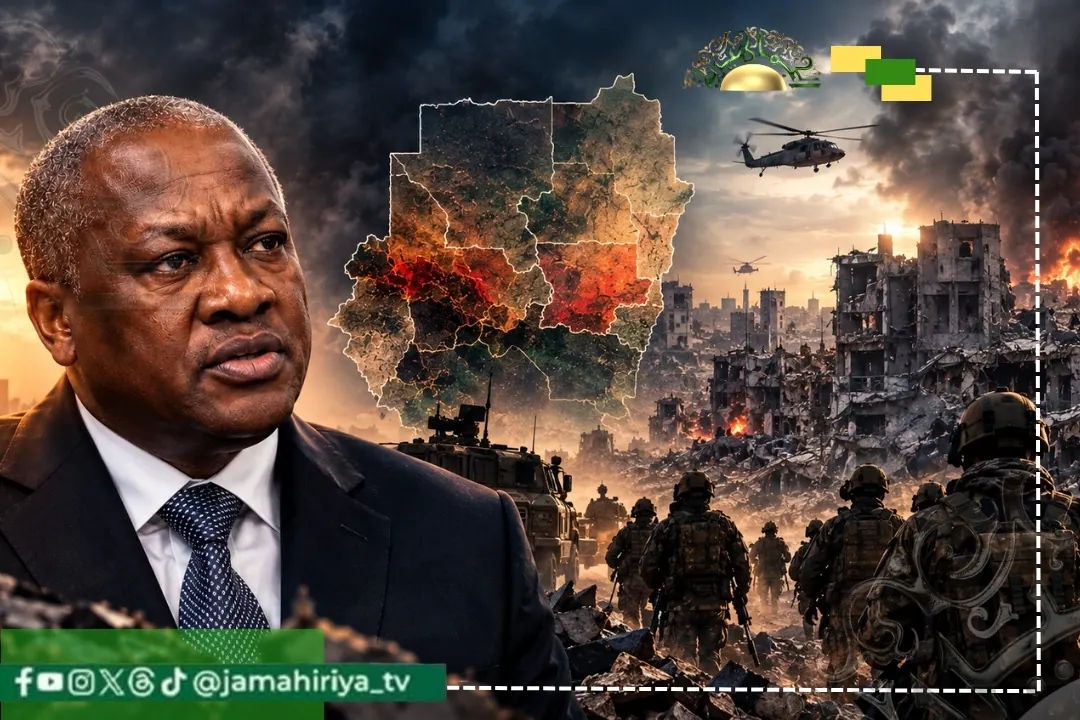
Ghanaian President John Dramani Mahama has attributed the worsening security situation in the Sahel region and West Africa to the 2011 NATO military intervention in Libya. Speaking at the Council on Foreign Relations, Mahama warned that the collapse of the Libyan state has led to the proliferation of weapons and fighters in regional countries, contributing to jihadist uprisings amid fragile security and political situations.
Mahama expressed concern that the security deterioration in the Sahel could spread to other West African countries, including Ghana. He emphasized that his country is not immune to the threats posed by armed groups in the region. The President's comments come as the Sahel faces growing security challenges, including military coups, declining cooperation between regional countries and their international partners, and rising militant activity.
The Ghanaian President called on African and international leaders to address the recent military coups in Mali, Burkina Faso, and Niger as part of a broader crisis linked to weak state institutions, and political, security, and economic challenges. Mahama urged a comprehensive approach to address these issues, stressing that the situation in the Sahel has far-reaching implications for regional stability.
According to Mahama, the collapse of Libya has created a security vacuum, allowing armed groups to flourish in the Sahel region. He noted that these groups pose a significant threat to regional countries, citing the growing presence of jihadist groups and the spread of small arms and light weapons. The President emphasized the need for a coordinated regional response to address these security challenges.
Mahama's comments reflect growing concerns about the security situation in the Sahel, where countries are struggling to contain militant groups. The region has experienced a surge in attacks by extremist groups, including al-Qaeda and the Islamic State, which have taken advantage of the security vacuum created by the Libyan conflict. The situation has significant implications for regional stability and global security.
The Ghanaian President's warning about the potential for the security crisis to spread to other West African countries highlights the need for a regional approach to address these challenges. Mahama's comments also underscore the importance of addressing the root causes of the crisis, including weak state institutions, poverty, and unemployment. The international community has a critical role to play in supporting regional efforts to stabilize the Sahel and prevent further destabilization.
Mahama's speech at the Council on Foreign Relations highlights the need for a comprehensive approach to address the security challenges in the Sahel region. His comments also emphasize the importance of international cooperation to address the root causes of the crisis and prevent further destabilization. The President's warning about the potential consequences of inaction underscores the need for urgent action to address the security situation in the Sahel.
Key points
- NATO's 2011 intervention in Libya contributed to the country's collapse and fuelling of terrorism in the Sahel region.
- The security deterioration in the Sahel could spread to other West African countries, including Ghana.
- The international community has a critical role to play in supporting regional efforts to stabilize the Sahel and prevent further destabilization.