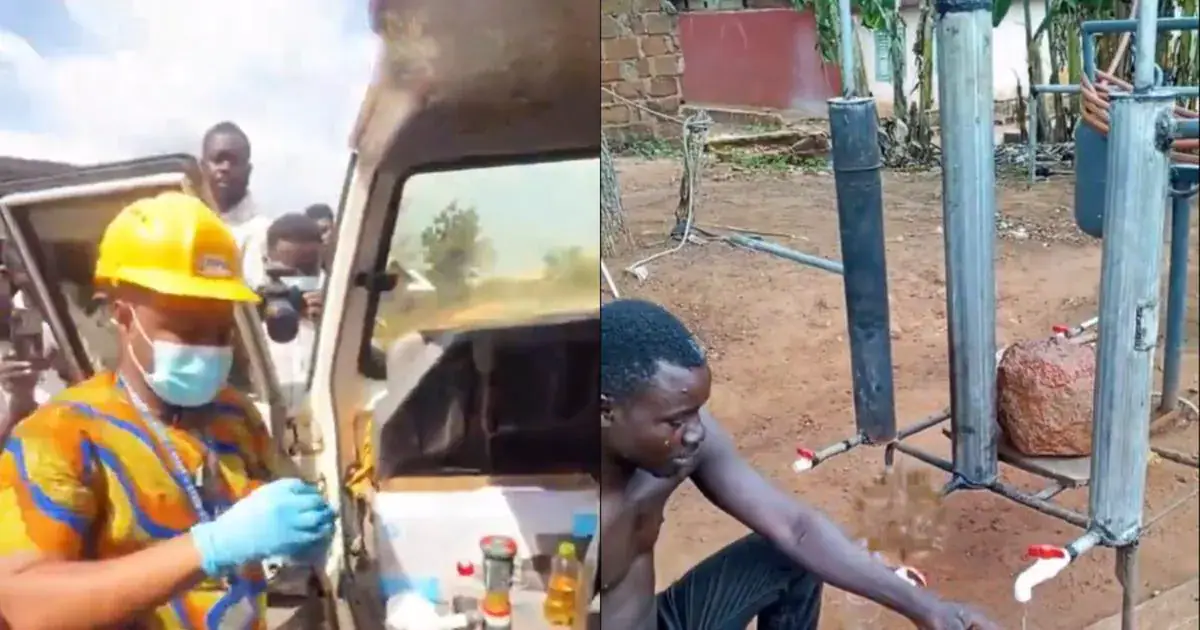
A viral plastic-to-fuel project by 38-year-old Ghanaian innovator Michael Adaesame from Asesewa in the Eastern Region failed initial mobile lab tests conducted by the National Petroleum Authority (NPA). The tests, which were conducted using a mobile laboratory kit, indicated that the petrol and diesel samples produced by Adaesame's locally fabricated plant did not meet the required standards for motor vehicle use.
During the demonstration, Adaesame explained how he heated plastic waste in a specially prepared barrel, producing a grease-like substance before separating the different fuel products. The process involved applying heat to the chamber and collecting the resulting products. The NPA team, led by Regional Director Salifu S. Nagumsi, brought a mobile laboratory kit to conduct preliminary tests on the samples.
Despite the initial findings, the NPA delegation expressed interest in the innovation and the possibility of supporting its development. The team acknowledged Adaesame's interest in converting plastic waste into useful products, saying he had no hidden motives for engaging in this production. The NPA indicated that it would consider possible support for the initiative, particularly its potential environmental benefits.
The initial test results mean the locally produced samples cannot yet be considered suitable for use as motor vehicle fuel. Further laboratory analysis and technical improvements will be needed to determine whether the products can meet the required standards. The NPA has collected additional samples for comprehensive laboratory analysis in Accra.
Officials from the NPA have cautioned motorists in the area against using the fuel due to safety and quality concerns. The delegation also expressed interest in supporting the development of the project, with a member of the team saying, "Our Chief Executive would welcome that idea wholeheartedly." The team will provide a report to their Chief Executive, who will then decide on the next steps.
The project has garnered significant attention, with many Ghanaians following its development. The NPA's involvement and potential support could be crucial in helping Adaesame refine his innovation and make it viable for use. The project's success could also have significant environmental benefits, as it aims to convert plastic waste into useful products.
The NPA's tests and potential support for the project demonstrate the Authority's commitment to ensuring the quality and safety of fuel products in Ghana. Further analysis and technical improvements will be necessary to determine the project's viability, but the initial interest shown by the NPA is a positive step for Adaesame's innovation.
Key points
- The project failed initial tests but has potential environmental benefits.
- The NPA is interested in supporting technical improvements.
- Further laboratory analysis is needed to determine the project's viability.