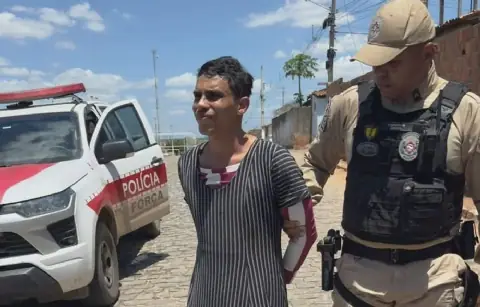
The recent midnight arrest and subsequent two-week court remand of Salomey Awiti Bafoh, a 40-year-old Senior Nursing Officer and mother of three from Techiman, has sent shockwaves through Ghana. The Ghana Police Service pursued her as an alleged accomplice to a UK-based TikTok influencer known as "Ghana Jollof," who is wanted for allegedly spreading false coup rumors. The state’s decision to aggressively lock up a local public health worker has triggered an intense national debate on free speech, digital accountability, and judicial fairness.
The case involves two individuals: Barbara Asantewaa Kodua, the UK-based social media commentator wanted by the Ghana Police CID, and Salomey Awiti Bafoh, who has pleaded not guilty to charges of abetment of crime under the Criminal Offences Act. Her defense lawyer, Nana Agyei Baffour Awuah, slammed the state's tactics, declaring that the charges against his client are frivolous and without basis. The lawyer raised concerns about Salomey's forceful pickup at 11:30 p.m. and transportation over nine hours from Techiman to Accra without her family or legal team being notified.
The judicial process has also been questioned, with co-counsel Enoch Afuakwa challenging the court’s decision to impose a two-week remand when authorities openly admitted the actual operator of the account was in the UK. Afuakwa noted that the court weighed into the arena of the state against the innocent citizen. The case spotlights a dangerous trend in how digital regulations are applied in Ghana, evolving from targeted security tools into broad weapons against digital expression.
The state's reliance on Section 208 of the Criminal Offences Act (Act 29) to prosecute the "publication of false news" has raised concerns. The Cybersecurity Act, 2020 (Act 1038), which was enacted to combat legitimate threats like hacking and cyber-terrorism, is increasingly used to police political discourse on social media platforms. The accused's lawyer argued that the charges against Salomey are an affront to the rule of law and set a bad precedent.
The case has sparked a strong reaction from various stakeholders, including high-profile political figures, the Ghana Registered Nurses and Midwives Association (GRNMA), and traditional rulers. Vice President Dr. Mahamudu Bawumia publicly criticized the heavy-handed midnight arrest, stating that national security agencies should not be weaponized against citizens over political speech. The GRNMA leadership has actively deployed high-powered delegations to the courtroom, publicly vowing to defend their member's rights.
The opposition has also reacted to the case, with Minority members and political commentators labeling the government's stance as hypocritical. Kevin Taylor argued that the security agencies involved operate directly under the executive branch's current mandate. Local traditional rulers, including the Jemahene and Nkoranza Kyidomhene, have publicly vouched for the nurse's character, pleading for judicial transparency and an immediate grant of bail.
To prevent such polarizing national security stand-offs and safeguard both state stability and citizen rights, stakeholders have proposed several measures. These include judicial discretion on remands, legislative review of digital laws, public education on digital literacy, and security agency reform. The judiciary must exercise extreme caution when denying bail to citizens with fixed residences and clear professional ties, ensuring that pretrial detention is not used as a punitive tool.
Key points
- The arrest of Salomey Awiti Bafoh has sparked a national debate on free speech and state overreach in Ghana.
- The case highlights the need for a review of digital laws to prevent their misuse as tools for suppressing digital expression.
- Stakeholders are calling for judicial discretion on remands and security agency reform to prevent similar incidents in the future.