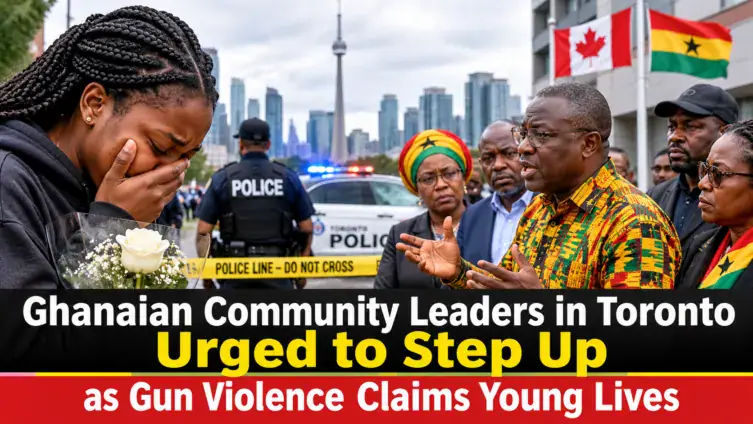
The growing number of young people losing their lives to gun violence in Canada has prompted renewed calls for Ghanaian parents and community leaders to take a more active role in protecting the next generation. The appeal comes amid grief over the reported killings of young people, including Javits Frimpong in New York, 18-year-old Malik Abass in Toronto, and Brandon Blake in Etobicoke. These incidents have intensified concerns among sections of the Ghanaian community about the safety of young people.
Kwei Armah, a member of the Ghanaian community, has made an emotional appeal to parents and leaders to take the security of their children and siblings seriously. He believes that parents must make time to understand their children's experiences, friendships, difficulties, and concerns, rather than assuming that providing material needs is enough to secure their future. Armah urges parents to engage in more conversations with their children to raise them well and educate them by paying more attention to their needs.
The recent deaths have brought a painful reminder that access to education, employment, and other opportunities cannot guarantee a future if young people are exposed to violence and other dangers. For many Ghanaian families who moved to Canada in search of better opportunities, securing a brighter future for their children remains a central part of the migration dream. However, the challenge is to ensure that youth safety becomes a shared responsibility rather than an issue that receives attention only when another life is lost.
The latest incident involves the fatal shooting of 18-year-old Brandon Blake of Barrie near Martin Grove Road and Finch Avenue West in Toronto. According to a Toronto Police Service news release, officers responded to reports of gunshots at about 12:56 a.m. on Tuesday, November 10. Officers found Blake suffering from gunshot wounds, and despite life-saving efforts, he was pronounced dead at the scene. Police have identified 19-year-old Joseph Kunene of Toronto as a suspect wanted for first-degree murder.
Armah believes that the responsibility for protecting young people should not rest with parents alone. He is urging chiefs, religious leaders, community associations, and other influential members of the Ghanaian diaspora to make youth welfare a consistent priority. This could mean creating more opportunities for young people to speak openly about their experiences, connecting them with trusted mentors, and strengthening support systems for families.
The Ghanaian community in Canada has worked over the years to preserve its cultural identity, support families, and create opportunities for the next generation. However, Armah's message is that these efforts must also place greater emphasis on the safety, wellbeing, and upbringing of young people. His appeal is simple: parents must be present in their children's lives, community leaders must take a more active interest in their welfare, and families must act before another tragedy strikes.
The appeal for stronger community involvement comes as Toronto's 34th homicide of 2026 was recorded. The killing of Brandon Blake, alongside the reported killing of Frimpong in New York and Abass in Toronto, has prompted questions about how families and community institutions can better support young people and help prevent violence. The challenge is to ensure that youth safety becomes a shared responsibility rather than an issue that receives attention only when another life is lost.
Key points
- Community leaders are being urged to make youth welfare a consistent priority to help prevent gun violence among young people.