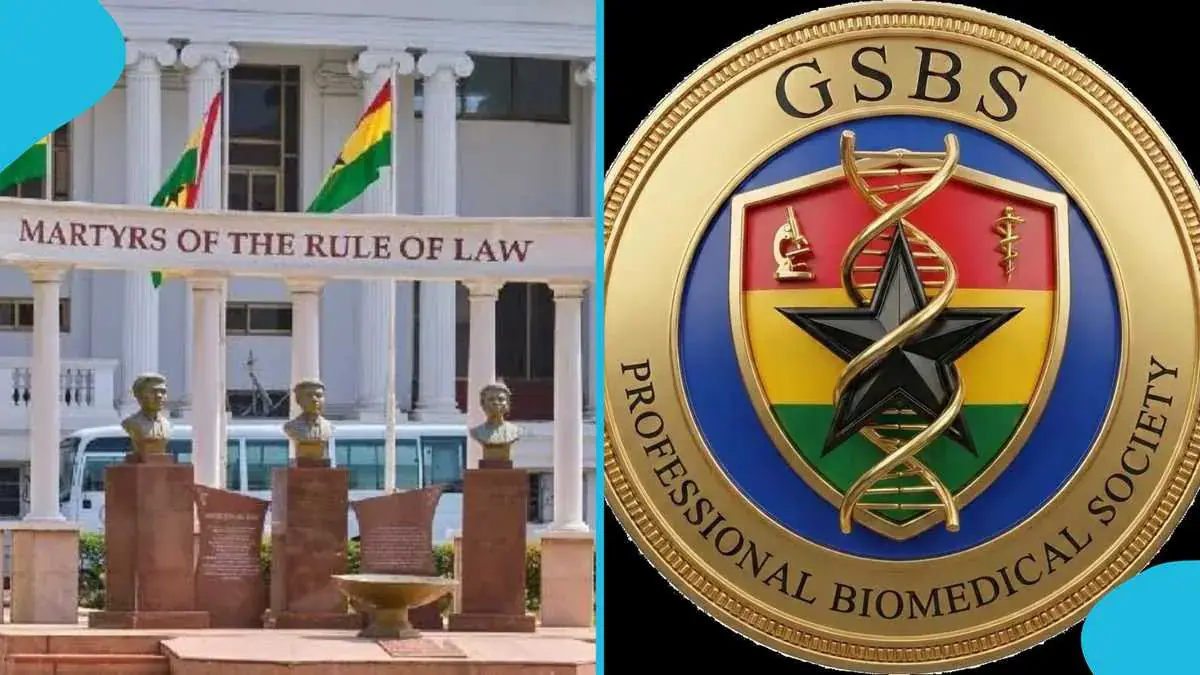
The Ghanaian Society for Biomedical Scientists (GSBS) has given the Allied Health Professions Council (AHPC) 14 days to respond with a clear registration route for biomedical scientists. If the Council fails to act, the Society is prepared to seek a judicial review at the High Court. This move comes after years of correspondence between the two bodies without a meeting. The GSBS is seeking a formal or provisional registration category for the profession, a dedicated licensing examination, and structured engagement with the Council.
The issue at hand is that Ghanaian graduates with accredited BSc Biomedical Sciences degrees are unable to register or sit a licensing exam, locking them out of the job market. The GSBS argues that while AHPC has added other emerging disciplines to its regulated list since 2013, Biomedical Sciences graduates from programmes accredited by the Ghana Tertiary Education Commission (GTEC) still have no distinct registration category or licensing examination. This has resulted in graduates being unable to legally take up clinical laboratory and diagnostic roles in Ghana's health system.
The GSBS and AHPC have been in communication since September 2026, with the Council responding on 30 September to say a meeting would be arranged once it had consulted stakeholders. The Society submitted detailed course-by-course curriculum information on 7 October and followed up on 8 and 23 October without receiving a reply. In its latest letter, GSBS has asked AHPC for an indicative meeting date and the contact details of a designated secretariat officer.
The GSBS has also invoked the Right to Information Act, 2019 (Act 989), to request the Council's official list of registered professions and any assessment it has carried out on the Biomedical Sciences curriculum. The Society stresses that Biomedical Sciences is a separate field from Medical Laboratory Science, with its own curriculum and practicum requirements. Although the two share core subjects, Biomedical Sciences extends into molecular diagnostics, human genomics, bioinformatics, and other areas.
The GSBS says the Ghanaian curriculum aligns with criteria used by the United Kingdom's Institute of Biomedical Science. The Society is seeking a formal or provisional registration category for the profession, a dedicated licensing examination, and structured engagement with the Council. It emphasises that it is not seeking automatic licensing for its members or any move to displace Medical Laboratory Science as a separate field.
The Society told AHPC that continued delays could leave it with no choice but to pursue a judicial review under Article 23 of the 1992 Constitution, which requires administrative bodies to act fairly and reasonably. The GSBS stressed that litigation is not its first preference, but it is prepared to take this step if necessary. The letter was signed by GSBS founding member and President Evans Kwabena Abor and addressed to AHPC Registrar Professor Shirazu Issahaku.
Until AHPC opens a registration route, graduates holding accredited Biomedical Sciences degrees remain unable to legally take up clinical laboratory and diagnostic roles in Ghana's health system. The GSBS is urging AHPC to take immediate action to address this issue and create a pathway for biomedical scientists to register and contribute to the country's healthcare system.
Key points
- The GSBS has given AHPC 14 days to respond with a clear registration route for biomedical scientists.
- Biomedical scientists are seeking a formal or provisional registration category, a dedicated licensing examination, and structured engagement with AHPC.
- The issue has been ongoing since 2013, with graduates unable to register or sit a licensing exam despite completing their studies.