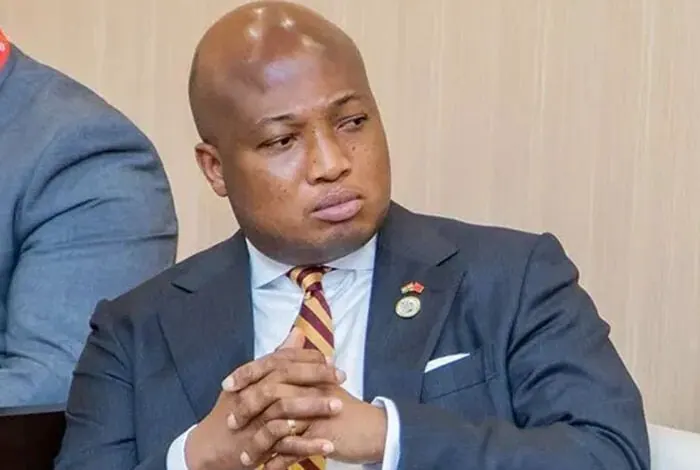
Ghana's Foreign Affairs Minister, Samuel Okudzeto Ablakwa, has rejected calls to abolish the International Criminal Court (ICC), advocating instead for the institution to be strengthened. He made these remarks at a High-Level Plenary Meeting at the United Nations in New York, marking the 25th anniversary of the Durban Declaration and Programme of Action. Mr. Ablakwa emphasized that the ICC should serve as a collective bulwark against crimes against humanity, racism, and genocide.
Mr. Ablakwa stated that Ghana remains committed to the principles of the Durban Declaration and Programme of Action, which aims to confront racism, racial discrimination, xenophobia, and related intolerance. He stressed that serious violations of these principles should attract severe consequences. Ghana, he said, takes the firm view that perpetrators of crimes against humanity must face consequences, and therefore, the ICC needs protection, not condemnation.
The Durban Declaration, adopted 25 years ago, represents a collective commitment to addressing historical injustices and dismantling systems that perpetuate inequality. Mr. Ablakwa commended the United Nations for organizing the commemorative event, recalling the adoption of a global framework aimed at confronting racism. He emphasized that the Declaration affirmed a shared responsibility to address historical injustices and dismantle structures that perpetuate inequality.
Despite the Declaration's adoption, Mr. Ablakwa expressed concern that the world is still grappling with racial inequality. He questioned why, 25 years after the Declaration, it is still necessary to remind people that all men and women are created equal. The minister cited examples of ongoing conflicts and humanitarian crises, including the situation in Palestine and Sudan, as evidence of the gap between international commitments and their implementation.
Mr. Ablakwa also criticized the failure of the international system to fully reflect Africa's place in global decision-making. He argued that the principles of the Durban Declaration would remain incomplete if Africa, with a population of about 1.4 billion people, continued to lack a permanent seat on the UN Security Council. The minister emphasized that the Durban Commitments must become a reality, not just a slogan.
On reparatory justice, Mr. Ablakwa stressed that the continuing relevance of the Durban Declaration is rooted in its recognition of historical injustices that have contributed to persistent inequalities. He referred to paragraph 13 of the Durban Declaration, which recognizes slavery as a crime against humanity. Ghana, he said, has taken concrete steps to address the continuing consequences of historical injustices, including the adoption of a landmark resolution declaring the trafficking of enslaved Africans as the gravest crime against humanity.
Mr. Ablakwa renewed Ghana's call for reparatory justice, emphasizing that it is essential to restoring dignity, addressing inequalities, and building long-lasting trust. He asked for a sincere apology, the return of looted assets, repair for the harm that still lives on, and a promise that it will never happen again. The minister's remarks reflect Ghana's commitment to the principles of the Durban Declaration and its objectives, including the pursuit of reparatory justice and the creation of a world where all people are treated equally.
Key points
- Ghana rejects calls to abolish the International Criminal Court, advocating for its strengthening to hold perpetrators of crimes against humanity accountable.
- The Durban Declaration, adopted 25 years ago, aims to confront racism, racial discrimination, xenophobia, and related intolerance.
- Ghana renews its call for reparatory justice, emphasizing its importance in restoring dignity, addressing inequalities, and building long-lasting trust.