Ghana has managed to avoid a terrorist attack on its soil despite the spread of extremist violence across West Africa. However, the killing of seven Ghanaian tomato traders in Burkina Faso in February 2026 highlights that the country's security cannot be measured solely by its borders. The traders were among 18 who had travelled to Titao, a town in northern Burkina Faso, to buy tomatoes. Suspected Islamist militants attacked the town, separating men from women before opening fire.
The attack in Burkina Faso exposed the practical limits of thinking about terrorism only in terms of an attack within national territory. Families, traders, and transport operators remain connected to places where armed groups are active, and violence across a border can have immediate consequences at home. Ghana's Interior Minister, Mohammed Mubarak Muntaka, reported that some members of the group survived with injuries, while others escaped unharmed.
Major General Timothy Baa-Taa-Banah, Director of Ghana's National Counter-Terrorism Fusion Centre, warned in July 2026 that more than 2,000 terrorist attacks had resulted in over 8,000 deaths across the Sahel and wider West African region. He noted that fatalities had risen by 14 per cent in the first half of the year. Ghana, he emphasized, was not immune simply because it had not become a primary theatre of attacks.
The Counter Terrorism Project disclosed that the groups contributing to regional insecurity do not all operate in the same places or under a single command. Al-Qaeda-linked Jama'at Nusrat al-Islam wa al-Muslimin (JNIM) is deeply entrenched in parts of the Sahel and has intensified its activity in northern Benin. Islamic State West Africa Province (ISWAP) has principally operated around the Lake Chad basin, affecting Nigeria and neighbouring countries.
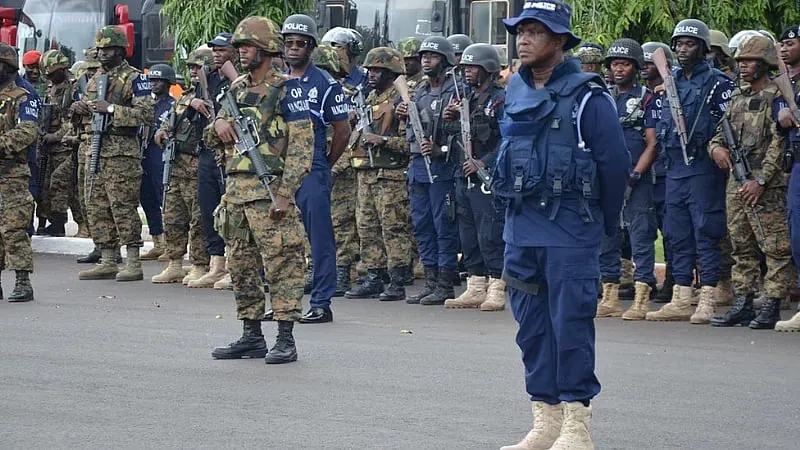
Ghana's challenge is therefore twofold: protect people and communities within its territory, and remain alert to developments beyond it. Neither objective can be met by treating the absence of a domestic attack as proof that the threat has disappeared. The country's approach combines conventional security work with efforts to involve communities, including community engagement, border technology, intelligence operations, cross-agency training, and media cooperation.
Ghana has invested in prevention, including the use of systems such as "Immigration 360" to improve passenger processing and data management. The "See Something, Say Something" campaign encourages residents to report activity that may present a security risk. International cooperation has reinforced these efforts, including a US donation of 84 pallets of equipment, valued at about $4 million, to the Ghana Armed Forces in July 2026.
Despite these efforts, gaps remain, particularly in monitoring the country's northern frontier, which includes communities whose social and economic ties extend into neighbouring countries. Unmonitored crossing paths and illicit trade also pose a risk. Cooperation among security, financial, and border authorities is essential to disrupting support networks and identifying people who may pose a threat.
Key points
- Ghana's success against terrorism must not breed complacency.
- The country's security cannot be measured solely by its borders.
- Ghana must remain vigilant to developments beyond its territory to protect its people and communities.