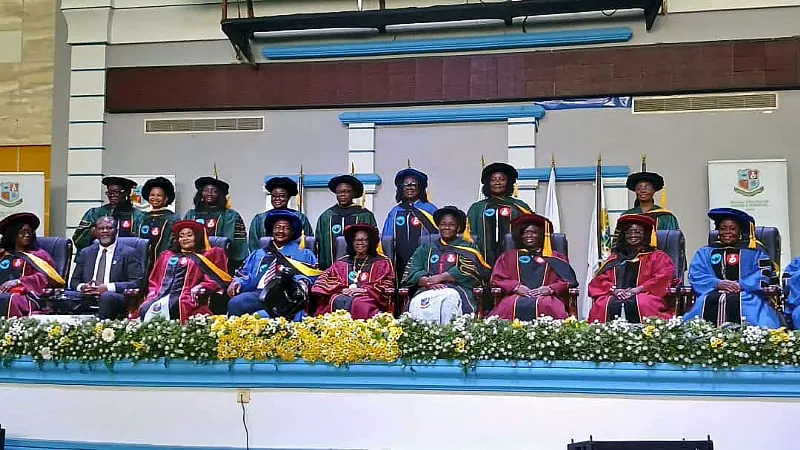
Ghana's Health Minister, Kwabena Mintah Akandoh, has emphasized the need for closer alignment between specialist nursing and midwifery training, workforce deployment, and the country's changing healthcare needs. He stressed that investments in infrastructure, technology, and health financing can only deliver results when supported by a competent workforce. With the growing burden of non-communicable diseases and emerging infectious threats, Ghana must move beyond simply increasing the number of nurses and midwives trained.
The Minister's call for action was echoed by Dr. Ignatius Abowini Nchor Awinibuno, Director of Allied Health, who spoke on behalf of the Minister at the opening of the 11th Annual General Meeting and 6th Seminar of the Ghana College of Nurses and Midwives. Dr. Awinibuno emphasized that Ghana must prioritize the training of specialist professionals, ensure their appropriate deployment, and provide the necessary working conditions for them to effectively apply their expertise. The event was held on the theme: “Building a Resilient Specialist Nursing and Midwifery Workforce to Improve Health Outcomes.”
Specialist expertise is increasingly critical in areas such as emergency and critical care, oncology, renal care, mental health, neonatal care, and maternal and newborn health. Ghana's emerging health architecture, comprising Free Primary Healthcare, the National Health Insurance Scheme (NHIS), and the Ghana Medical Trust Fund, is creating a continuum of care that connects early detection and treatment at the community level with district and specialized services. However, expanding access to specialized treatment must go hand in hand with developing the human resources capable of delivering such care.
The Minister noted that equipment, financing, and specialist medical care achieve their full value when supported by skilled nurses and midwives who can monitor patients, recognize complications, coordinate care, and support families through recovery. He also emphasized the need for workforce planning to address the geographical distribution of specialist professionals, reducing the extent to which access to specialized healthcare depends on a patient's ability to travel to major cities.
Dr. Eva Mensah, Director of Nursing and Midwifery, also emphasized the need to redefine resilience, saying it should not mean expecting health workers to endure difficult conditions indefinitely. A resilient workforce, she noted, requires the right numbers, competencies, leadership, systems, and institutional support to provide safe and effective care during both routine periods and emergencies. She further called for staffing norms to include specialist nurses and midwives.
As part of efforts to strengthen specialist training, an agreement was reached in May 2026 between the Ghana Medical Trust Fund and the Ghana College of Nurses and Midwives to support the expansion of specialist nursing training, including the training of 500 nurses. Prof. Ebenezer Bugri Anarfo, the Chairperson for the event, said the ultimate measure of specialist training should not be the number of professionals produced, but the difference they made in patient care and health-system performance.
The speakers agreed that the future of Ghana's health system would depend on a deliberate effort to connect specialist education with national health priorities and translate professional training into measurable improvements in patient outcomes. They called for stronger investment in postgraduate education, continuous professional development, clinical mentorship, research, digital competencies, and leadership development.
Key points
- Ghana's Health Minister calls for alignment between specialist nursing training and healthcare needs.
- Specialist expertise is critical in areas such as emergency and critical care, oncology, and mental health.
- A resilient workforce requires the right numbers, competencies, leadership, systems, and institutional support.