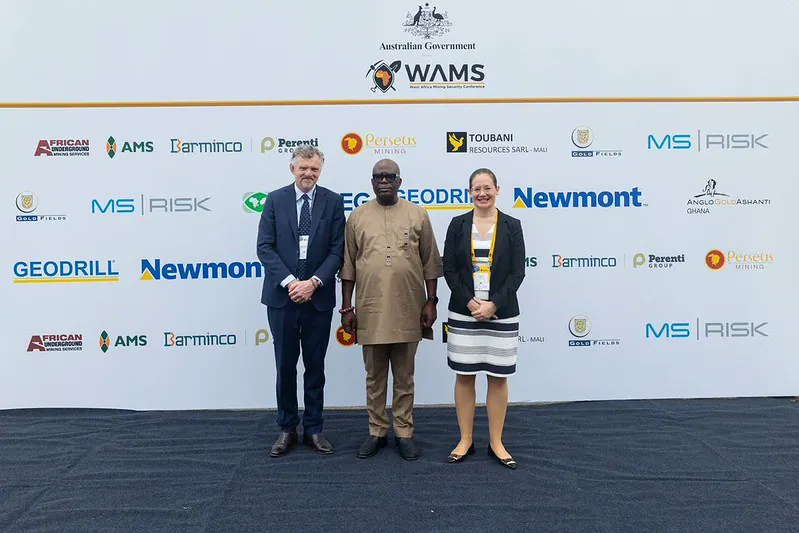
Security experts at the sixth West Africa Mining Security Conference in Accra emphasized that Ghana's fight against illegal mining, gold smuggling, and community disputes requires a tailored security approach. They cautioned against adopting anti-terrorism tactics from the Sahel region without modification. Deputy Minister for the Interior, Ebenezer Okletey Terlabi, stated that security strategies effective in one context may not work in another. This debate has been ongoing in Ghana's galamsey fight for years. The country's response to illegal mining has been a topic of discussion among officials, diplomats, mining executives, and security professionals.
The conference highlighted that Ghana's security problems in the mining sector differ from those in Sahelian states. Ghana's challenges focus on illegal gold trading networks, disputes between mining firms and local communities, and smuggling across porous borders. These issues require policing, regulation, and negotiation rather than a purely militarized response. Australian High Commissioner-designate Keara Shaw emphasized that security in the mining sector cannot be divorced from environmental responsibility and community dialogue. She argued that protecting legitimate mining activity and ordinary people must go hand-in-hand with tackling organized crime and environmental damage.
The debate occurs amid Ghana's ongoing galamsey crackdown, which has exposed gaps in the permitting system. Only one of six foreign mining firms operating in the Ahafo Region reportedly holds a valid permit. Traditional authorities, such as Togbe Afede XIV, have cautioned galamsey gangs against moving into the Volta Region. This comes after President Mahama denied ever promising a state of emergency to tackle illegal mining. The stakes are high for communities near mining sites, with livelihoods, land, water quality, and safety at risk.
The West Africa Mining Security Conference has run for six editions, evolving into a regular regional forum for governments and mining companies to discuss security risks. The platform aims to help firms and states refine their approaches to conditions specific to West African operations. However, the sources do not provide a date for the next conference or outline specific policy changes Ghana's Interior Ministry intends to make.
For readers unfamiliar with the term, "galamsey" refers to illegal, small-scale gold mining carried out without government licenses. This practice is often blamed for polluted rivers, degraded farmland, and violent clashes with security forces or rival mining gangs. The conference brought together government, diplomatic, and corporate stakeholders from across West Africa to discuss threats facing the sector.
Nigel Stanier, Assistant Secretary and head of the Africa Branch at Australia's Department of Foreign Affairs and Trade, participated in the conference, underlining Canberra's interest in regional stability and responsible investment in West Africa's mining industry. The Australian High Commissioner-designate's comments reinforced the need for a comprehensive approach to security in the mining sector.
The outcome of the conference and the implementation of Terlabi's call for locally tailored security strategies remain unclear. The debate on Ghana's galamsey fight is ongoing, with the country's response to illegal mining still a topic of discussion.
Key points
- Ghana's security approach to galamsey must be tailored to its specific context.
- A purely militarized response is not suitable for addressing Ghana's mining security challenges.
- Environmental responsibility and community dialogue are crucial components of security in the mining sector.