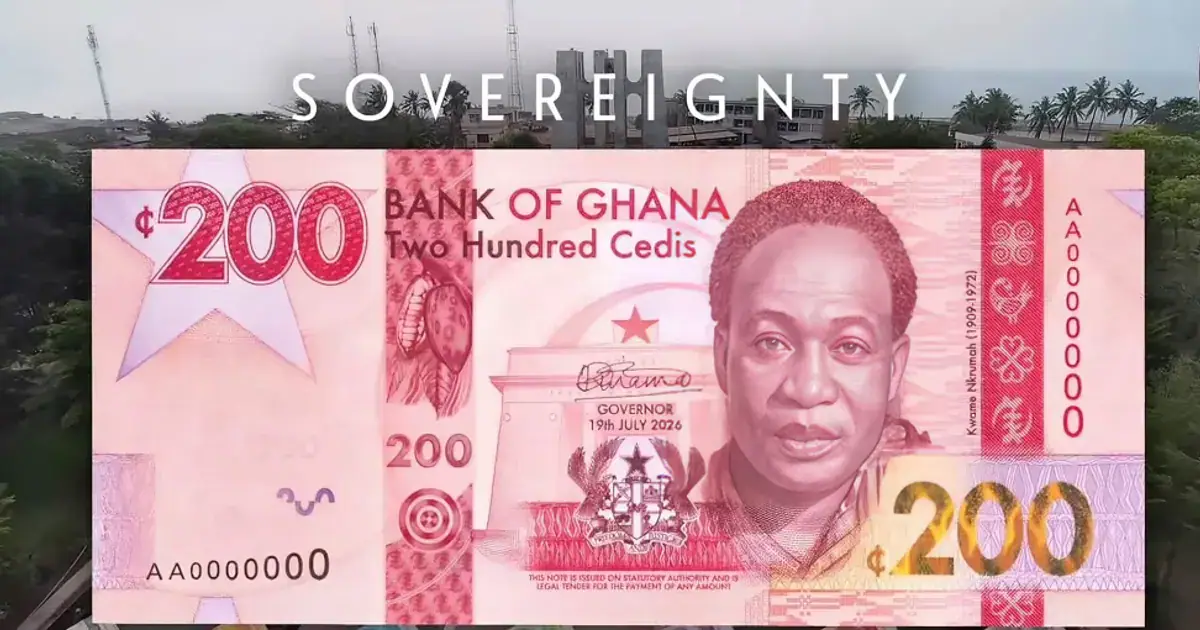
The Bank of Ghana has unveiled its new Heritage Cedi Series, featuring eight prominent national figures, historical landmarks, and symbolic Adinkra emblems on banknotes entering circulation in December 2026. This new series celebrates Ghanaian personalities and their contributions to national development. President John Dramani Mahama officially unveiled the new banknote series at the Bank of Ghana's Bank Square headquarters in Accra.
The evolution of Ghana's currency has been marked by significant changes since the country adopted the Cedi as its official currency. Prior to the Cedi, people in the Gold Coast used items like cowry shells, gold dust, and silver coins for trade and commerce. The names of two familiar Ghanaian currency denominations, the Cedi and Pesewa, can be traced to this history. The British West African pound became the official currency during the colonial era, before Ghana introduced its own Ghanaian pound following independence in 1957.
The new Heritage Cedi notes feature eight prominent Ghanaian personalities on their front designs, while the reverse sides showcase important landmarks and historical sites across the country. Each denomination also carries a traditional Adinkra symbol representing a particular national value, achievement, or cultural belief. The new banknotes are expected to enter circulation on December 1, 2026, and will be used alongside the existing notes, which will remain legal tender.
The GH¢1 banknote honors Agnes Oforiwa Tagoe-Quarcoopome, an Accra-based market woman and trader who supported Kwame Nkrumah's independence campaign. The reverse of the note features market women selling foodstuffs, highlighting the important contribution of women to commerce and everyday trading activities. The accompanying Adinkra symbol is Bese Saka, meaning a sack of kola nuts, representing abundance, wealth, unity, and commercial prosperity.
Other denominations feature notable figures such as Cardinal Peter Poreku Dery, Dr. J.E.K. Aggrey, Justice Annie Jiagge, Dr. Ephraim Amu, Theodosia Okoh, and Kofi Annan. Each note showcases significant landmarks and Adinkra symbols, highlighting their contributions to Ghana's development. For example, the GH¢5 note celebrates Dr. J.E.K. Aggrey, a respected educationist, and features the clock-tower building of Achimota School in Accra.
The new banknotes also incorporate advanced security features, including a QR code on the reverse of each note. The decorative borders draw inspiration from traditional kente patterns, adding a unique cultural touch to the designs. The Bank of Ghana aims to promote national pride and cultural heritage through this new currency series.
The introduction of the Heritage Cedi Series marks a significant milestone in Ghana's monetary history. With its unique blend of national figures, landmarks, and cultural symbols, the new currency series is expected to foster a sense of national identity and unity among Ghanaians.
Key points
- The new Heritage Cedi Series features eight prominent Ghanaian personalities and their contributions to national development.
- The banknotes will enter circulation on December 1, 2026, and will be used alongside existing notes.
- Each denomination carries a traditional Adinkra symbol representing a particular national value, achievement, or cultural belief.