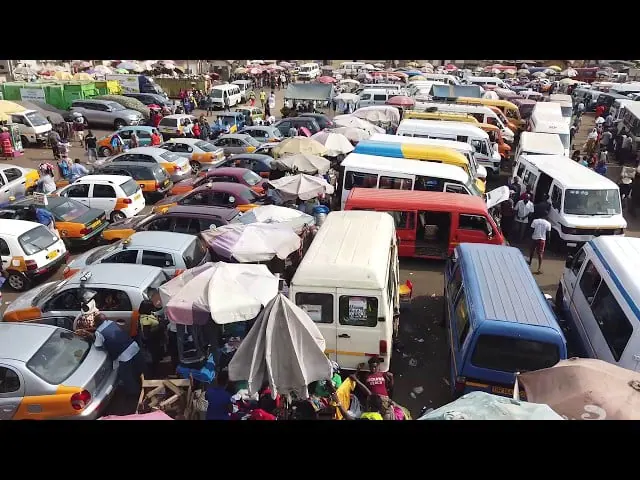
The Ghana Private Road Transport Union (GPRTU) and the Ghana Road Transport Coordinating Council (GRTCC) have announced a nationwide 8% increase in public transport fares, set to take effect on September 26, 2026. This adjustment affects trotros, taxis, and inter-city services. According to the unions, the increase is a result of rising operational costs, including petroleum product prices, spare parts, and vehicle maintenance expenses. The new fare schedule has been detailed and released to the public.
Under the revised schedule, intra-city fares will see a significant increase. For instance, a GH¢5 fare will rise to GH¢5.50, while a GH¢10 fare will now cost GH¢11. Other intra-city fares will also increase, with a GH¢30 journey going up to GH¢32.40 and the highest listed fare of GH¢34 rising to GH¢36.80. These changes aim to reflect the current economic realities faced by transport operators. The unions have justified the increase based on the approved transport fares that came into effect on May 24, 2025.
Shared taxi fares will also be adjusted, with passengers travelling up to four kilometres paying GH¢2.90, up from GH¢2.60. For longer distances, the fare for journeys of up to 40 kilometres will increase from GH¢18.70 to GH¢20.20. These changes are part of a broader effort to ensure that transport operators can maintain their services amidst rising costs. The GPRTU and GRTCC have emphasized that the fare adjustments are necessary to sustain the transport sector.
Inter-city commuters will also be affected by the fare increase. A journey previously costing GH¢25 will now attract a fare of GH¢27, while a GH¢100 journey will rise to GH¢108. At the upper end of the inter-city schedule, the fare for a journey currently priced at GH¢300 will increase to GH¢324. These adjustments reflect the increasing operational costs faced by transport operators on inter-city routes.
The GPRTU and GRTCC have directed transport operators to display the approved fare schedule at loading terminals and stations. This move aims to enable commuters to verify the applicable charges and ensure transparency in the fare application. The unions have also warned that operators who charge fares above the approved rates will face sanctions.
The unions have attributed the latest increase to various factors, including changes in the ex-pump prices of petroleum products, rising spare parts costs, and vehicle maintenance expenses. However, they noted that government intervention to moderate the price of diesel helped limit the extent of the fare increase. This intervention was crucial in reducing the potential impact on commuters.
The new fares will apply nationwide from September 26, 2026. The GPRTU and GRTCC have urged both transport operators and commuters to comply with the new fare schedule. By implementing this adjustment, the unions aim to ensure the sustainability of public transport services across Ghana.
Key points
- The 8% fare increase is effective September 26, 2026.
- The increase affects intra-city, shared taxi, and inter-city transport services.
- The adjustment is attributed to rising operational costs, including petroleum product prices and vehicle maintenance expenses.