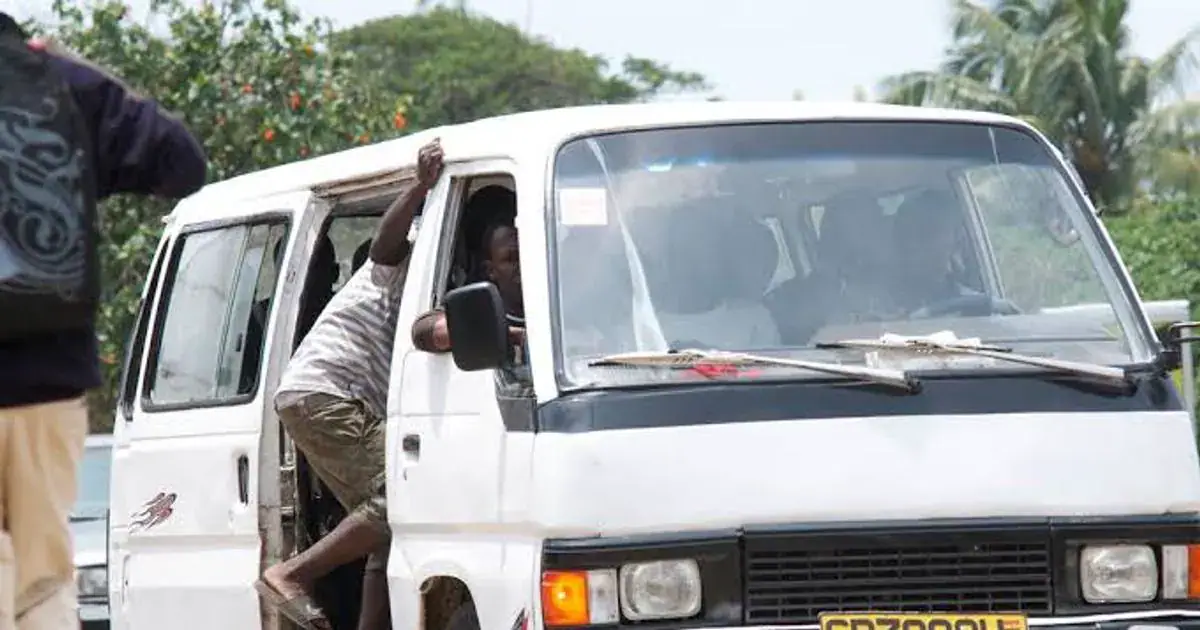
Commercial transport operators in Ghana have announced plans to suspend services nationwide from November 1, 2026, in protest over the rollout of the Traffitech-GH automated traffic enforcement system. The Ghana Private Road Transport Union (GPRTU), the Commercial Transport Operators of Ghana, and the Concerned Drivers Association of Ghana, operating under the Joint Transport Front, have expressed concerns over the system's implementation. They claim the government and police have failed to address trader occupation of designated bus stops and pedestrian walkways.
The transport operators had given the government and police until October 20, 2026, to clear traders from designated spaces, but the deadline passed without action. Areas such as Kaneshie, Circle, Madina, Kasoa, and Kejetia have been cited as locations where traders have taken over bus stops and pedestrian walkways. The operators argue that introducing camera-based traffic enforcement without addressing this situation will put drivers at risk of receiving fines when they cannot use designated places for picking up and dropping off passengers.
The transport unions accuse the government of seeking to impose fines on drivers while failing to protect spaces legally reserved for their operations. They describe this as an attempt to "extort" money from innocent drivers. The operators stress that they will not operate under an unfair and unjust system, stating, "You cannot digitalise illegality." They warn that their members will suspend operations as soon as Traffitech-GH becomes operational on November 1.
The planned suspension comes as the Ghana Police Service prepares to fully implement Traffitech-GH, an automated system designed to detect road traffic offences using cameras, sensors, and other digital devices. The system aims to improve road discipline and reduce accidents by making it easier for the police to identify motorists who break traffic rules. Some of the offences it is designed to detect include speeding, jumping red lights, wrongful overtaking, driving without valid roadworthiness certificates, and failing to wear seatbelts.
According to the Police Service, images and videos captured by the devices will first be reviewed by officers before an Electronic Notice of Violation (ENV) is sent to the registered vehicle owner's phone through SMS. Motorists who receive the notices have 14 days to pay the prescribed fine or challenge the offence. The system was initially scheduled to begin full operations on October 1, 2026, but the Police Service moved the date to November 1 to allow for more public education about how it works and the offences it will detect.
The transport operators have appealed to commuters to make alternative transport arrangements from November 1 to avoid being stranded if the planned action goes ahead. They hold the government fully responsible for any inconvenience this action will cause. The operators emphasize that they are committed to their demands and will not back down until their concerns are addressed.
The Ghanaian government's implementation of Traffitech-GH and the transport operators' response highlight the challenges of balancing road safety with the concerns of commercial transport operators. The situation remains uncertain as the November 1 deadline approaches, with potential implications for commuters and the broader transportation sector in Ghana.
Key points
- Transport operators in Ghana threaten nationwide strike from November 1 over Traffitech-GH rollout.
- Operators cite unfair enforcement and trader occupation of bus stops as reasons for the strike.
- The Ghana Police Service aims to improve road discipline and reduce accidents with Traffitech-GH.