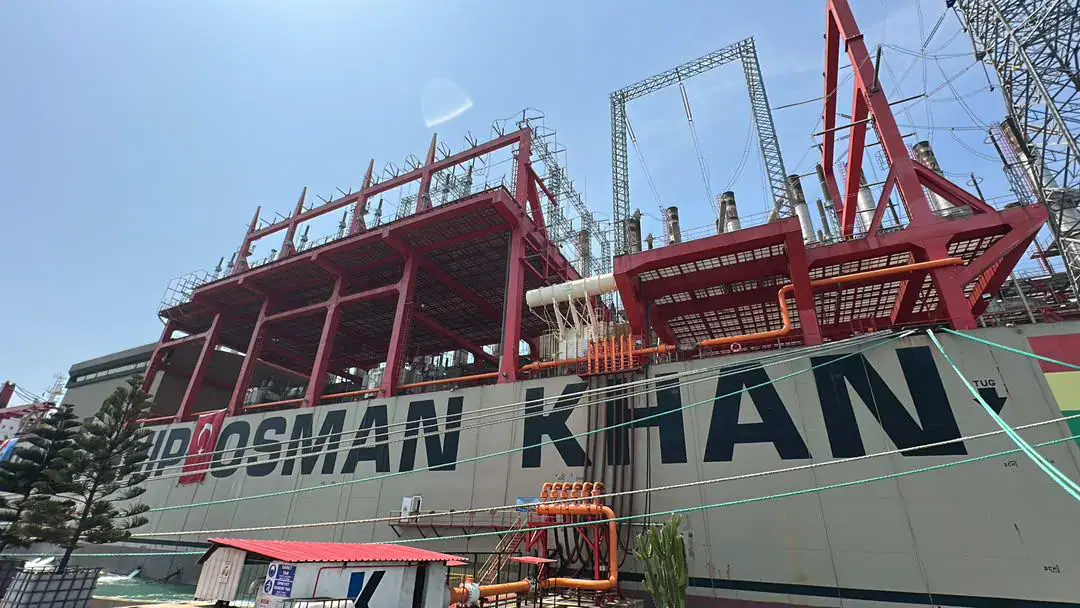
Ghana's Finance Minister, Dr Cassiel Ato Forson, announced that the country will phase out its emergency power plants by 2030, as part of the 2027 Budget. The minister stated that the state will build and own the replacements outright, including a 1,450-megawatt thermal plant at Kafodzidzi-Abrobeano, Central Region, and a 600MW solar plant backed by 2,000 megawatt-hours of battery storage.
The thermal plant is expected to be completed in two phases, with the first 600MW due by December 2028 and the remaining 850MW by December 2030. Work on the thermal plant is set to start next month, according to the 2027 Budget Statement. The plant is being led by Ghana Thermal Power Limited and is expected to require about 150 million standard cubic feet of extra gas a day from the Sankofa and Jubilee fields.
The energy sector in Ghana has been facing significant challenges, including a shortfall of about US$1.4 billion in 2025 and arrears of about US$1.7 billion owed to independent power producers and fuel suppliers. Dr Forson stated that the new plants, along with a modern grid and better distribution, will help end the US$1.4 billion taxpayers cover every year.
The Budget allocates GH¢13 billion for energy sector payment shortfalls in 2027, with medium-term tables projecting GH¢7.8 billion for 2028 and nothing for 2029 and 2030. The government will also invest US$500 million into the transmission network between 2027 and 2030, with GRIDCo strengthening the north-south lines and connecting new plants to the places that use the power.
In addition to the new plants and transmission network, the government will also implement measures to reduce distribution losses, including the distribution of 2 million prepaid meters. Private firms will also be involved in distribution on performance terms by the end of 2027. The Budget also allocates US$200 million for preparing for nuclear power, in a 24-month readiness programme that runs from January 2027 to December 2028.
The 2027 Budget aims to reduce the cost of generating power from about 16 US cents a kilowatt-hour to 8 cents or less. The minister emphasized that the new plants and infrastructure will help achieve this goal and reduce the country's dependence on costly emergency power. The Budget does not provide details on the cost of the thermal or solar plants, or the site and completion date for the solar farm.
The plan to phase out emergency power plants is part of a broader effort to reform the energy sector and reduce costs. The government aims to end the country's dependence on costly emergency power by 2030 and transition to more sustainable and affordable energy sources. Key aspects of the plan include reducing distribution losses and increasing the use of renewable energy sources.
Key points
- Ghana plans to replace emergency power plants with a 1,450MW thermal plant and a 600MW solar farm by 2030.
- The energy sector in Ghana has been facing significant challenges, including a shortfall of about US$1.4 billion in 2025.
- The government aims to reduce the cost of generating power from about 16 US cents a kilowatt-hour to 8 cents or less.