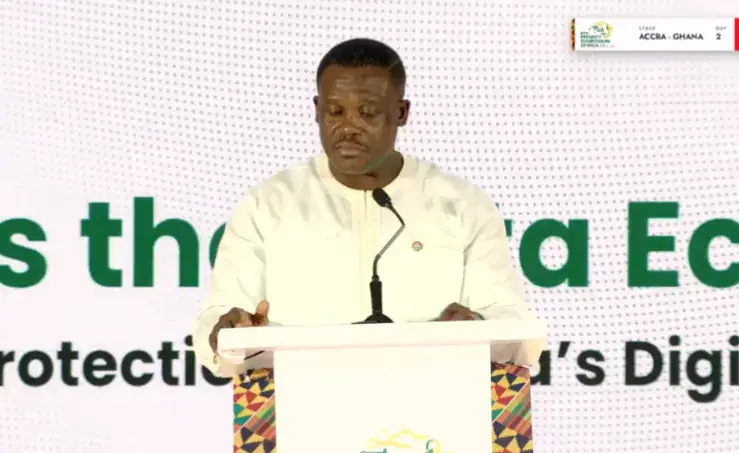
The government of Ghana is set to invest $300 million between 2027 and 2028 to establish a National Artificial Intelligence (AI) Centre and upgrade rural 2G networks to reliable 4G connectivity. This initiative, announced by Communications Minister Samuel Nartey George, aims to strengthen Ghana's technological capacity, support local innovation, and reduce the country's reliance on foreign-owned digital infrastructure. The investment is part of the government's efforts to develop its own computing infrastructure, enabling local researchers, innovators, and technology firms to develop and test AI solutions.
The announcement was made during the opening ceremony of the 8th Privacy Symposium Africa in Accra, held under the theme, “Money. Data. Control.” Minister George emphasized the need for Ghana to develop its own computing infrastructure, allowing the country to have truly accurate compute infrastructure, not just for Ghana but for the sub-region. This move is expected to enable local researchers and innovators to develop AI solutions without being overly dependent on infrastructure owned by foreign technology companies.
The investment is captured under Pillar Eight of the government's 2027 Budget, dubbed A US$300 Million Technology Economy. The budget outlines plans to establish the National Artificial Intelligence Centre and upgrade rural connectivity infrastructure between 2027 and 2028. The rural network upgrade will ensure reliable 4G connectivity, particularly to support farmers with access to weather and market information, digital payments, and opportunities to reach buyers.
Minister George argued that Ghana and other African countries must move beyond supplying data to foreign technology companies and instead build the infrastructure and expertise to convert data into economic value. He emphasized that if Ghana continued to depend on foreign-owned computing infrastructure and foundational AI models, the country risks losing a significant share of the economic benefits generated from data.
The 8th Privacy Symposium Africa is being organised by Unwanted Witness in collaboration with the Hewlett Foundation, Ghana's Data Protection Commission, and the Media Foundation for West Africa. The event provides a platform for stakeholders to discuss issues related to data protection, privacy, and the use of technology in Africa.
The government's investment in AI and rural network infrastructure is expected to have a positive impact on the country's technological capacity and economic growth. By developing its own computing infrastructure, Ghana can reduce its reliance on foreign-owned digital infrastructure and create opportunities for local innovation and entrepreneurship.
Key aspects of the investment include the establishment of a National Artificial Intelligence Centre, the upgrade of rural 2G networks to 4G connectivity, and the development of local computing infrastructure to support AI solutions. The government's efforts aim to convert data into economic value, creating new opportunities for Ghana's economic growth and development.
Key points
- The government of Ghana plans to invest $300 million to establish a National Artificial Intelligence Centre and upgrade rural 2G networks to 4G connectivity.
- The investment aims to strengthen Ghana's technological capacity, support local innovation, and reduce the country's reliance on foreign-owned digital infrastructure.
- The initiative is part of the government's 2027 Budget, which outlines plans to develop Ghana's computing infrastructure and convert data into economic value.
Reporting sources
- Gov't to build $300 milli... · ModernGhana