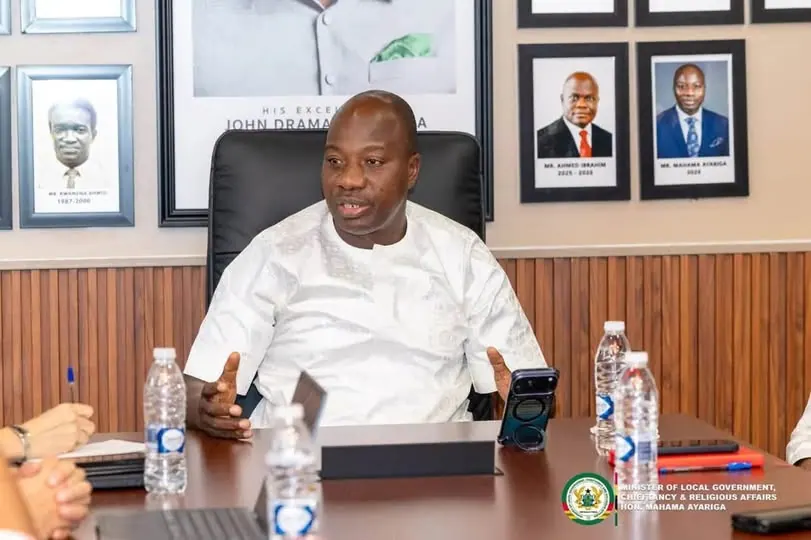
The government of Ghana is set to launch a digital system for collecting property rates, aiming to improve the internally generated revenue of Metropolitan, Municipal and District Assemblies. This initiative was announced by Minister for Local Government, Chieftaincy and Religious Affairs, Mahama Ayariga, on October 5, 2026, during the Government Accountability Series. The new system is expected to enhance revenue collection and reduce leakages associated with the current process.
Under the proposed system, property rate payments will be integrated with mobile money platforms. Additionally, property and spatial information from relevant state institutions will be consolidated to improve the identification and collection of rates. This digital approach is intended to make the payment process more transparent and reduce the role of intermediaries in collecting property rates. By doing so, the government aims to ensure that assemblies receive the full amount of property rates due to them.
The Minister emphasized that digital systems will reduce opportunities for partial payments and unnecessary intermediaries, while strengthening transparency and ensuring that the State captures the full statutory rates due. The additional revenue generated through this reform is expected to help finance development projects within local communities, such as roads, streetlights, pavements and drainage infrastructure. These projects will have a direct impact on the quality of life for local residents.
The proposed reforms are part of broader efforts by the government to strengthen the financial capacity of MMDAs and improve their ability to fund development at the local level. By enhancing revenue collection, MMDAs will be able to invest in essential infrastructure and services. This, in turn, is expected to promote local economic growth and improve the overall well-being of communities.
A more reliable property-rate revenue system could eventually support other financing options for municipal authorities, including the use of municipal bonds where appropriate. This would provide MMDAs with access to additional funding sources, enabling them to undertake larger-scale development projects. The Minister highlighted the potential for this new revenue stream to make a positive impact on local development.
The digital system will bring together property and spatial information from relevant state institutions, enabling more accurate identification and collection of property rates. This integrated approach is expected to minimize errors and reduce the risk of revenue leakage. By leveraging technology, the government aims to create a more efficient and transparent revenue collection process.
The government is confident that the new digital system will significantly enhance revenue collection and support local development. With the implementation of this system, MMDAs are expected to receive the full amount of property rates due to them, enabling them to invest in essential infrastructure and services. The Minister emphasized that the reform is a key step towards strengthening the financial capacity of MMDAs and promoting local economic growth.
Key points
- The government plans to integrate property rate payments with mobile money platforms.
- The digital system aims to reduce opportunities for partial payments and unnecessary intermediaries.
- The additional revenue generated is expected to finance local development projects, such as roads and infrastructure.