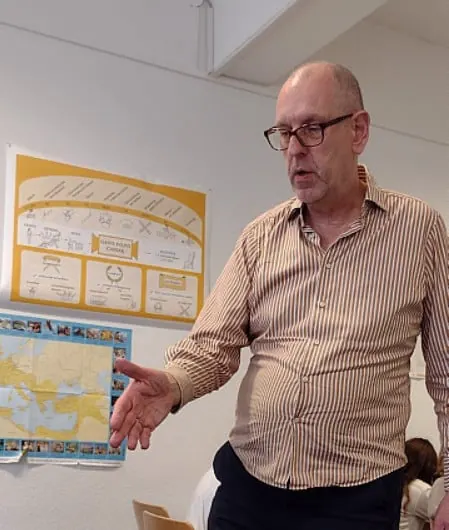
On October 2, 2026, author Karl-Heinz Heerde reflected on the transience of empires in a lecture to his students. He noted that empires, including the Pharaohs', Roman, Mali, Ashanti, Inca, Maya, Achaemenid, and Ottoman empires, have all risen and fallen throughout history. Heerde suggested that today's superpowers will eventually follow suit, and that their downfall is inevitable. This perspective was shared in an essay titled "Ghana: The African Hero," which explores Ghana's potential role in shaping the future of global leadership.
Heerde's essay posits that fundamental power changes often come about through conflict, and that the next world war will be marked by the presence of atomic bombs, introducing a new and unprecedented level of danger to the change process. He noted that the world abhors a power vacuum, and that it will inevitably be filled by new powers. According to Heerde, current superpowers are already in decline, and it is only a matter of time before they are replaced.
The author suggested that the likely replacement for current superpowers is unlikely to come from regions such as Australia, Asia, Arabia, India, or South America. Instead, Heerde argued that the world operates in cycles, and that humanity's trajectory will ultimately lead back to Africa. Heerde noted that the continent was once home to powerful empires, and that its current state of poverty and marginalization is a result of colonialism and corruption introduced by European powers.
Heerde identified Ghana as a potential leader in Africa's resurgence, citing its historic mandate as the first country in Sub-Saharan Africa to gain independence under Dr. Kwame Nkrumah. Heerde drew parallels between Ghana's potential and the story of Peter, who was chosen by Jesus Christ to build his church due to his loyalty and willingness to be corrected. According to Heerde, Ghanaians possess similar qualities, being known for their peaceful nature and loyalty.
The author's book, "The World Ruler," presents a scientific argument for Ghana's potential rise to global leadership. Heerde suggested that Ghana's leadership role in the African Union will coincide with Africa's emergence as a new global empire. In this scenario, Ghana will be at the forefront of the continent's development and will ultimately become the world ruler.
Heerde's views may seem radical, but they draw on historical precedents. He noted that the Nubians, who were once slaves of the Egyptian pharaohs, eventually discovered iron and rose to power, overthrowing their former masters. According to Heerde, critics must consider the possibility that Ghana and Africa may follow a similar trajectory.
The essay concludes by emphasizing that Ghana's potential rise to global leadership is not a fanciful idea, but rather a historically grounded perspective. Heerde's views, whether seen from a scientific or spiritual perspective, contribute to a growing conversation about Africa's role in shaping the future of global leadership. As the world continues to evolve, it remains to be seen whether Ghana will indeed emerge as a leader on the global stage.
Key points
- Ghana may emerge as a leader in Africa's resurgence as a global power.
- The world operates in cycles, and humanity's trajectory will ultimately lead back to Africa.
- Current superpowers are in decline and will eventually be replaced by new powers.