The government of Ghana has approved its interest in joining the BRICS grouping as part of efforts to diversify the country's international economic partnerships and create new opportunities for trade, investment, and industrialization. According to Minister for Foreign Affairs, Samuel Okudzeto Ablakwa, Cabinet has given the green light for Ghana to take the necessary steps to formally apply for membership and seek the support of existing BRICS members. This move is expected to bolster Ghana's economic growth and development.
The decision to join BRICS is in line with the Mahama administration's vision of transforming Ghana's economy through sustainable growth, job creation, and industrialization. BRICS offers Ghana an opportunity to diversify its development partnerships and explore new options in pursuing its economic agenda. Minister Ablakwa emphasized that Ghana values its traditional partnerships but seeks to expand its international relationships. He cited the role of the African Export-Import Bank (Afreximbank) during Ghana's recent financial crisis, which provided about $700 million in support.
Ghana's growing economic relations with countries within the BRICS grouping, particularly India and China, have contributed to its interest in joining the bloc. Trade between Ghana and India has more than doubled, rising from about $3 billion in 2024 to nearly $7 billion. Minister Ablakwa stated that Ghana aims to use its international partnerships to promote value addition to its natural resources, rather than relying heavily on the export of raw materials. The country seeks resource sovereignty, where it can be treated as an equal partner.
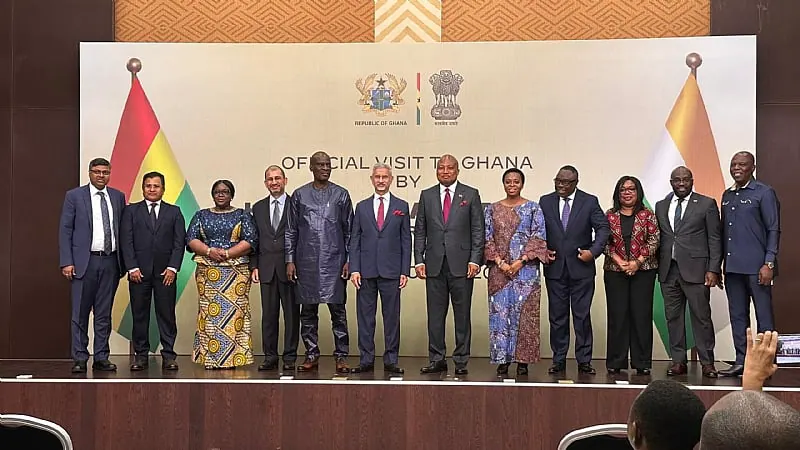
Minister Ablakwa's comments were made at a joint press briefing with visiting External Affairs Minister of India, Dr. Subrahmanyam Jaishankar, in Accra. Dr. Jaishankar welcomed Ghana's interest in BRICS, citing the bloc's strong sense of independence and desire for freedom of choice among its member countries. He noted that India has always been sympathetic to Ghana's aspirations and goals. BRICS membership is subject to collective consideration by its members.
Ghana's interest in BRICS aligns with President John Dramani Mahama's foreign policy priorities, including the pursuit of greater economic independence and a multipolar international system. The country already enjoys strong diplomatic relations with original BRICS members, including Brazil, Russia, India, and China, as well as South Africa and newer members like the United Arab Emirates, Saudi Arabia, and Iran. Minister Ablakwa expressed confidence that Ghana can count on these countries to support its bid.
The Minister for Foreign Affairs emphasized that Ghana's membership in the IMF and World Bank will not prevent it from deepening cooperation with other international groupings and partners. He highlighted the importance of having new friends and partners while maintaining traditional relationships. This approach is expected to enhance Ghana's economic prospects and provide more options for development.
As Ghana prepares to formally apply for BRICS membership, the country is likely to face collective consideration from existing members. With India's support and Ghana's strong diplomatic relations with other BRICS members, the bid is expected to be well-received. The outcome will be closely watched, as Ghana seeks to leverage its international partnerships for economic growth and development.
Key points
- Ghana seeks BRICS membership to diversify its international economic partnerships and create new opportunities for trade, investment, and industrialization.
- The country's growing economic relations with India and China have contributed to its interest in joining the bloc.
- Ghana aims to use its international partnerships to promote value addition to its natural resources and achieve resource sovereignty.