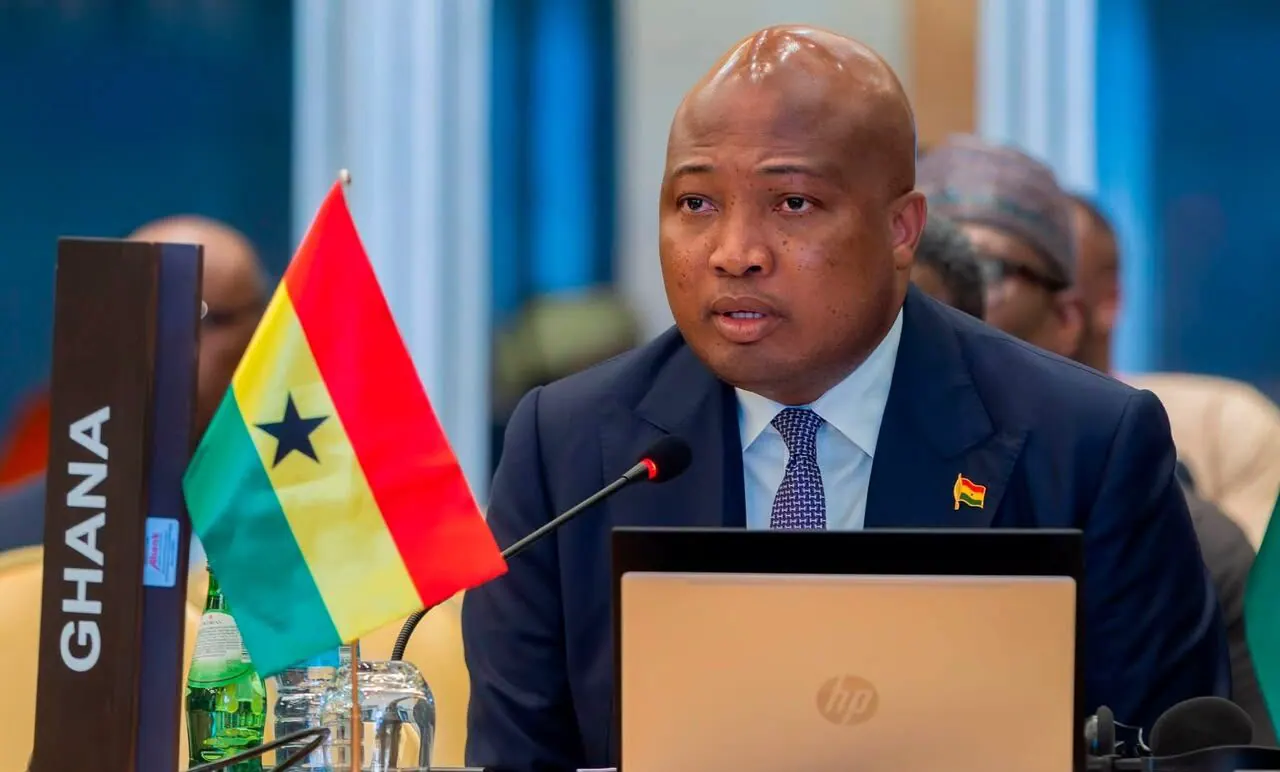
Ghana is pursuing bilateral partnerships with strategic countries to drive job creation, industrialization, value addition, and infrastructure development. According to Foreign Minister Samuel Okudzeto Ablakwa, the government is seeking tangible benefits from its international engagements, including labor mobility, visa waiver, scholarship, trade and investment, and infrastructure agreements. These efforts are being made on the sidelines of the 81st Session of the United Nations General Assembly (UNGA) in New York.
The Minister highlighted that Ghana is particularly seeking strategic partners to support its railway development agenda, following progress in road and bridge construction. He mentioned that Qatar, Bahrain, and Saudi Arabia, which have significant financial resources, are being engaged to support Ghana's railway transformation agenda. Further meetings have been lined up with Norway, Finland, the Netherlands, and Germany, which are considered strategic countries that could support Ghana's development agenda.
Mr. Ablakwa emphasized that bilateral engagements are being pursued alongside Ghana's multilateral diplomatic initiatives, including its leadership on reparatory justice and preparations to assume the African Union (AU) chairmanship. He noted that several countries have expressed interest in Ghana's strategy for the AU, and he has been sharing the contents of Ghana's AU strategic document with them.
The Minister stated that job creation, industrialization, value addition, and resource sovereignty are central to the government's bilateral engagements. He mentioned that recent meetings with Qatar and Bahrain included discussions on supporting Ghana to add value to its natural resources and establish more factories. The goal is to create opportunities for Ghana's young population and ensure that natural resources are not exported cheaply in their raw form.
Mr. Ablakwa has more than 20 bilateral meetings scheduled with carefully selected strategic countries and major actors, aimed at establishing mutually beneficial partnerships. He emphasized that these meetings are not just about handshakes or photo opportunities but about concretely delivering benefits for the Ghanaian people.
On the preservation of cultural artefacts being returned to Ghana, the Minister mentioned that the government has made provision in the 2027 Budget for the establishment of a modern museum. This facility will be capable of receiving and preserving the thousands of artefacts expected to be returned from various countries. The museum is expected to create opportunities for tourism and employment.
The returned artefacts, including the preserved head of King Badu Bonsu II, will serve as an eternal memorial to the fact that there was resistance to colonial domination and the transatlantic slave trade. The government is investing in facilities for the preservation of returned artefacts and developing a policy and strategy to ensure that the museums are properly managed.
Key points
- Ghana is seeking bilateral partnerships to drive job creation, industrialization, value addition, and infrastructure development.
- The government is pursuing labour mobility, visa waiver, scholarship, trade and investment, and infrastructure agreements with strategic partner countries.
- A modern museum is being established to preserve returned cultural artefacts and create opportunities for tourism and employment.