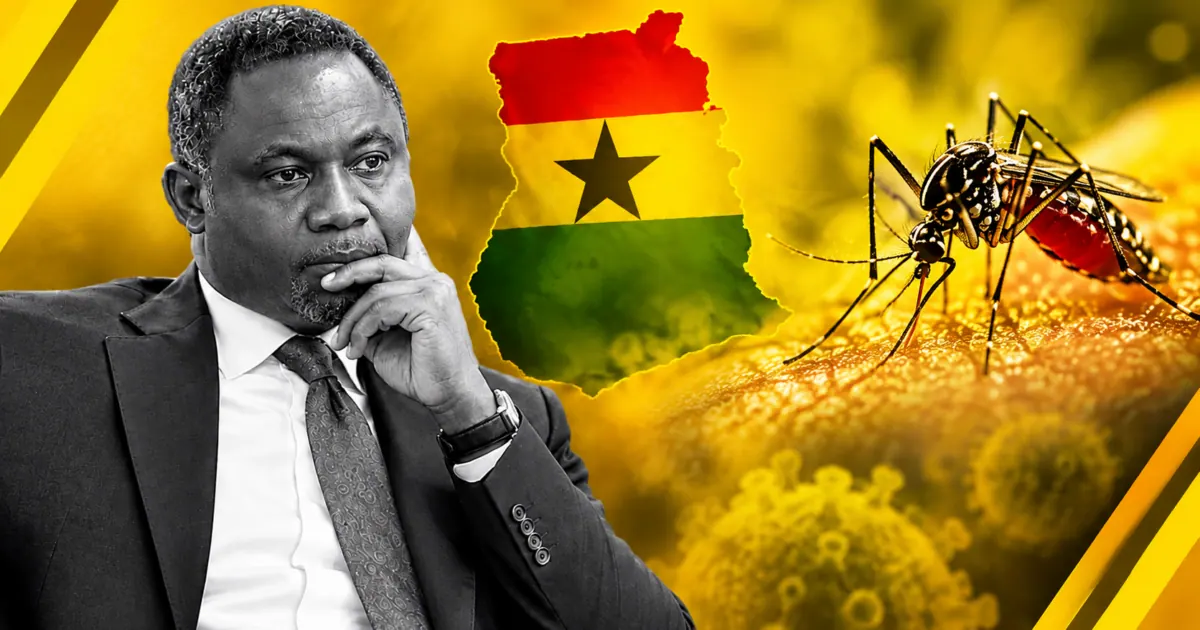
Ghana has reported 450 suspected yellow fever cases between June and September 2026, according to Health Minister Kwabena Mintah Akandoh. The Upper West Region accounts for 74 of these cases, with three laboratory-confirmed cases. Yellow fever is a potentially deadly viral disease spread through the bite of infected mosquitoes, with symptoms including fever, headache, and muscle pain.
The 450 suspected cases do not necessarily translate to 450 infections, as the two numbers measure different things. Suspected cases are people who meet criteria for investigation, while confirmed cases have undergone testing and classification. According to the World Health Organisation (WHO), Ghana reported 235 yellow fever cases between 2021 and 2025. A 2021 outbreak reported 202 suspected cases, of which 70 were confirmed, a confirmation rate of about 35%.
The Ministry has not provided a national breakdown of confirmed, negative, and pending results, making it unclear to assess the scale of transmission and progress of the response. The Upper West Region accounts for approximately 16.4% of the suspected cases, with three confirmed cases, representing about 4.1% of the region's suspected cases. This regional concentration deserves attention, as Upper West has experienced yellow fever outbreaks before.
A study of the 2021 Wa East outbreak found routine yellow fever vaccination coverage in the district was only 25% before the outbreak, rising to 95% after a mass vaccination campaign. This implies that national vaccination averages can conceal communities where protection is considerably weaker. Ghana's routine yellow fever vaccination coverage is estimated to be high, at 94% in 2021, 95% in 2022, and 88% in 2023, according to WHO/UNICEF estimates.
However, these figures are estimates of the share of the target population receiving routine vaccination and do not establish the vaccination status of people currently under investigation. Even at 91% coverage, the national average leaves room for missed children and local pockets of low protection. The economic and public-health problem is one of coverage, distribution, and measurement.
A high national average can coexist with local gaps, and an administrative record can appear complete without providing a reliable picture of who has actually received the dose. The vaccination card, or International Certificate of Vaccination or Prophylaxis (ICVP), is a formal record of vaccination, but it is not the vaccine itself. There are risks of a person holding a certificate without having received the vaccine or having received the vaccine but lacking a usable certificate.
The existence of these risks does not establish how often cards are issued without vaccination in Ghana, which requires evidence from vaccination centres, travellers, health authorities, and certificate records. To address these concerns, it is essential to strengthen vaccination coverage, improve record-keeping, and enhance verification processes to ensure that vaccination cards accurately reflect an individual's protection status.
Key points
- Ghana reported 450 suspected yellow fever cases between June and September 2026, with 74 cases in the Upper West Region.
- National vaccination averages can conceal local gaps in protection, and administrative records may not accurately reflect an individual's vaccination status.
- The vaccination card is not a guarantee of protection, as it can be issued without vaccination or lost, incomplete, or inconsistent records can create administrative barriers.