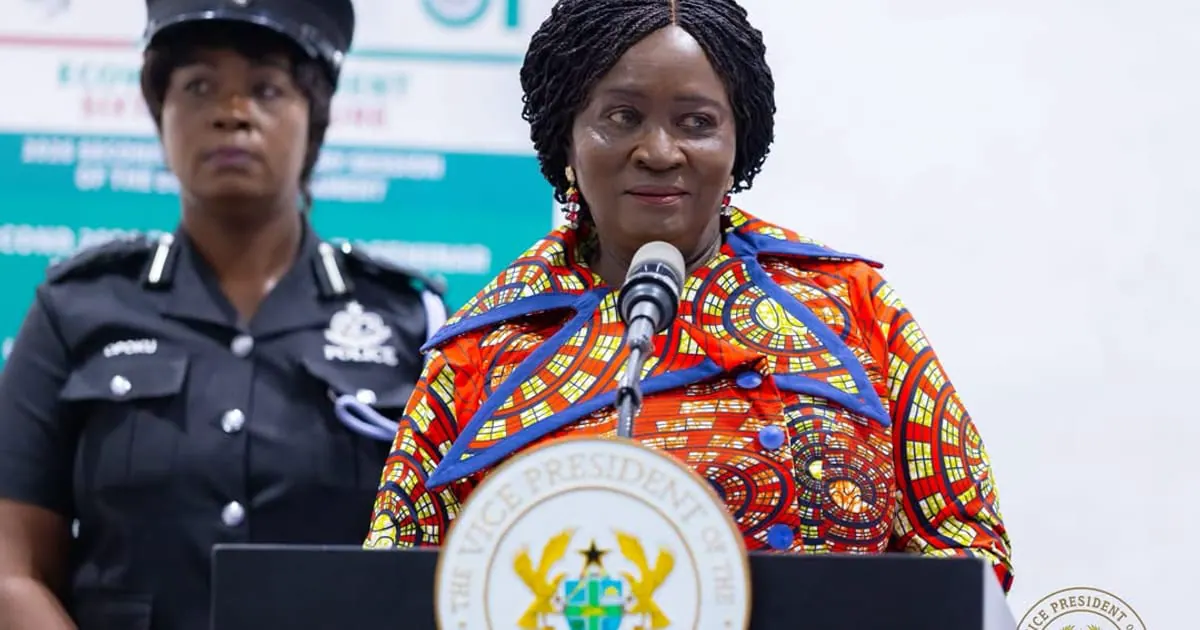
Vice President Professor Naana Jane Opoku-Agyemang has emphasized the need for sustained investment and stronger collaboration to address malnutrition and micronutrient deficiencies in Ghana. Speaking at the Global Micronutrient Forum in Accra on September 28, she noted that malnutrition remains a persistent challenge worldwide, with long-lasting consequences for individuals and future generations. The Vice President highlighted the importance of a multi-faceted approach, involving various sectors such as health, education, agriculture, and social protection.
According to the Vice President, Ghana has made progress in addressing malnutrition but still faces significant challenges. These include high rates of anaemia among women and adolescent girls, limited dietary diversity, and inadequate breastfeeding practices. She stressed that nutrition is influenced by various factors, including household incomes, food availability, school meals, access to information, and healthcare services. To address these challenges, the Vice President called for integrated interventions involving government, the private sector, development partners, and other countries.
The Vice President highlighted Ghana's school feeding programme, which now reaches over 4.5 million children, as a key initiative aimed at improving nutrition. Efforts are also underway to strengthen nutritional standards, caterer training, and monitoring. Additionally, she pointed to primary healthcare initiatives as an opportunity to strengthen preventive nutrition services, including maternal and child health interventions. These initiatives aim to address the root causes of malnutrition and promote sustainable nutrition systems.
Professor Opoku-Agyemang emphasized the need for domestic financing and international support to complement each other in addressing malnutrition. She noted that countries facing high levels of malnutrition often face fiscal constraints, climate shocks, and pressure on health systems. To address these challenges, the Vice President called for greater financial resources, scientific expertise, innovation, and international cooperation to support long-term nutrition systems rather than short-term interventions.
The Vice President also highlighted the importance of collaboration and coordination among stakeholders to address malnutrition. She called for integrated interventions that involve government, the private sector, development partners, and other countries. This, she stressed, would help leverage resources, expertise, and knowledge to address the complex challenges of malnutrition.
Ghana is hosting the Global Micronutrient Forum, which provides a platform for global conversation and knowledge sharing on nutrition. The Vice President formally declared the forum open, emphasizing Ghana's commitment to addressing malnutrition and micronutrient deficiencies. The forum brings together experts, policymakers, and stakeholders to discuss innovative solutions and strategies to tackle malnutrition.
The Vice President's call for increased investment and collaboration to address nutrition deficiencies underscores the need for a sustained and multi-faceted approach to tackle this challenge. With Ghana's continued efforts to address malnutrition, the country aims to make progress towards achieving sustainable nutrition systems and improving the health and well-being of its citizens.
Key points
- Vice President Professor Naana Jane Opoku-Agyemang calls for sustained investment and collaboration to address malnutrition and micronutrient deficiencies in Ghana.
- Ghana has made progress in addressing malnutrition but still faces challenges, including high rates of anaemia among women and adolescent girls, limited dietary diversity, and inadequate breastfeeding practices.
- The Vice President emphasizes the need for integrated interventions involving government, the private sector, development partners, and other countries to address malnutrition.