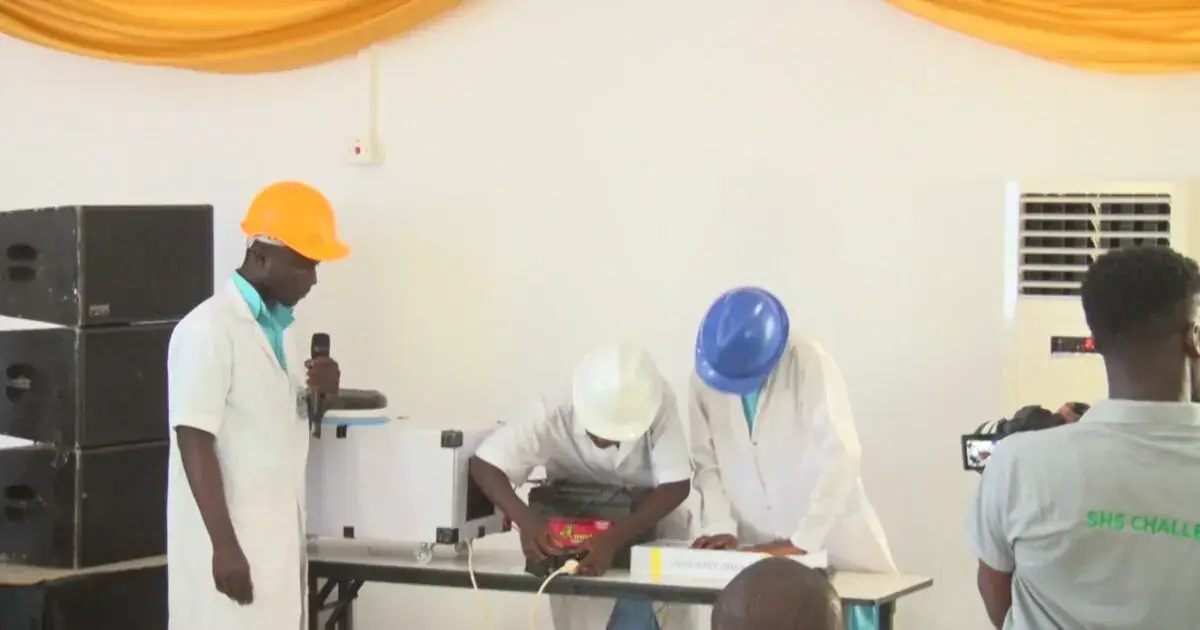
The Energy Commission Renewable Energy Challenge, now in its seventh edition, has brought together technical students from various senior high schools across Ghana to showcase innovative prototypes designed to address the country's renewable energy needs. The challenge, held in the Ashanti Region, saw students from northern and southern parts of the country display their projects. This initiative aims to promote sustainable energy solutions in Ghana.
The Head of Public Affairs at the Energy Commission, George Sarpong, highlighted that inadequate funding remains a significant obstacle hindering the development of students' projects. He appealed to the government and other stakeholders to provide financial support for research, prototype development, and scaling up of students' innovations. Sarpong noted that participating schools spend approximately GH¢35,000 to develop their prototypes, emphasizing the need for sustained investment.
The competition saw Ahantaman Girls' Senior High School emerge as the winner of the southern zone, while Dabokpa Senior High Technical School won the northern zone competition. The students expressed their desire for the relevant ministries and authorities to support and scale up their innovations, making them accessible to communities, particularly rural farmers. They believe that with adequate funding, their innovations can benefit farmers in rural areas.
Professor Francis Kermanson of the Kwame Nkrumah University of Science and Technology (KNUST), who judged the competition, commended the students for their creativity and innovation. He noted that their works demonstrated Ghana's potential to advance renewable energy solutions. However, Kermanson stressed the need to address funding challenges facing technical and vocational education and training (TVET) institutions.
The grand finale of the Energy Commission Renewable Energy Challenge is expected to take place in Accra, where the zonal winners will compete for the national title. This event will bring together the best innovative renewable energy projects from across the country, providing a platform for students to showcase their talents and creativity.
The call for funding for TVET students to develop renewable energy prototypes comes as Ghana seeks to promote sustainable energy solutions. The Energy Commission's initiative aims to encourage innovation and creativity in the sector, providing opportunities for students to develop practical solutions to the country's energy needs.
The development of renewable energy solutions is critical for Ghana's sustainable development. The country's reliance on fossil fuels has significant environmental and economic implications. By promoting innovation and investment in renewable energy, Ghana can reduce its carbon footprint and create new economic opportunities.
Key points
- The Ghanaian government is being urged to prioritize funding for TVET students to develop innovative renewable energy prototypes.
- The Energy Commission Renewable Energy Challenge aims to promote sustainable energy solutions in Ghana by encouraging innovation and creativity in the sector.
- Inadequate funding remains a significant obstacle hindering the development of students' renewable energy projects.