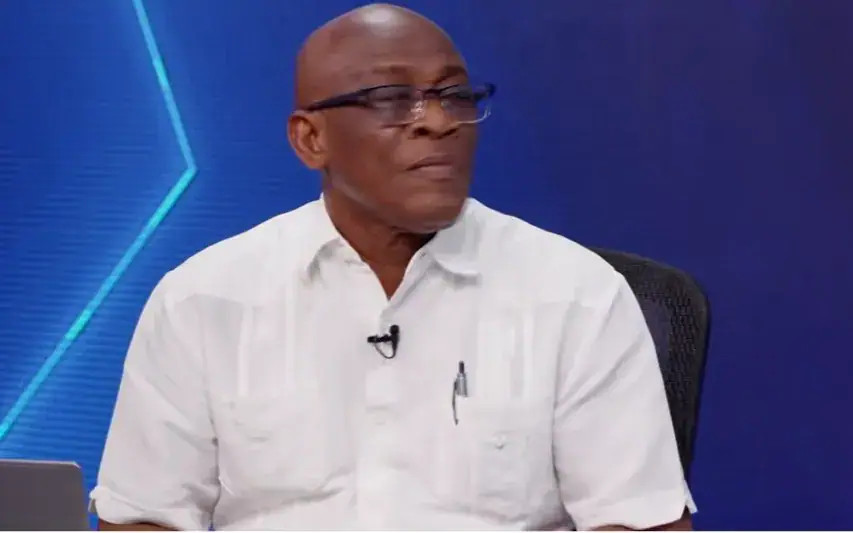
Presidential Advisor on the Economy Seth Terkper has defended the government's decision to trim budgetary allocations to ministries and agencies. He told JoyNews' PM Express that no administration can satisfy every spending request when revenue flows remain unpredictable and old debts still have to be paid. Terkper's comments follow the parliamentary debate on the 2027 Budget, which has been marked by sharp disagreements over EOCO's frozen accounts and the government's claim of $12.7 billion in reserves.
Terkper acknowledged that some ministries and agencies have raised concerns over cuts to their budgetary estimates. He explained that allocations are shaped by both domestic and external factors that are often outside the government's control. Drawing on his experience as Finance Minister, Terkper noted that certain factors, such as global market fluctuations, can quickly unravel budget assumptions. He cited the 2015 oil price collapse as a cautionary tale, where the budget had to be revised due to a sharp decline in crude oil prices.
The 2015 oil price collapse had a significant impact on Ghana's budget. The government had initially projected a crude oil benchmark price of US$99.38 per barrel but had to revise it to US$57 per barrel in the 2015 mid-year review. By August 2015, Brent crude was trading at around US$45.70 per barrel. Terkper recalled that this disruption to revenue projections forced the government to seek approval for reduced spending in March 2016.
Terkper pointed to mechanisms such as the Annual Budget Funding Amount (ABFA), the Stabilisation Fund, and the Contingency Fund as tools designed to cushion the budget against shocks. However, he noted that these mechanisms cannot eliminate the basic difficulty of forecasting commodity revenues months before a fiscal year begins. The cocoa sector has recently played a similar role, with conditions shifting dramatically after the previous year's budget had already been prepared.
The International Monetary Fund's 2026 assessment of Ghana's economy recorded a steep correction in global cocoa prices during the 2025/26 season. Prices fell from around US$8,800 per tonne in August 2025 to roughly US$2,800 by the end of February 2026. This decline, combined with a farmgate price out of step with the world market, left the Ghana Cocoa Board (COCOBOD) holding unsold stock and facing severe liquidity pressure.
The government has since cleared GH¢3.62 billion in arrears owed to cocoa farmers and restructured about GH¢3.7 billion of COCOBOD's legacy debt. Terkper argued that this episode shows why flexibility in budget management matters, even after estimates have been laid before Parliament. He cautioned against reading revised figures in the 2027 Budget as government misleading the public, saying budget preparation is a complex process that involves many variables.
Terkper used the interview to press a longer-term argument about debt discipline, invoking Ghana's passage through the Heavily Indebted Poor Countries (HIPC) initiative and subsequent defaults. He warned that Ghana cannot keep borrowing and borrowing after HIPC and defaults, and defended the government's use of the Cedi Sinking Fund to prepare for debt repayments. The fund held GH¢29 billion as of 11 November 2026, enough to cover the principal on domestic bonds due in February 2027.
Key points
- Seth Terkper defends budget cuts, citing unpredictable revenue flows and old debts.
- Terkper warns against a return to unsustainable borrowing, citing Ghana's HIPC history and recent debt defaults.
- The government has cleared GH¢3.62 billion in arrears owed to cocoa farmers and restructured about GH¢3.7 billion of COCOBOD's legacy debt.