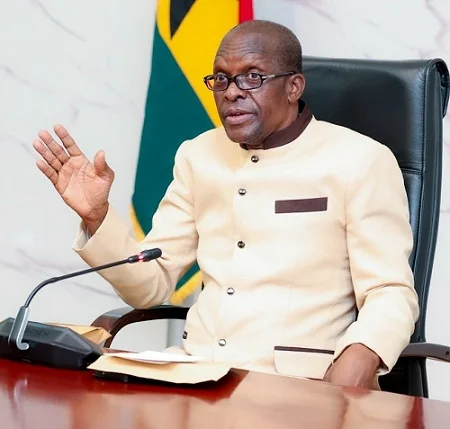
Speaker of Parliament, Alban Sumana Kingsford Bagbin, has rejected a private member's motion filed by the First Deputy Minority Whip, Habib Iddrisu, seeking a parliamentary inquiry into recent major narcotics seizures linked to Ghana. According to Speaker Bagbin, the proposed inquiry would affect ongoing criminal investigations and judicial proceedings. The motion sought the establishment of an Ad Hoc Committee to investigate the circumstances surrounding the seizures.
The proposed committee would have to evaluate evidence and witnesses directly connected to matters currently before the criminal justice system, which could ultimately require Parliament to determine issues that fall within the jurisdiction of the courts. Speaker Bagbin ruled that permitting the motion to proceed in its present form at this particular time may prejudice the interests of parties to pending judicial proceedings. He consequently ruled that the motion was inadmissible, pursuant to the relevant provisions of Parliament's Standing Orders.
However, Speaker Bagbin stressed that his ruling did not mean Parliament could never inquire into the matter. He said Parliament could still seek information from Ministers, scrutinize the performance of relevant public institutions, examine the adequacy of narcotics-control legislation, and consider broader issues concerning port security, national security, and narcotics policy. What Parliament had to avoid was conducting a parallel fact-finding exercise that could prejudice parties whose cases were before the courts.
Earlier, Minority Leader Alexander Afenyo-Markin raised concerns about the willingness of Ghana's international counterparts to share intelligence on narcotics trafficking. He referred to comments previously made by the Minister for the Interior, Mohammed Mubarak Muntaka, saying foreign counterparts were reportedly becoming hesitant about providing information because they suspected that insiders could be involved in the narcotics-related activities.
Minister for the Interior, Mohammed Mubarak Muntaka, rejected what he described as attempts to misrepresent his earlier comments. He explained that his remarks had referred specifically to security and law-enforcement officials who could compromise investigations, rather than government Ministers or politically exposed persons. He cited previous narcotics cases in which Customs and other officials had been arrested and prosecuted.
Muntaka emphasized that anyone found to have participated in criminal activity would be dealt with, and international law-enforcement officers routinely shared intelligence through professional channels. However, he said the involvement of officers within the system could create doubts among their foreign counterparts. He continued to engage his counterparts abroad, citing communications with the Netherlands' Minister for Justice and Police.
The proposed parliamentary inquiry followed a series of high-profile narcotics seizures involving consignments linked to Ghana, prompting calls for scrutiny of the country's ports, customs controls, intelligence systems, and narcotics-enforcement mechanisms. Speaker Bagbin also cautioned MPs against using the term 'cover-up' in relation to the matter, warning that he would take drastic action against any member who repeated the allegation on the floor.
Key points
- Speaker Bagbin ruled that the motion was inadmissible due to potential prejudice to ongoing judicial proceedings.
- The proposed inquiry aimed to investigate the circumstances surrounding recent major narcotics seizures linked to Ghana.
- Minister Muntaka emphasized that his concerns were about security and law-enforcement officials, not government Ministers or politically exposed persons.