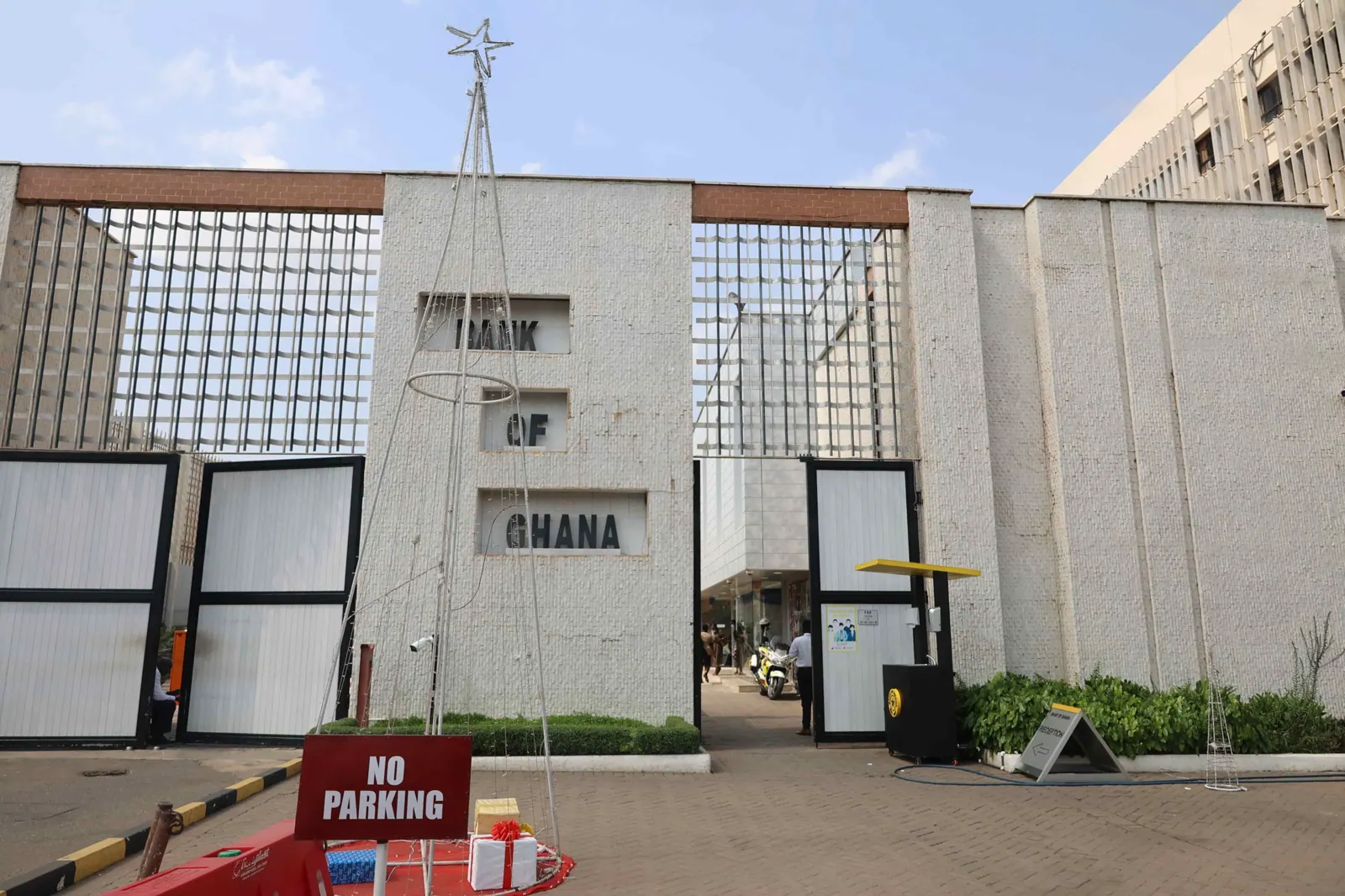
Ghana's gross international reserves have experienced a significant decline, dropping by approximately $1.9 billion between June and August 2026. According to data from the Bank of Ghana (BoG), the country's reserves fell from $12.94 billion in June to $11.07 billion in August. This decline reflects renewed pressure on Ghana's external buffers, despite strong export performance.
The decline in reserves is a notable trend, especially considering that the first quarter of 2026 saw a loss of $3.09 billion in reserves after recording $13.83 billion in reserves in 2025. However, Ghana's external reserves have seen an 11.5% increase in recent months, reaching approximately $14.5 billion. This recent growth is a positive indicator for the country's economic stability.
The Bank of Ghana and the government have been working to boost the country's external buffers. Dr. Johnson, an economist, believes that the growth of Ghana's external reserves will help attract investors and maintain their confidence, sustaining fiscal growth in the country. A stronger reserves position is essential for maintaining investor confidence and enhancing Ghana's ability to withstand global economic shocks.
To achieve this goal, the government has introduced the Ghana Accelerated National Reserve Accumulation Programme (GANRAP), which aims to significantly boost the country's external buffers over the medium term. The initiative targets an increase in reserves to the equivalent of 50 months of import cover by 2028, compared with the current level of about 5.8 months. Dr. Asiama, a monetary policy expert, cautioned that such ambitious programs require careful coordination.
The Minister of Finance, Dr. Cassiel Ato Forson, unveiled Ghana's first-ever comprehensive national policy, GANRAP, in late February. The policy is designed to deliberately and sustainably build the country's external reserves and secure long-term macroeconomic stability. The initiative marks a historic and strategic shift in how Ghana manages its external buffers, moving away from costly borrowing and short-term reserve-building measures.
Under GANRAP, the government is targeting an ambitious increase in reserves to the equivalent of 15 months of import cover by end-2028. The policy sets intermediate milestones of 8.6 months by end-2026, 11.8 months by end-2027, and 15 months by end-2028. The target is to create an "economic war chest" to shield Ghana against commodity price shocks, global financing volatility, and geopolitical tensions.
Central to the policy is a deliberate gold-backed reserve accumulation strategy, anchored on the Ghana Gold Board Act, 2025 (Act 1140). The government has set an operational weekly gold purchase target of approximately 3.02 tonnes. This will be achieved through the acquisition of at least 2.45 tonnes weekly from the Artisanal Small-Scale Mining (ASM) sector and invocation of pre-emption rights to secure a minimum of 0.57 tonnes weekly from the large-scale mining sector.
Key points
- Ghana's gross international reserves declined from $12.94 billion in June to $11.07 billion in August.
- The government has introduced the Ghana Accelerated National Reserve Accumulation Programme (GANRAP) to boost the country's external buffers.
- The policy targets an increase in reserves to the equivalent of 15 months of import cover by end-2028.