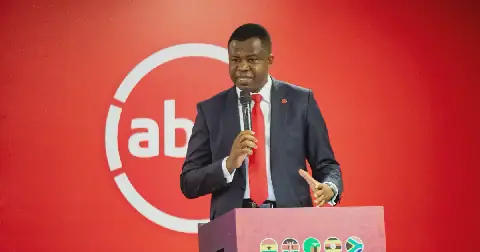
The President of the Young Lawyers Association, Noah Ephraem Tetteh Adamtey, has expressed concerns about a significant gap in Ghana's rape laws, specifically regarding male victims. Under Section 98 of the Criminal Offences Act, 1960 (Act 29), the current definition of rape does not acknowledge men as victims. This limitation was highlighted following a recent incident where a ride-hailing driver claimed that three women overpowered him and forced him to have sex against his will.
According to Mr. Adamtey, while a man subjected to forced sexual activity by a woman may not pursue a rape charge, existing provisions of the law can still be used to prosecute the perpetrator for other offences. For instance, such conduct could be considered indecent assault if there was forcible and non-consensual sexual contact. This would allow the state to bring criminal charges against the alleged perpetrator. Additionally, if the circumstances involved the victim being prevented from leaving the vehicle after being overpowered, the law could also support charges of assault, battery, and false imprisonment.
Mr. Adamtey noted that Sections 84 and 85 of Act 29 provide grounds to prosecute such conduct, particularly where someone is forcibly restrained or subjected to unwanted physical contact. However, the lawyer emphasised that the disparity becomes more significant when the offences are compared with the punishment attached to rape, which is considered a serious felony. In contrast, offences such as indecent assault and false imprisonment generally attract less severe penalties.
The disparity in punishments creates a potential gap in protection for men subjected to sexually exploitative acts by women. Although criminal charges may be possible, the penalties may not be comparable to those applicable in a conventional rape case. Mr. Adamtey explained that if the manner in which the woman had sexual contact with the man gets to the level of unnatural canal knowledge, then it may get to the extent of the punishment for rape.
The President of the Young Lawyers Association described the issue as one requiring policy consideration, particularly in determining whether Ghana's laws adequately protect male victims of non-consensual sexual violence. He stressed that the inability to classify the conduct as rape under the current definition does not mean a male victim has no legal remedy. However, he acknowledged that the available offences may carry significantly lighter punishments.
Mr. Adamtey added that if the circumstances of the case get to the level of unnatural canal knowledge, then the man may get a remedy equivalent to what a woman would get if a rape charge was brought. This highlights the need for a review of the current laws to ensure that male victims of non-consensual sexual violence have adequate legal protection.
The issue has sparked a national conversation about the need for reform in Ghana's rape laws to ensure that all victims, regardless of gender, have equal access to justice. The review of the laws will require careful consideration of the complexities surrounding male victims of non-consensual sexual violence and the need for adequate legal protection.
Key points
- Ghana's rape law does not recognise men as victims, leaving them with limited legal recourse.
- Existing provisions of the law can still be used to prosecute perpetrators for other offences, such as indecent assault and false imprisonment.
- The disparity in punishments creates a potential gap in protection for men subjected to sexually exploitative acts by women.