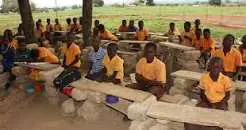
The cost of educating children in Ghana's private schools has become a significant burden for many families. A recent report from Tema highlighted the issue, with parents spending hundreds or even thousands of Ghanaian cedis per child on learning materials before school fees are considered. One parent reported spending GH¢895 for a Class One child, GH¢996 for a Class Five child, and GH¢1,990 for a child in junior high school. This has raised concerns about the affordability of education in Ghana.
The problem lies in the fact that some private schools require students to purchase new textbooks every year, even if the same books can be used by younger siblings. This is particularly challenging for families with multiple children attending private school. The cost of textbooks and exercise books can be considerable, and parents are calling for greater regulation of the private school system. The issue has sparked a national debate about the role of private schools in Ghana's education system and the need for greater oversight.
Private schools play a vital role in Ghana's education system, providing an alternative to public schools that often face challenges with infrastructure, teachers, and learning materials. According to Ghana's Education Strategic Plan, private schools account for about one-third of basic schools and more than 20% of basic-school enrolment nationally. However, this has also led to concerns about the lack of regulation in the private school sector, with some schools prescribing their own combinations of books and materials.
The law in Ghana requires private educational institutions to meet certain standards concerning curricula, syllabi, and facilities established by the Ministry of Education. The Pre-Tertiary Education Act, 2020 (Act 1049), established the current framework for regulating private schools, and the National Schools Inspectorate Authority (NaSIA) is responsible for approving private schools. However, despite these regulations, many private schools appear to be operating with relative freedom, prescribing their own textbooks and materials.
The National Council for Curriculum and Assessment (NaCCA) is responsible for developing national curriculum and assessment standards for pre-tertiary education. NaCCA has an Instructional Resources Directorate that assesses, approves, and reviews textbooks and other instructional materials. In May 2025, NaSIA and NaCCA jointly reminded all pre-tertiary schools that only NaCCA-approved textbooks and instructional materials should be used. However, it appears that some private schools may not be adhering to these guidelines.
One of the key issues is the lack of transparency and consistency in the regulation of private schools. Parents are often not aware of the curriculum being taught, the subjects being covered, or the learning outcomes expected at each level. They are also not aware of the total cost of compulsory learning materials or which materials can be reused by younger siblings. This lack of transparency has led to calls for greater regulation and oversight of the private school sector.
To address these concerns, it has been suggested that private schools should be required to clearly disclose the curriculum they follow, the subjects taught, and the learning outcomes expected at each level. They should also be required to disclose the textbooks and supplementary materials used, the publishers and authors of those materials, and whether the materials have NaCCA approval. This would help parents make informed decisions about their children's education and ensure that private schools are operating in a transparent and accountable manner.
Key points
- Private schools in Ghana face scrutiny over high textbook costs and lack of regulation.
- The cost of educating children in private schools has become a significant burden for many families.
- Greater regulation and oversight of the private school sector are needed to ensure transparency and accountability.