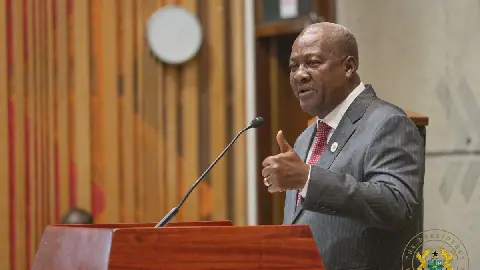
History rarely gives a nation a second chance with a leader who returns to office wiser, more experienced, and determined to leave a lasting legacy. President John Dramani Mahama of Ghana is one such rare figure in Africa. Having traveled the path from vice president to president, from defeated incumbent to opposition leader, and from former president back to the presidency through the ballot box, he brings a wealth of experience to his new term. This journey has exposed him to both the privileges of power and the humbling lessons of political defeat.
President Mahama's return to office is not simply a political comeback but the return of a leader who appreciates the urgency of turning vision into delivery. This perspective is already evident in the agenda taking shape since his inauguration in January 2025. A clear example is the Accra-Kumasi Expressway, a modern highway linking Ghana's two largest economic centers. For decades, Ghanaians have understood the importance of this project, yet progress remained elusive. The recent acquisition of the right-of-way represents a breakthrough that many believed would never happen.
Ghana has chosen to fund the Accra-Kumasi Expressway project in a way that demonstrates faith in its own financial strength and capacity to deliver. The country has mobilized $2 billion ahead of the award of one of the most ambitious road projects in its nation's history. This achievement should mean more to Ghanaians, as it is a powerful statement of confidence. At a time when many developing nations remain heavily dependent on external borrowing, Ghana is showing that it can fund its own development.
The Accra-Kumasi Expressway promises to ease congestion, cut transport costs, improve logistics, and unlock new economic opportunities across the country. Roads do more than connect cities; they connect people to jobs, businesses to markets, and ambition to opportunity. With construction expected to begin next year, Ghanaians can look forward to a more efficient and connected economy.
Beyond infrastructure, President Mahama's reforms in the mining sector signal a determination to ensure that Ghana derives greater value from its natural wealth. For decades, artisanal gold has been leaked away while the country exported billions of dollars' worth of minerals, capturing only a portion of the benefits. Today, there is a growing effort to change that reality through the Gold Board mechanism and other policies that capture more artisanal gold and increase local participation.
The government's focus on strategic infrastructure also extends to the modernization and expansion of airport infrastructure. This reflects an understanding that connectivity drives economic growth. Countries that aspire to become regional hubs must invest aggressively in transportation networks that facilitate trade, tourism, and investment. Modern airports are gateways to global markets, and with Ghana hosting the secretariat of the Africa Continental Free Trade Area, this should mean more to Ghanaians.
President Mahama's return offers a historic opportunity for transformation, with his understanding of governance and experience providing insights that cannot be learned from advisers, reports, or briefings. Ghana stands at an important moment in its development journey, with abundant natural resources, a dynamic and youthful population, vibrant entrepreneurs, and one of Africa's most stable democracies. The progress on the Accra-Kumasi Expressway, reforms in the mining sector, and the push for localization are all positive steps towards transforming potential into prosperity.
Key points
- President Mahama's return to office offers a historic opportunity for Ghana's transformation.
- The Accra-Kumasi Expressway project is a breakthrough that demonstrates Ghana's financial strength and capacity to deliver.
- President Mahama's reforms in the mining sector aim to ensure Ghana derives greater value from its natural wealth.