For decades, Ghana has been a destination for policy learning, with governments from across Africa sending officials to study its national health insurance system, social-protection programmes, and public-sector reforms. Despite this, Ghana often struggles to translate its innovations into sustained improvements in productivity, efficiency, and public-service delivery. The question remains whether Ghana has been able to institutionalize, finance, implement, and continuously improve its policies. This paradox has sparked a national conversation about Ghana's development strategy.
Ghana's National Health Insurance Scheme, established in 2003, is a prime example of a policy innovation that has attracted international attention. The scheme has been studied by countries such as Tanzania, Liberia, Rwanda, Kenya, Uganda, and Malawi. However, despite its success as a policy model, Ghana's own health-insurance system continues to face challenges related to financing, coverage, and sustainability. According to the 2025 budget documentation, 18.4 million people, or 56.3% of the population, were active NHIS members in 2024.
Ghana's experience with social protection provides another example of policy learning. The Livelihood Empowerment Against Poverty programme, or LEAP, was introduced as part of Ghana's efforts to provide cash support to vulnerable households. The development of LEAP was influenced by Brazil's Bolsa Família, and Brazilian officials participated in Ghana's policy-learning process. Ghana subsequently became a source of lessons for other African countries, including Malawi and The Gambia.
Ghana's school-feeding programme is another policy innovation that has attracted international attention. The programme, which combines social protection with local agricultural production, was studied by officials from Nigeria's Osun State in 2013. The Nigerian experience demonstrates how Ghanaian policy ideas have travelled beyond the country's borders. However, Ghana continues to confront challenges surrounding the financing, quality, coverage, and sustainability of its own programme.
The oil-palm industry presents a paradoxical case. Malaysia, which did not copy Ghana's oil-palm policy, developed one of the world's most productive and sophisticated palm-oil industries. Ghana, where oil palm is indigenous, remains an important producer but has not achieved comparable levels of productivity and industrial integration. Ghana's smallholder yields are approximately six tonnes per hectare, compared with up to 24 tonnes per hectare in Malaysia.
The difference between Ghana and Malaysia extends beyond farm yields. Malaysia developed an extensive industrial ecosystem connecting research, improved planting material, plantations, processing, refining, and oleochemicals to food products, cosmetics, and industrial products. Ghana has struggled to develop a comparable downstream industry, citing challenges such as fragmented smallholder production, low productivity, weak infrastructure, and limited value-chain integration.
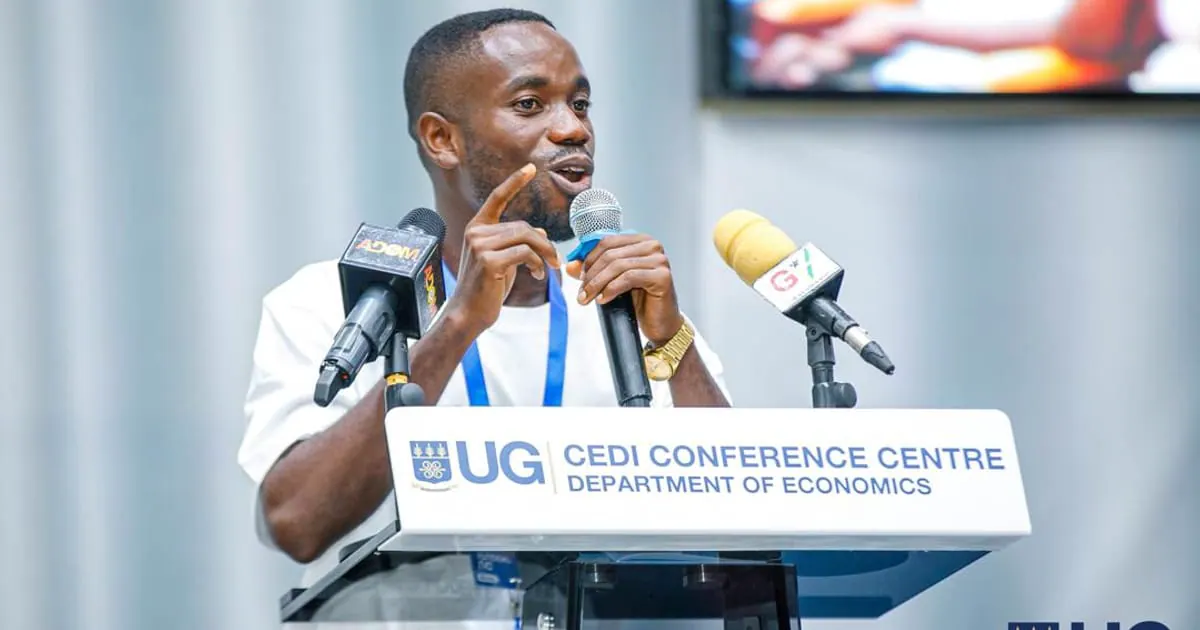
The Malaysian story raises fundamental questions about Ghana's broader development strategy. Why has Ghana struggled to capture more value from a crop that originated in its own region, while Malaysia transformed it into a globally competitive industrial sector? The answer may lie not in the availability of resources, but in the institutions and systems built around them. As Ishmael Oduro-Acheampong noted, the challenge for Ghana is whether it can continue improving the systems that other countries are studying.
Key points
- Ghana's policies attract international attention, but the country struggles to implement and sustain them.
- The country's National Health Insurance Scheme, social-protection programmes, and school-feeding programme are examples of policy innovations that have been studied by other countries.
- Ghana's development strategy and institutions are critical to addressing the country's challenges in translating policy innovations into sustained improvements.