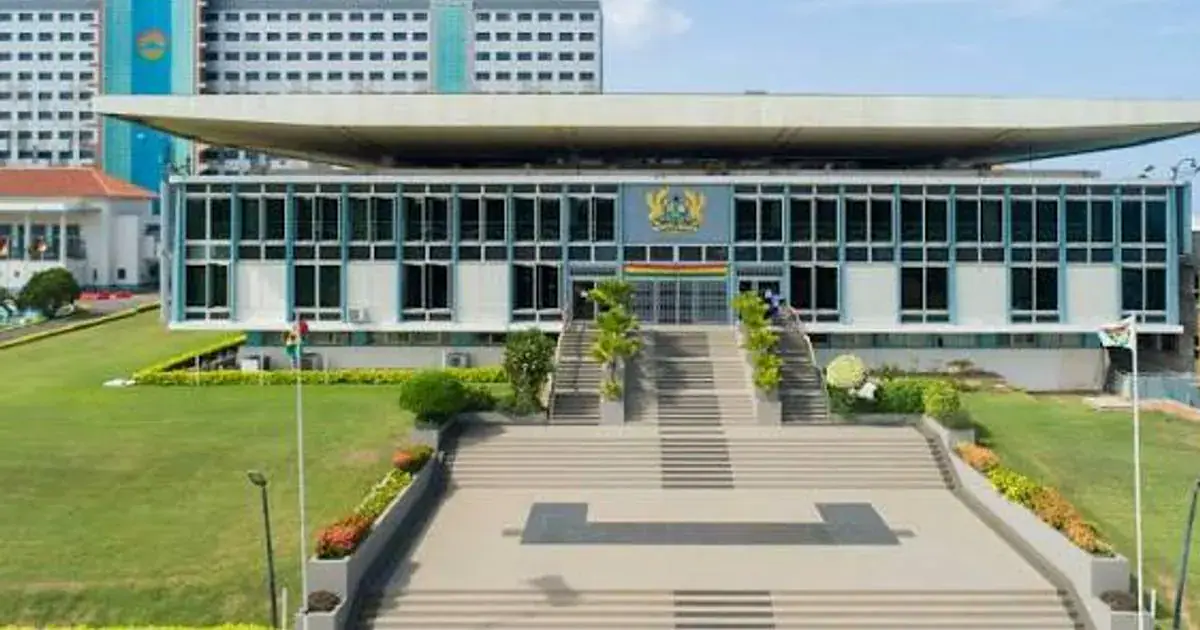
The Parliament of Ghana has been criticized for its security arrangements, particularly during major state events such as the State of the Nation Address. On these occasions, many senior state officials, including key figures in the national security architecture, gather in the parliamentary chamber, raising concerns about the potential risks of a single incident targeting the chamber. This concentration of officials could disrupt the continuity of government and complicate emergency coordination.
Article 67 of the 1992 Constitution of Ghana requires the President to deliver a message on the state of the nation to Parliament at the beginning of each session of Parliament and before its dissolution. However, the constitutional provision does not prescribe the attendance of every senior state official who routinely gathers in the parliamentary chamber for the occasion. Despite this, the State of the Nation Address has evolved into a major national ceremony, bringing together various stakeholders, including political leaders, judicial officers, senior public officials, diplomats, and representatives of the security services.
The presence of many senior officials at the State of the Nation Address demonstrates the unity of the state and the importance attached to the occasion. However, it also raises legitimate security questions about the potential consequences of an unforeseen incident targeting the chamber. The concern is not that these officials should be excluded from important national ceremonies, but rather whether the state has adequately assessed the risks associated with concentrating so many individuals with critical constitutional, judicial, executive, and security functions within a single facility.
The risk of an incident targeting the parliamentary chamber is not limited to the physical space itself. The airspace surrounding the precincts of Parliament also deserves attention. Aircraft taking off from or approaching Accra International Airport can sometimes be seen or heard from the parliamentary area, raising questions about coordination between national security agencies, aviation authorities, and the officials responsible for parliamentary security.
The relevant authorities must conduct and regularly review risk assessments to ensure that the necessary protective arrangements are in place for exceptional circumstances. This includes a comprehensive assessment of the surrounding environment, potential threats, and the ability to respond to emergencies. The protection of critical national institutions must extend beyond their immediate physical boundaries to ensure national security.
History offers sobering reminders of the vulnerability of institutions of state. In 1999, armed gunmen stormed Armenia's parliament, killing the prime minister, the parliamentary speaker, and other senior officials. Similarly, in Turkey in July 2016, during an attempted coup, the parliament building and the presidential complex were attacked from the air. These events demonstrate that threats to national institutions can take different forms and may emerge during periods of political instability.
In light of these concerns, there is a growing call for Ghana to adopt a Designated Survivor System, similar to that used in the United States. This system would ensure that at least one senior official is not present at the parliamentary chamber during major state events, thereby minimizing the risk of a single incident disrupting the continuity of government. By adopting such a system, Ghana can take a proactive approach to mitigating the risks associated with its parliamentary security arrangements.
Key points
- Ghana's concentration of senior state officials in one location during major state events raises concerns about continuity risks and national security.
- The state must adequately assess the risks associated with concentrating many individuals with critical functions within a single facility.
- Ghana should consider adopting a Designated Survivor System to minimize the risk of disrupting the continuity of government.