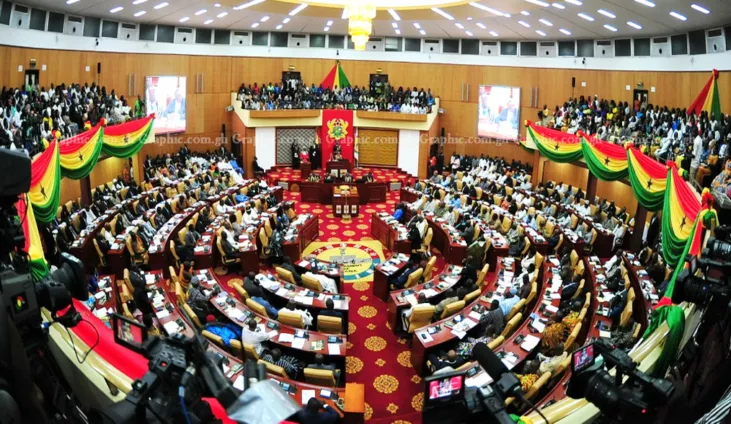
In Ghana, Parliament plays a crucial role in ensuring accountability within government agencies. When these agencies are accused of misusing public funds, mishandling contracts, or failing to deliver on their mandates, Parliament has the constitutional power to investigate. This authority is not merely ceremonial; it enables parliamentary committees to summon ministers, compel the production of documents, and examine witnesses under oath. These powers are derived from Article 103(3) of the 1992 Constitution, which empowers parliamentary committees to investigate and inquire into the activities and administration of ministries, departments, and agencies.
The constitutional basis for Parliament's investigative power is rooted in Article 103(3) of the 1992 Constitution. This article authorizes parliamentary committees to investigate and inquire into the activities and administration of ministries and departments. Furthermore, Article 103(6) grants committees the powers, rights, and privileges of a High Court for enforcing witness attendance, examining witnesses on oath, and compelling the production of documents. This means that parliamentary committees can require public officers to appear, produce documents, and testify under oath. Despite these substantial powers, the Commission on Human Rights and Administrative Justice (CHRAJ) has noted that they are often underutilized.
Parliament conducts investigations through various committees, each with jurisdiction over specific areas and the authority to investigate relevant ministries, departments, and agencies. For instance, the Committee on Defence and Interior has jurisdiction over matters pertaining to national security and internal affairs. Similarly, the Committee on Trade, Industry and Tourism has investigative authority over its sector. The Public Accounts Committee (PAC) holds a distinct role, examining reports from the Auditor-General to scrutinize how public funds have been used or misused. The PAC's work has resulted in the recovery of GH¢233.3 million in misused public funds.
The Public Accounts Committee (PAC) is a key engine of accountability in Ghana's Parliament. In 2025, Speaker Alban Bagbin revealed that the PAC's examinations had led to the recovery of GH¢233.3 million in misused public funds. This followed 261 sittings examining Auditor-General reports and 252 specific recommendations to address systemic weaknesses. The PAC's hearings are public and impactful, with the committee examining a special audit report on government outstanding claims and commitments in 2026. The Chairperson, Abena Osei-Asare, disclosed that out of $241 billion in commitments, claims, and bank transfer advice submitted, $104.4 billion was validated and recommended for payment.
Ministers and officials who ignore PAC invitations face consequences. In March 2026, the PAC issued an ultimatum to absentee ministers: appear in Tamale or face a formal citation for "refusal to attend," which would be included in the committee's final report to the President. The Ranking Member, Samuel Atta Mills, attributed the no-shows to "arrogance." The PAC's work has direct consequences for individuals, as seen in the March 2026 hearings on a GH¢4.8 million "ghost vehicles" scandal at the Ministry of Defence. The committee found that vehicles supposedly supplied for border surveillance during the 2024 elections had never been delivered.
Parliament's investigative power is not limited to the PAC. Other committees, such as the Committee on Petitions, investigate and report on matters referred to them under the Standing Orders. Parliament can also establish ad hoc committees to investigate specific matters, from bribery allegations to environmental issues. These committees have the authority to summon ministers, compel document production, and examine witnesses under oath. This enables them to thoroughly investigate and report on matters within their jurisdiction.
In conclusion, Ghana's Parliament plays a vital role in ensuring accountability within government agencies. Through its committees, Parliament has the constitutional power to investigate and inquire into the activities and administration of ministries, departments, and agencies. The PAC's work has resulted in significant recoveries of misused public funds and has held ministers and officials accountable for their actions. As Ghana continues to strive for good governance, Parliament's investigative power remains a crucial mechanism for promoting transparency and accountability.
Key points
- Parliament's investigative power is rooted in Article 103(3) of the 1992 Constitution.
- The Public Accounts Committee (PAC) has recovered GH¢233.3 million in misused public funds through its hearings.
- Ministers and officials who ignore PAC invitations face consequences, including formal citations for "refusal to attend."