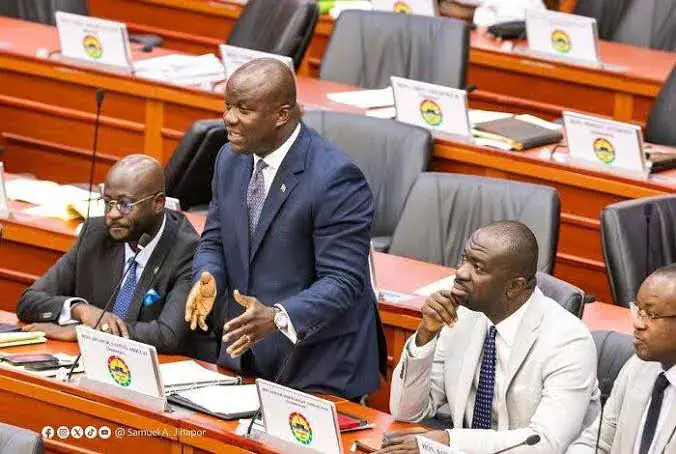
A heated confrontation broke out in Ghana's Parliament on November 3, 2026, as Damongo Member of Parliament Samuel Abu Jinapor was escorted out of the Chamber by a Parliamentary Marshal. The incident occurred after Jinapor made an allegation that Foreign Affairs Minister Samuel Okudzeto Ablakwa was involved in the sale of Ghanaian diplomatic passports. The allegation prompted an immediate objection from Majority Leader James Agalga, who questioned the factual basis of the claim.
The controversy began during the opening sitting of Parliament's Third Meeting of the Second Session, exposing deepening divisions between the Majority and Minority Caucuses. Speaker Alban Bagbin directed Jinapor to withdraw his statement, but the legislator refused, leading to his ejection from the Chamber. The Minority Caucus protested by walking out in solidarity with their colleague. Minority Leader Alexander Afenyo-Markin strongly criticized the Speaker's intervention, describing it as harsh and unfair.
Afenyo-Markin questioned the justification for the disciplinary action, arguing that Jinapor had already withdrawn the disputed statement. He believed that the Speaker should have exercised greater restraint and allowed the concerns raised by Jinapor to be referred to the appropriate parliamentary committee for further examination. According to Afenyo-Markin, legislators should not be required to conclusively establish the truth of every allegation before bringing matters of public interest to Parliament.
The confrontation comes against the backdrop of mounting opposition scrutiny of Ablakwa over two major controversies involving the expenditure on the evacuation of Ghanaians from South Africa and the issuance of diplomatic and service passports. The NPP has questioned the circumstances surrounding the allocation of official travel documents to certain individuals, particularly six beneficiaries whose professional designations and institutional positions were allegedly inaccurately represented.
The opposition has petitioned the United States Embassy in Ghana to suspend recognition of the affected passports until an independent verification exercise establishes whether the beneficiaries satisfied the applicable eligibility requirements. The passport controversy has become a major political issue, with the Minority demanding greater transparency concerning the individuals authorized to receive diplomatic and service passports, the criteria governing their issuance, and the officials responsible for approving them.
Earlier on the same day, NPP supporters staged a demonstration in Accra, demanding accountability and a comprehensive explanation of the expenditure incurred during the evacuation exercise. The demonstrators questioned the reported financial outlay of GH¢49.72 million, drawing attention to alleged discrepancies in payment records and gaps in the supporting documentation. They also demanded answers concerning the diplomatic passport controversy.
The NPP has called for Ablakwa's resignation or his removal by President John Dramani Mahama, arguing that the issues surrounding the evacuation expenditure and passport administration require an independent investigation. Ablakwa has rejected allegations of financial misconduct, maintaining that the evacuation expenditure should be subjected to an independent audit. The incident has added a fresh institutional dimension to an already escalating political dispute, highlighting competing expectations surrounding legislative oversight and ministerial accountability.
Key points
- The confrontation in Ghana's Parliament was sparked by allegations of diplomatic passport sales made by MP Samuel Abu Jinapor against Foreign Affairs Minister Samuel Okudzeto Ablakwa.
- The incident exposed deepening divisions between the Majority and Minority Caucuses over the conduct of the Foreign Affairs Minister and the Speaker's handling of allegations raised on the floor of the House.
- The opposition has petitioned the US Embassy in Ghana to suspend recognition of certain diplomatic passports issued under questionable circumstances.