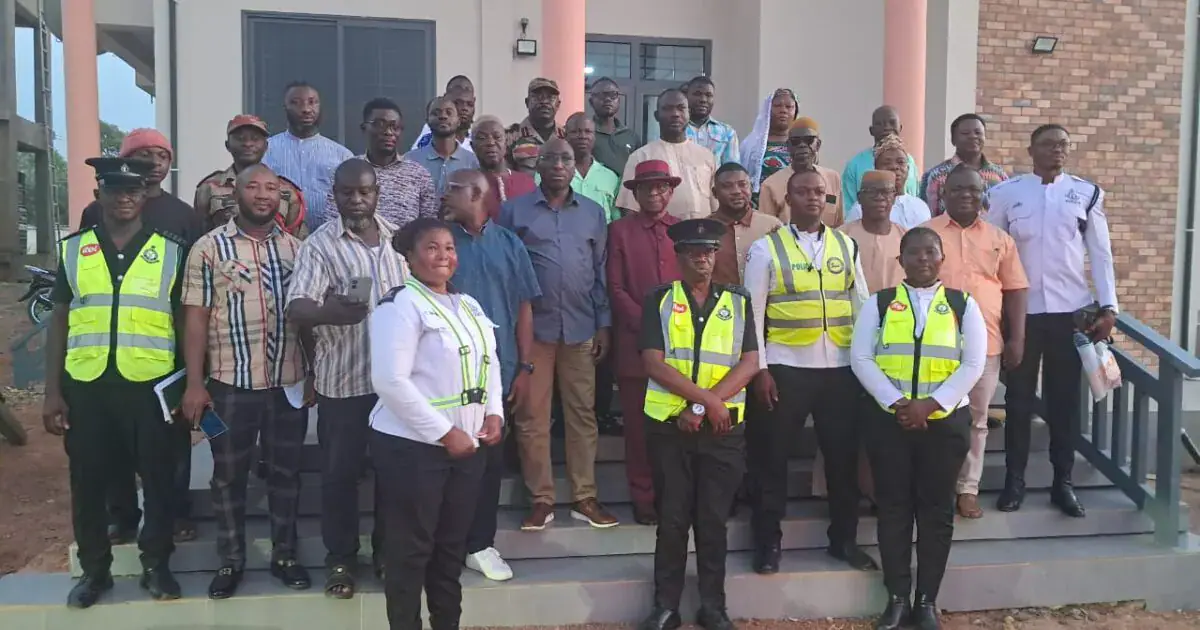
The Director-General of the National Road Safety Authority (NRSA), Abraham Amaliba, has announced a series of measures to address road safety concerns in Ghana, including the removal of traders from road pavements, the introduction of technology-driven traffic enforcement, and mandatory towing of broken-down vehicles. He made the announcement during a regional engagement in Wa, where he emphasized the need for collaboration with the police to enforce road traffic regulations.
According to Mr. Amaliba, local government authorities have been given a one-month ultimatum to clear traders and commercial activities from road spaces and pavements. He also announced plans to issue directives requiring political parties to stop placing campaign posters on road signs, warning that the practice obstructs visibility and poses a danger to road users. The NRSA Director-General outlined the authority's road safety framework, which is built around the "Four E's" of Education, Enforcement, Engineering, and Emergency Response.
The Upper West Region has recorded an alarming number of road deaths, with 22 males and 11 females killed in recent fatal crashes, according to the Regional Police Commander, DCOP Francis Yiribaare. He disclosed that over-speeding is the leading cause of road fatalities, particularly along the Wa-Tumu stretch. DCOP Yiribaare also reported that the police are shifting their enforcement strategies to pay greater attention to private vehicles, which are increasingly becoming a road safety concern.
To address the concerns raised by the police, Mr. Amaliba announced the introduction of a system known as Trafitech, which uses cameras to automate traffic monitoring and enforcement, reducing direct human involvement in identifying and apprehending traffic offenders. The system is being rolled out in Accra and Kumasi, with plans to extend it to other parts of the country. Mr. Amaliba also announced that from next year, the towing of broken-down vehicles from roads would become mandatory to prevent crashes involving stationary vehicles.
The scale of Ghana's road safety challenge was further highlighted by the NRSA's Deputy Director for Planning and Programming, Dennis Yeribu, who disclosed that Ghana records at least 38 road crashes, eight deaths, and 45 permanent injuries every day. He said men account for 80% of road crash fatalities, while nearly 90% of those killed are adults aged 18 and above. The period between 2:00 pm and 8:00 pm is particularly dangerous for road users, with 3,644 fatalities recorded within the six-hour window between 2015 and 2024.
The Upper West Region records crash severity rates above the national average, with motorcycle-related fatalities contributing significantly to the country's road safety challenges. Mr. Yeribu also cited a 26% national increase in motorcycle fatalities, underscoring the need for stronger enforcement and targeted road safety interventions. The engagements form part of efforts by the NRSA and its partners to strengthen road safety enforcement, improve public awareness, and reduce preventable deaths and injuries on Ghana's roads.
The NRSA's efforts to address road safety concerns have been welcomed by stakeholders, who have called for sustained efforts to reduce the alarming rate of road deaths in Ghana. The authority's determination to enforce road traffic regulations, despite potential resistance from influential individuals, has been seen as a positive step towards reducing the country's road safety challenges. The introduction of technology-driven traffic enforcement and mandatory towing of broken-down vehicles is expected to improve compliance and discourage reckless driving.
Key points
- The NRSA has announced tougher enforcement measures to address the alarming rate of road deaths in Ghana, particularly in the Upper West Region.
- The authority has introduced technology-driven traffic enforcement and mandatory towing of broken-down vehicles to improve compliance and discourage reckless driving.
- Ghana records at least eight road deaths daily, with men accounting for 80% of road crash fatalities.