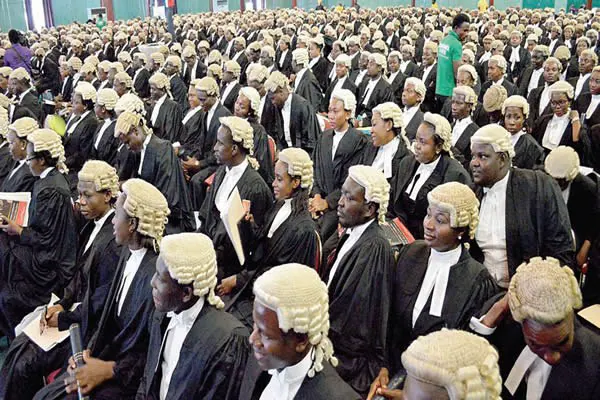
Ghana recently welcomed 1,568 new lawyers, the largest single intake in the country's history. The enrollment ceremony took place on October 9, 2026, at the Supreme Court, with family and friends in attendance. This milestone marks a significant achievement for the new lawyers and their families. However, it also raises questions about the distribution and utilization of these new legal professionals. According to MyJoyOnline, the country is facing a mismatch between the growing number of lawyers and the need for legal aid services.
The Legal Aid Commission, responsible for providing free legal representation to citizens who cannot afford private lawyers, operates in only 45 of Ghana's 261 districts. The Commission has expressed a need for 180 additional staff nationwide to meet basic demand. Specifically, Tamale and Bolgatanga, two regional capitals in the north, share a single Legal Aid lawyer between them. This shortage of legal aid lawyers highlights a pressing concern about the equitable distribution of legal services across the country.
Ghana's lawyer-to-citizen ratio is approximately one lawyer for every 4,000 citizens, with nearly 10,000 lawyers serving a population of around 35 million. In comparison, the United Kingdom has one lawyer per 440 citizens, while the United States has one per 240 citizens. China's ratio stands at roughly one lawyer per 1,700 citizens. Within West Africa, Nigeria has a lower lawyer-to-citizen ratio than Ghana but a larger economy.
The distribution of lawyers in Ghana is uneven, with most lawyers concentrated in major cities like Accra, Kumasi, and Takoradi. This leaves other regions comparatively starved of lawyers, despite the national total of lawyers increasing. The Judicial Service Staff Association has reported that about 130 of Ghana's 500 courts nationwide have no sitting judge, partly due to a funding bottleneck that hinders judicial appointments.
The absence of judges in these courts contributes to persistent adjournments and delays that frustrate litigants across the country. It appears that Ghana has enough qualified lawyers to fill its empty benches and understaffed legal aid offices. However, the country may lack the fiscal commitment or policy direction to channel new graduates toward public interest or legal aid roles rather than private commercial practice.
The dominance of lawyers in Ghanaian politics has contributed to public unease about the growing number of lawyers. Some commentators have compared the lawyer pipeline to shortages in engineering and medicine, questioning which profession Ghana most urgently needs to expand for national development. A law degree can lead to various career paths beyond courtroom litigation, including corporate and commercial advisory work, intellectual property practice, and policy advocacy.
The lawyer surplus debate is abstract until ordinary Ghanaians need legal help and cannot get it. The legal aid gap means that residents of districts without a Legal Aid Commission office must travel long distances, pay privately, or go without representation in disputes. A record bar class does little to close that gap if new lawyers gravitate toward private practice in major cities rather than public interest or legal aid roles in underserved regions.
Key points
- Ghana's new lawyers outnumber legal aid providers, highlighting a mismatch between the growing number of lawyers and the need for legal aid services.
- The country's lawyer-to-citizen ratio is approximately one lawyer for every 4,000 citizens, with an uneven distribution of lawyers across regions.
- The absence of judges in 130 courts nationwide contributes to persistent adjournments and delays, partly due to a funding bottleneck that hinders judicial appointments.