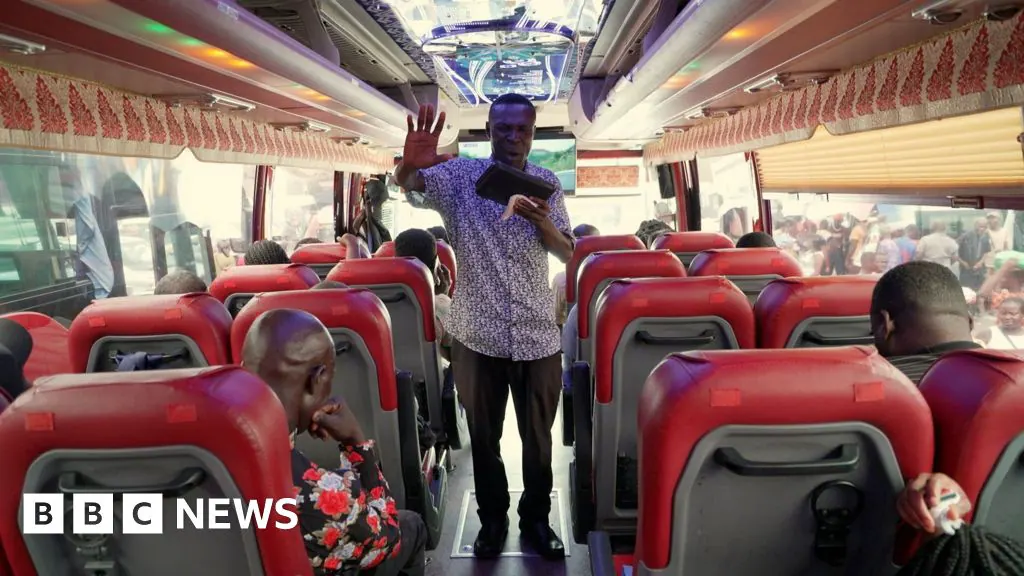
In predominantly Christian Ghana, preaching on public transport is a widespread practice. At the Neoplan bus station in Accra, a group of Christians gather to evangelize on vehicles taking travelers across the country. Led by 61-year-old pastor Boateng Bismark James, 13 worshippers prepare to spread their message. Ghana's new law, however, may put an end to this familiar practice. The regulation, passed by parliament in May, targets preaching and hawking on vehicles while in motion, citing safety and comfort concerns.
The new law stipulates that anyone found preaching in public service vehicles faces up to eight months in prison, a fine of up to $52 (£39), or both. Boateng, a pastor at Gospel Light church, has been preaching on commercial vehicles since 2023. He believes that not everyone can attend church on Sundays and that his message of salvation is essential for passengers. Some travelers listen intently, while others try to ignore him. Boateng says some passengers have expressed gratitude for his message, stating they've never heard it in church before.
The new rules have sparked divided opinions. Critics argue that preaching on moving vehicles is a nuisance and a safety risk, as it may distract drivers. Supporters, however, believe that evangelism is a Christian duty and should be protected under freedom of religious worship. Chery Lokko, a passenger in her early 30s, prefers to travel in peace, stating that preachers can be a nuisance and even spit saliva on passengers. In contrast, Bernice Nartey, traveling to Kumasi, thinks pastors should be allowed to preach with passengers' consent.
A video widely shared on social media shows a passenger angrily confronting a pastor attempting to board a minibus. Despite this, many Ghanaians believe that evangelism on public transport is crucial for reaching people who may not attend church. Bernice Nartey notes that the preaching sometimes helps people find renewed hope during stressful situations. Boateng is concerned about the impact of the new law on his ministry and income, as many pastors rely on monetary gifts from passengers.
Boateng urges the government to allow pastors to preach on buses and alight when exiting Accra. He believes that preaching is not only a religious calling but also an essential source of income. In fact, he's been able to support his children's education through the gifts received while preaching. Ghana's constitution guarantees freedom of religion, but those rights are subject to public safety considerations.
Rev Enoch Paul Hayes, a senior pastor at the International Central Gospel Church, does not think the new rules infringe on religious freedom. He advises fellow pastors not to break the law and instead use alternative outlets like social media to spread their message. Hayes suggests that social media can reach thousands of people, making it a viable option for pastors.
The Christian Council of Ghana did not respond to requests for comment. For Boateng and other bus preachers, the new rules create a difficult choice between adapting their ministry, giving up a vital source of income, or risking legal consequences. As Ghana's predominantly Christian population navigates this change, the impact on evangelism and public transport remains to be seen.
Key points
- The new law in Ghana prohibits preaching on public service vehicles, classifying it as a nuisance and citing safety and comfort concerns.
- The law has sparked divided opinions, with critics arguing it's a nuisance and safety risk, while supporters believe it's essential for evangelism.
- Pastors face up to eight months in prison, a fine of up to $52 (£39), or both if found preaching in public service vehicles.