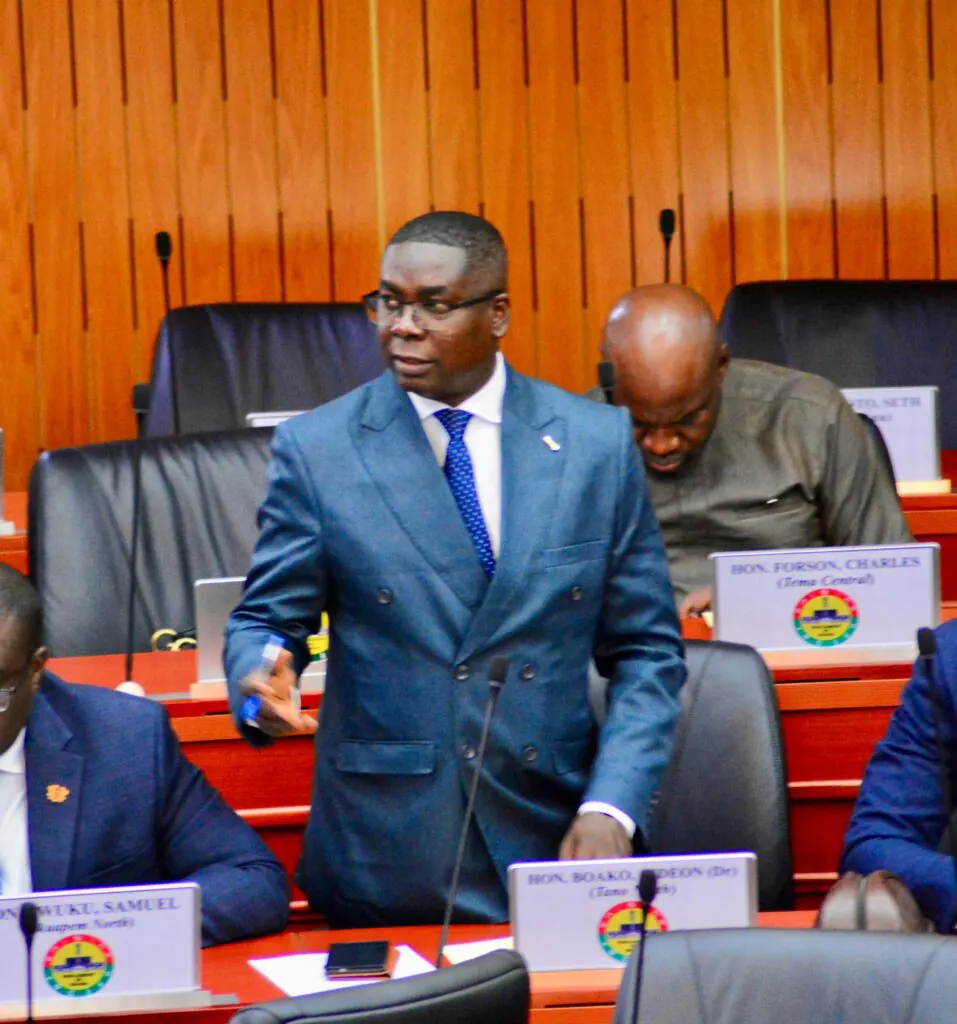
Ghana's Deputy Ranking Member of Parliament's Finance Committee, Dr. Gideon Boako, has raised concerns about the resilience of the country's new gold-to-foreign-exchange model. In a write-up on September 27, Dr. Boako examined the changing external-sector architecture following the transfer of domestic gold-purchasing responsibilities from the Bank of Ghana to the Ghana Gold Board (GoldBod) in July. The new model relies on commercial banks and private off-takers to finance gold purchases, generating foreign exchange for the market and reserves.
Under the new arrangement, GoldBod reported generating $1.315 billion in foreign exchange in August, its first full month under the new financing structure. About $668 million was sold directly to commercial banks, and approximately $647 million was made available to the Bank of Ghana for reserve accumulation. Dr. Boako noted that one strong month was not enough to establish whether the model could withstand less favourable market conditions.
Dr. Boako identified potential risks to the model, including tighter commercial-bank liquidity, reduced financing from private off-takers, weaker gold production, disruptions to export shipments, and rising financing costs. These concerns come against the backdrop of pressure on Ghana's external position, with the cedi depreciating by 9.5 percent in real bilateral terms against the US dollar on a year-to-date basis by September.
The cedi's depreciation and volatile gross international reserves have raised concerns about the model's ability to supply sufficient foreign exchange to commercial banks and the Bank of Ghana. Dr. Boako stated that the key test would be whether GoldBod could continue to mobilize financing consistently and at scale when market conditions become more difficult.
The new gold-to-foreign-exchange model was introduced to eliminate quasi-fiscal risks associated with the previous arrangement. Dr. Boako's concerns highlight the need for careful monitoring of the model's performance, particularly in the face of potential risks and challenges.
According to Dr. Boako, the model's success will depend on its ability to mobilize financing consistently and at scale, even in difficult market conditions. The Ghanaian government's efforts to stabilize the cedi and build up international reserves will be closely watched in the coming months.
The performance of GoldBod under the new financing structure will be crucial in determining the model's resilience and effectiveness in generating foreign exchange for the country. Key stakeholders will be monitoring the situation closely to ensure that the model achieves its intended objectives.
Key points
- Dr. Gideon Boako raises concerns about the resilience of Ghana's new gold-to-foreign-exchange model amid pressure on the cedi and fluctuations in international reserves.
- GoldBod reported generating $1.315 billion in foreign exchange in August under the new financing structure.
- The model's success will depend on its ability to mobilize financing consistently and at scale, even in difficult market conditions.