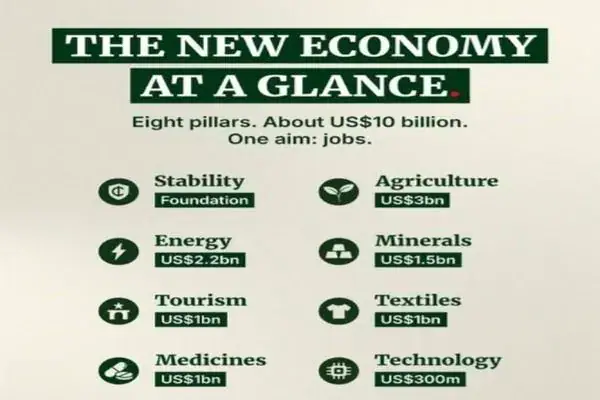
The Ghanaian government, led by the Mahama-led NDC, has introduced a US$10 billion New Economy programme aimed at transforming the country's economy through industrialisation, investment, employment, and prosperity. However, this new initiative has raised questions about the fate of previous promises made to Ghanaians, including a 24-hour economy, thousands of jobs, and improved healthcare and education.
The 24-Hour Economy was a flagship promise of the NDC's 2024 election campaign, aiming to create approximately 1.7 million jobs by the end of 2028. Despite its ambitious goals, the 2027 Budget allocates only GH¢165 million to the 24-Hour Economy Secretariat, compared to GH¢30 billion for the New Economy programme. This significant disparity in funding has raised concerns about the government's priorities and implementation strategy.
The Big Push, another government initiative, has received a combined allocation of GH¢59.8 billion across two budgets. However, despite the substantial funding, the 2026 Mid-Year Fiscal Policy Review reported that only 13 out of 87 projects had attained at least 50 per cent completion. Ghanaians deserve to know how many roads have been completed, how much has actually been spent, and what liabilities remain outstanding.
The New Economy programme has been allocated GH¢30 billion, equivalent to approximately 1.5 per cent of Ghana's GDP. The programme aims to mobilise US$10 billion between 2027 and 2030, with eight priority areas, including agriculture, energy, and technology. However, concerns have been raised about the lack of a detailed public breakdown of the allocation by project, pillar, and implementing institution.
An analysis by Africa Policy Lens highlighted that the combined capital budgets of seven ministries associated with the programme amounted to approximately GH¢5.1 billion, against the central GH¢30 billion allocation. This discrepancy has raised concerns about public financial accountability and the need for transparency in the programme's implementation.
The government owes Ghanaians an account of the 24-Hour Economy and the Big Push before asking them to embrace the New Economy programme. A manifesto commitment does not expire because a government introduces a new slogan, and the electorate did not vote for an endless succession of economic slogans, but for tangible results.
The New Economy programme must be implemented with transparency and accountability to avoid shifting public attention from unfulfilled promises. The government must provide a detailed breakdown of the programme's implementation plan, including costed projects, timelines, and responsible institutions, to ensure public financial accountability and trust.
Key points
- The New Economy programme has been allocated GH¢30 billion, with concerns raised about the lack of a detailed public breakdown of the allocation.
- The 24-Hour Economy and Big Push initiatives have received significantly lower funding and have not delivered on their promises.
- The government must provide transparency and accountability in the implementation of the New Economy programme to avoid shifting public attention from unfulfilled promises.