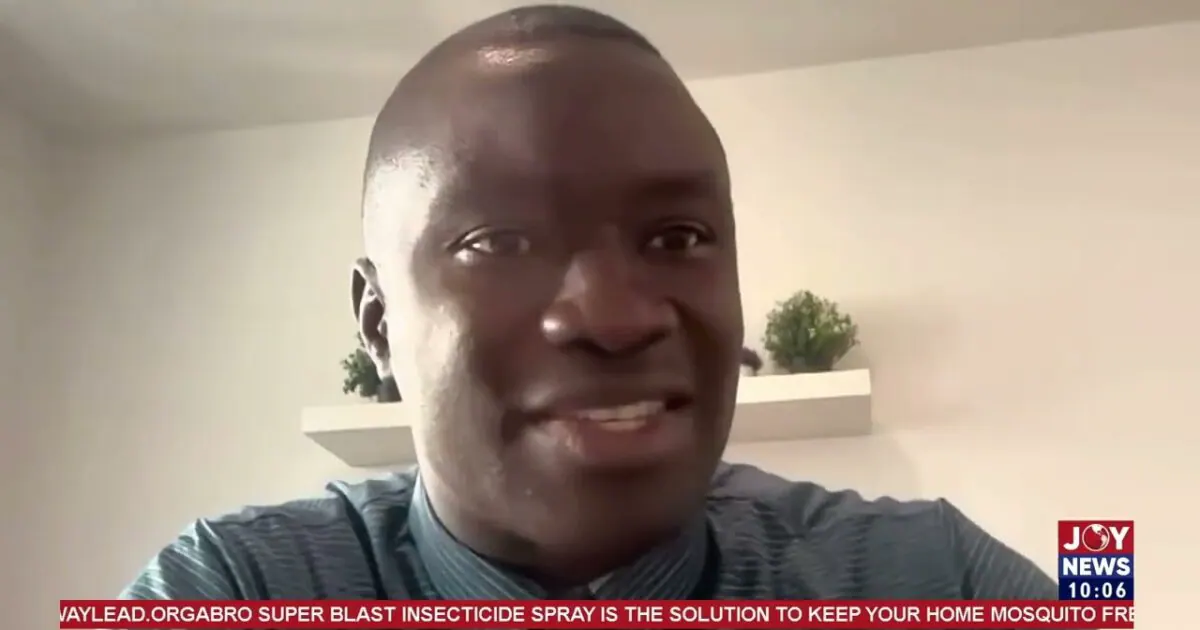
The Deputy Director-General of Ghana's Narcotics Control Commission (NACOC), Alexander Twum-Barimah, has firmly rejected allegations that the leadership of the Commission could be compromised in the movement of narcotics out of Ghana. He emphasized that NACOC remains committed to protecting the country's image and will not allow its leadership to be compromised in the fight against narcotics trafficking. Twum-Barimah made these statements on JoyNews' Newsfile on September 26, 2026.
Twum-Barimah's comments were in response to allegations made by Rev. John Ntim Fordjour, the Ranking Member on Parliament's Defence and Interior Committee. Ntim Fordjour had raised concerns about the handling of narcotics trafficking cases involving Ghana. Twum-Barimah denied what he described as false allegations made against him and NACOC, insisting that he was present at the airport when security agencies examined an aircraft that was later referenced by the legislator.
The controversy centers around an aircraft that was examined by security agencies on March 16, 2025. According to Twum-Barimah, the examination was negative, contradicting subsequent claims made by Ntim Fordjour. Twum-Barimah questioned the basis for the legislator's claims and accused him of repeatedly presenting false information. He also denied allegations that he had colluded with individuals to facilitate the movement of drugs out of the country.
Twum-Barimah disputed a claim that 73 parcels of cocaine had left Ghana for the Netherlands, insisting that the parcels were intercepted in Ghana. He urged those commenting on ongoing narcotics investigations to ensure that the information they provide is accurate. The NACOC Deputy Director-General emphasized that NACOC and other state agencies were taking steps to deal with the narcotics cases and that individuals identified in connection with the investigations were being subjected to judicial and investigative processes.
The Deputy Director-General criticized the practice of targeting individuals over a broader national narcotics issue. He argued that the existence of a major drug-related case does not automatically mean officials within the responsible agencies should be personally attacked. Twum-Barimah maintained that NACOC would continue working with other state agencies to address the matter and protect the integrity of the country's narcotics-control system.
The controversy highlights the challenges faced by Ghana in addressing narcotics trafficking. NACOC's efforts to combat the issue have been questioned by some, with allegations of compromised leadership and inadequate handling of cases. However, Twum-Barimah's statements demonstrate the Commission's commitment to transparency and accountability. The incident also underscores the need for accurate information and responsible commentary on ongoing investigations.
The incident has sparked a national conversation about the fight against narcotics trafficking in Ghana. Stakeholders are calling for a collaborative approach to address the issue, with some advocating for stronger enforcement measures. As the investigations continue, NACOC's leadership has reiterated its commitment to protecting the country's image and upholding its mandate.
Key points
- Deputy Director-General Alexander Twum-Barimah denies allegations of compromised leadership in narcotics trafficking cases.
- NACOC intercepted 73 parcels of cocaine in Ghana, contradicting claims that they were exported to the Netherlands.
- Twum-Barimah urges accurate information and responsible commentary on ongoing narcotics investigations.