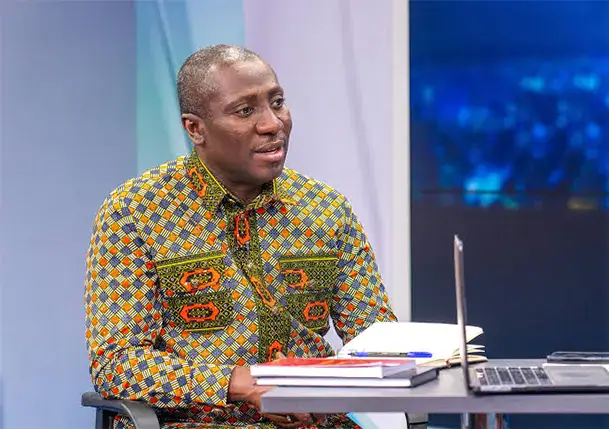
Ghana's Minority Leader, Alexander Afenyo-Markin, has called on the government to repeal Section 208 of the Criminal Offences Act. He described the provision, commonly referred to as the 'fear and panic' law, as a threat to freedom of expression and the nation's democracy. The law has been used to prosecute citizens and journalists over their publications. Mr. Afenyo-Markin made the call at the 30th Ghana Journalists Association (GJA) Media Awards in Accra.
The Minority Leader expressed concern over the growing use of Section 208 to arrest and prosecute citizens and journalists for statements and publications. He said his caucus believed the provision had no place in Ghana's democratic dispensation. The law has been used to criminalise legitimate public criticism and suppress dissent. Mr. Afenyo-Markin argued that the application of the law could create an atmosphere of fear that would extend beyond newsrooms to other sections of society.
Mr. Afenyo-Markin said the criminal prosecution of individuals over political speech, public criticism, satire, opinion, and journalism was a dangerous way of regulating public expression. He noted that when every uncomfortable statement became a potential criminal case, the result was not a more truthful society, but a more fearful one. The Minority Leader also suggested that the repeal of Section 76 of the Electronic Communications Act, 2008, might be pursued.
The two provisions, Section 208 and Section 76, have placed citizens under the threat of prosecution for statements made in the digital public space. However, Mr. Afenyo-Markin stressed that his caucus was not advocating irresponsible speech or seeking to defend falsehood, hate speech, incitement, or publications that endangered lives and public peace. He said freedom of expression must be exercised responsibly.
Mr. Afenyo-Markin suggested that defamation, libel, and false publication could be addressed through civil actions. This would allow persons whose reputations had been damaged to seek redress through the courts. He said such remedies could include retractions, apologies, and compensation rather than imprisonment. The Minority Leader cautioned against the use of Strategic Lawsuits Against Public Participation (SLAPPs) to intimidate journalists and citizens.
Mr. Afenyo-Markin warned that Ghana must not allow the gains made in press freedom following the repeal of the criminal libel and sedition laws in 2001 to be undermined. He recalled that former President John Agyekum Kufuor had made the repeal of the criminal libel laws a priority after assuming office in 2001. The Minority Leader also cited former President Nana Addo Dankwa Akufo-Addo's 2019 declaration that he would rather have a reckless press than a submissive one.
The Minority Leader urged President John Dramani Mahama to consider granting a pardon to Camilla Alhassan, who is in prison over social media activities. He maintained that the right to speak, question authority, criticise government, and disagree with public officials belonged to all Ghanaians, irrespective of their political affiliations. Mr. Afenyo-Markin added that journalists were not enemies of the state but played an important role in holding public officials accountable and giving a voice to vulnerable groups.
Key points
- The Minority Leader, Alexander Afenyo-Markin, calls for the repeal of Section 208 of the Criminal Offences Act.
- The law has been used to prosecute citizens and journalists over their publications, threatening freedom of expression and democracy.
- The Minority Leader suggests that defamation and false publication could be addressed through civil actions rather than criminal prosecution.
Reporting sources
- Repeal Criminal ‘Fear And Panic’ Law – Afenyo To Govt · Daily Guide