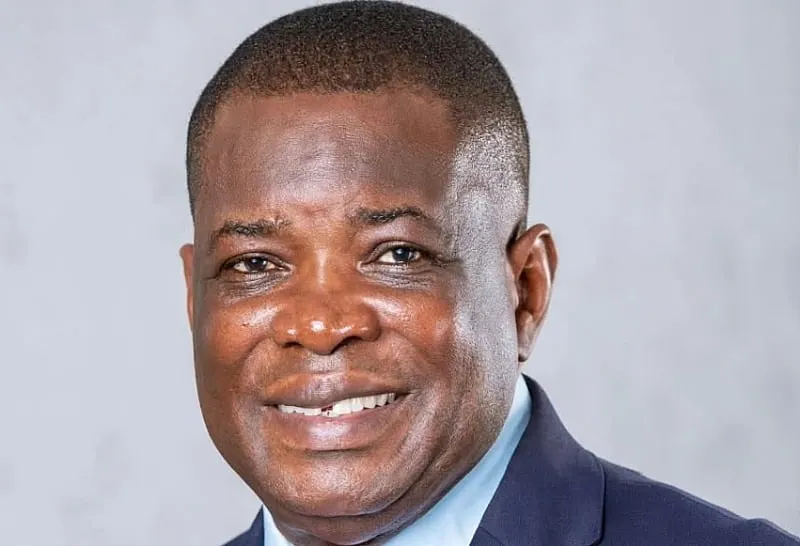
Ghana's Minister for Roads and Highways, Kwame Agbodza, has been instrumental in the government's efforts to revamp the country's road infrastructure. As a key part of President John Dramani Mahama's reset agenda, Agbodza has been working tirelessly to deliver on the promise of improved roads. With a clear mandate to execute the President's Big Push agenda, Agbodza has been driving a trans-generational investment in quality, durable road infrastructure that connects economic zones, reduces travel time, and restores faith in public works.
Agbodza's approach to his role has been characterized by a no-nonsense attitude and a commitment to getting the job done. He has designed an operational pyramid with strict discipline, dedication, and selfless duty at the pinnacle. The minister has also instituted a non-negotiable key performance indicator for every road contractor, emphasizing that they must either perform and deliver on time or make way for someone else to do the job. This approach has been anchored on three pillars: clearing arrears and remobilizing funds, zero tolerance for 'eye-service' from pleasing-men, and delivering legacy projects.
One of Agbodza's key strategies has been to make unannounced site visits a standard practice. This approach has helped to end the culture where contractors only work when they hear the minister is coming to their site. On several occasions, Agbodza has openly lambasted members of his own team for tipping off non-performing contractors, and some of those contractors have been exposed on camera. The minister's workaholic nature, technical know-how, and work ethics have been widely admired, and he is rarely found in his air-conditioned office, preferring to be on the field where real work takes place.
Under Agbodza's watch, more than 2,000 kilometers of roads across all 16 regions of Ghana are under active construction or rehabilitation. The minister's focus on delivering legacy projects such as the Accra-Kumasi Expressway, outer ring roads and bypasses, and the Eastern and Western Corridor roads has been yielding results. Agbodza's style of leadership has brought a new lease of energy and work ethic to the Ministry of Roads and Highways, with staff, contractors, engineers, consultants, and visitors all testifying to his impact.
Agbodza's leadership style has also been characterized by his willingness to take bold decisions. For instance, on the Kumasi Outer Ring Road, he tasked Arab Contractors to move beyond earthworks and start concrete works concurrently in accessible zones. At Suame, where only about 5% of the interchange had been completed, he ordered a crash program, declaring that "2028 is too far." The minister has also directed that contractors must never halt work for dignitaries, as they are not different from members of the public.
The minister's commitment to ensuring that road projects are completed on schedule has been unwavering. He has warned utility agencies like the Ghana Water Company, Electricity Company of Ghana, and telcos that any unauthorized digging of newly completed roads will not be tolerated and will attract legal action. Agbodza has also summoned parties to his office to explain why their contracts should not be terminated or why punitive action should not be taken, where directives are flouted.
As Ghana's road infrastructure continues to receive attention, Ghanaians are beginning to feel the impact of Agbodza's efforts. From Accra to Nalerigu, through the dusty stretches in the countryside to the choked urban roads in Accra, Kumasi, Tamale, and other cities, the effects of the minister's work are being felt. With his focus on delivering quality road infrastructure, Agbodza is helping to restore faith in public works and improve the overall quality of life for Ghanaians.
Key points
- Over 2,000 kilometers of roads are under active construction or rehabilitation across Ghana's 16 regions under Agbodza's leadership.